Feb 13, 2026
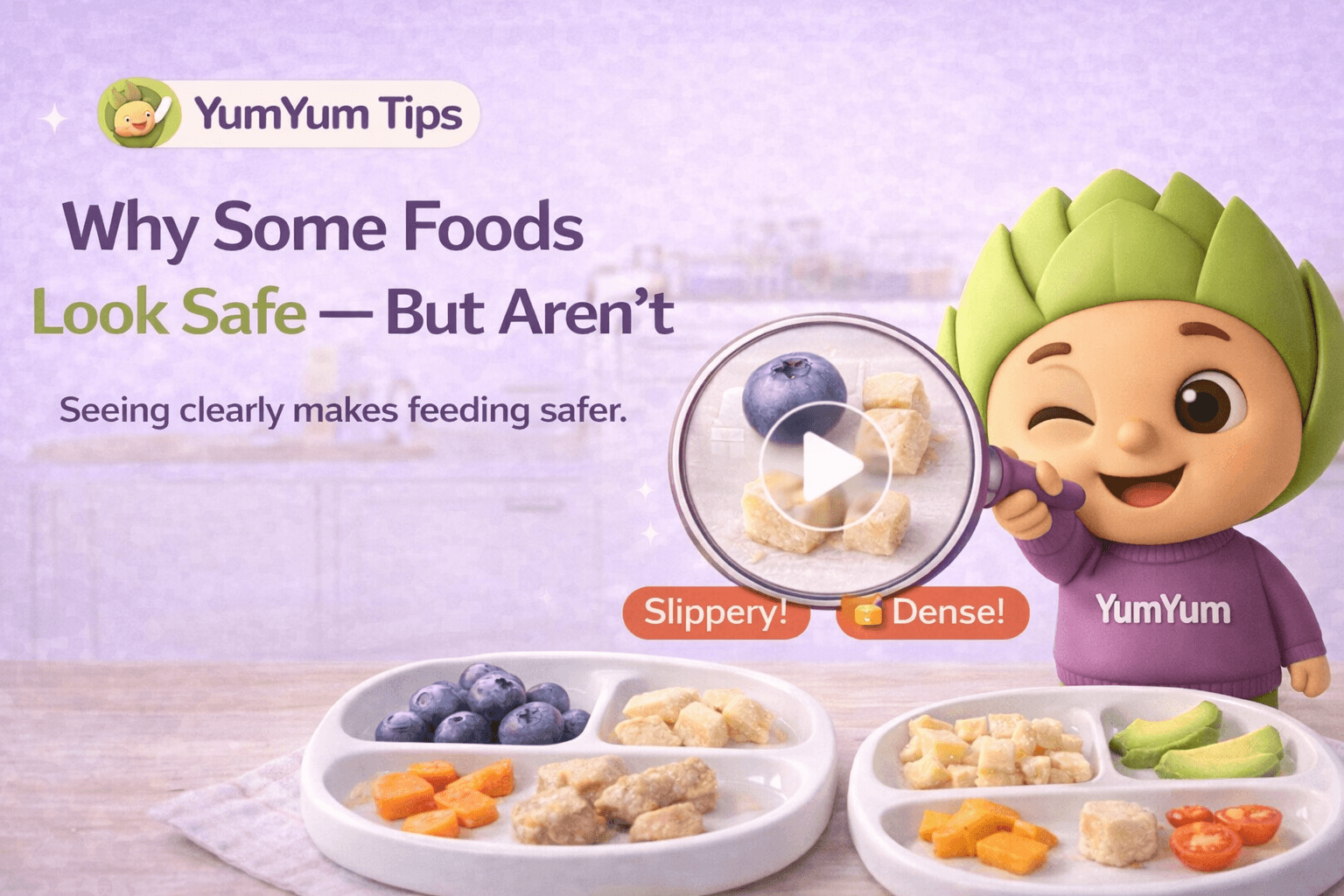
YumYum Tips: Why Some Foods Look Safe — But Aren’t
Introducing solids is not just about what to serve.
It’s about how it behaves in a baby’s mouth.
Some foods look perfectly safe.
Until they’re not.
The Illusion of “Soft Enough”
Many parents rely on appearance.
If it looks:
small
soft
mashable
- It must be safe, right?
Not always.
Some foods:
are slippery
compress under pressure but don’t break
form dense chunks in the mouth
This is where visual understanding becomes critical.
For a simple age-based starting point, see: How to Serve Egg to a Baby by Age: 6, 9, and 12 Months
Why Appearance Can Be Misleading
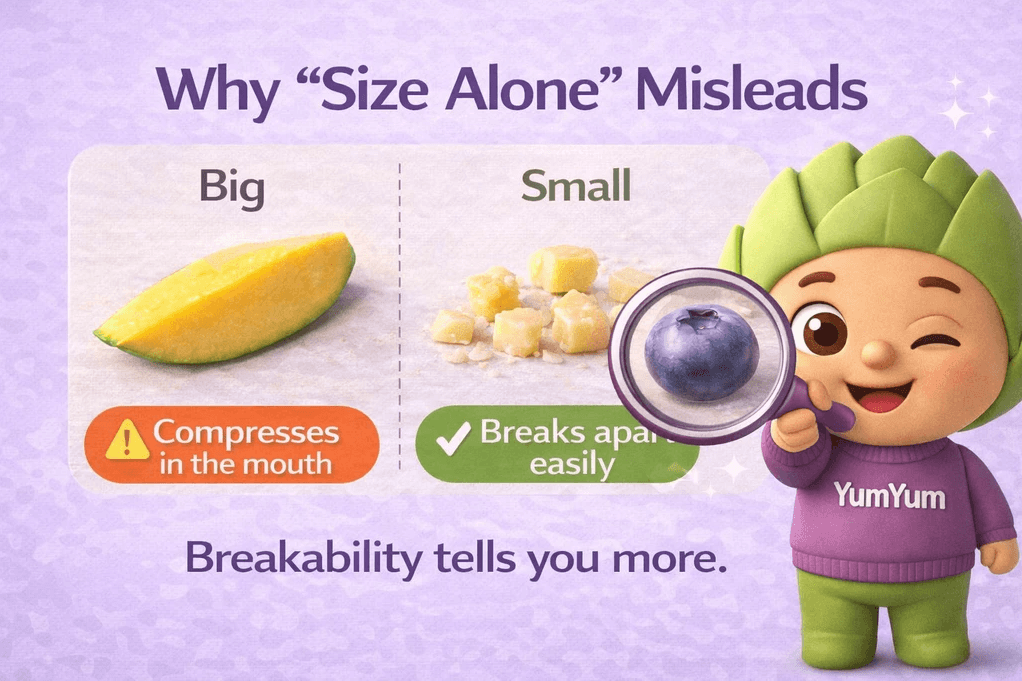
Here are common examples:
Cooked Vegetables
They look soft — but if slightly undercooked, they may still require stronger chewing skills.
Apples
A raw apple can look small and harmless — but it can be firm and difficult to handle, especially early on.
(If you’re serving apple, follow the safe visual examples here:) How to Serve Apple to a Baby (6, 9, and 12 Months)
Meat Cubes
Even tiny pieces can be hard if not prepared correctly.
The risk is rarely about size alone.
It’s about texture, structure, and breakdown.
To understand common risky shapes (and safer alternatives), read: Safe vs Unsafe Food Shapes for Babies (BLW Guide)
What Really Matters: Breakability
Instead of asking:
“Is this small enough?”
Ask:
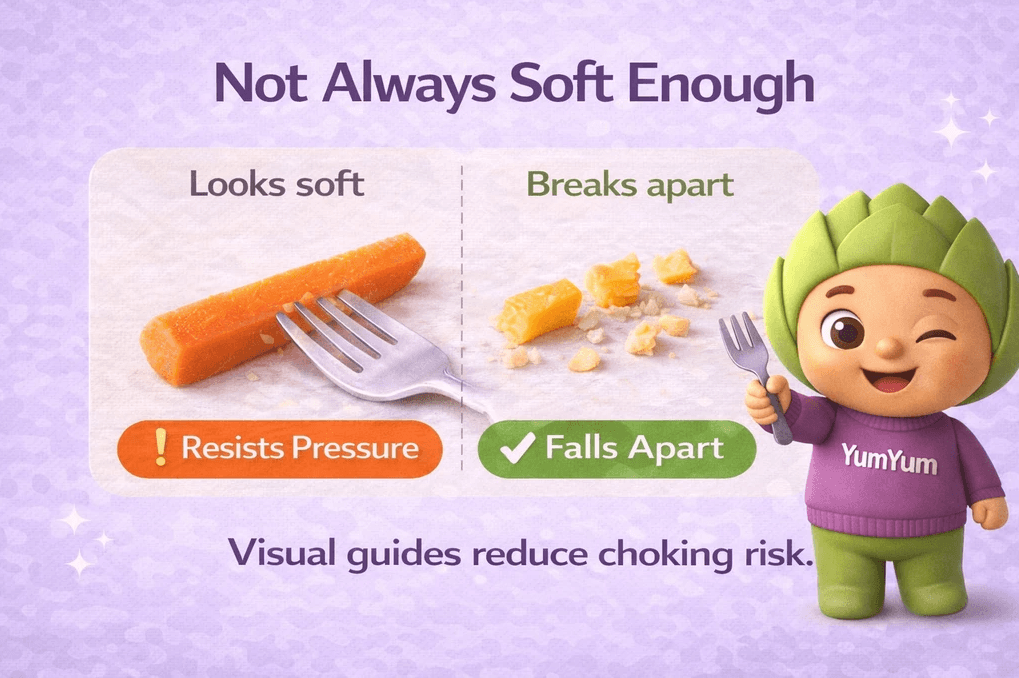
“Will this break apart easily under gentle pressure?”
Babies don’t chew like adults.
They mash with their gums.
If food:
resists pressure
stays dense
doesn’t fall apart
It may be more challenging than it looks.
Why Visual Guides Reduce Risk
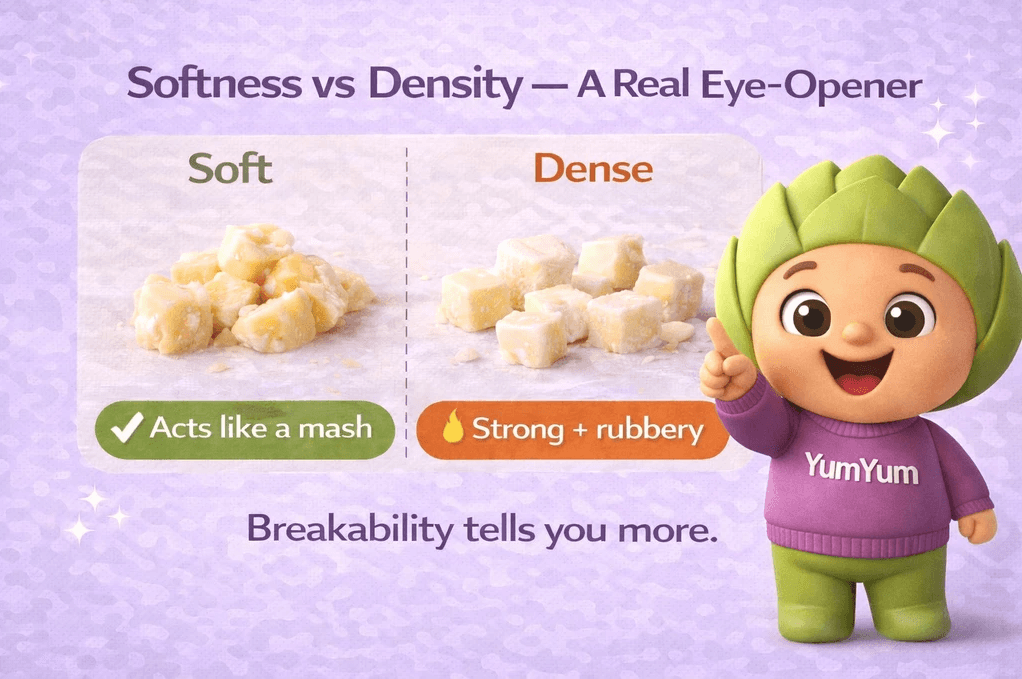
When parents can see:
correct shape
correct softness
how food tears apart
They gain clarity.
And clarity reduces stress.
This is especially important during:
6–9 months (early exploration stage)
introduction of new textures
first exposure to firmer foods
(If you’re new to BLW, start here:)
/blw-first-foods-safety-guide
How YumYum Supports Safer Feeding
YumYum combines:
clear serving photos
age-specific guidance
texture-focused examples
visual demonstrations (including videos on selected foods)
So parents don’t rely on imagination — they rely on visibility.
Instead of:
“Does this look safe?”
You get:
“This is how it should look.”
To unlock full photo galleries and videos, learn more here: YumYum 🍎👶
The Goal Isn’t Perfection
Feeding is a learning process.
Mistakes happen.
But visual clarity helps parents:
feel more confident
reduce uncertainty
approach meals calmly
And confidence matters as much as technique.
Key Takeaway
Some foods look safe — but appearance alone can be misleading.
When introducing solids, don’t judge by size alone.
Look at softness.
Look at breakability.
Look at the texture.
Seeing clearly makes feeding safer.