Safe vs Unsafe Food Shapes for Babies (BLW Guide)
Why food shape matters more than the food itself
When starting baby-led weaning (BLW), most parents focus on what foods to offer.
But one of the biggest safety factors is actually how the food is cut and shaped.
The same food can be safe or unsafe depending on its shape, size, and texture.
Understanding this difference helps reduce choking risks and builds your baby’s confidence with eating.
This guide explains safe vs unsafe food shapes, why they matter, and how to choose the right shape for your baby’s age.
Unsafe food shapes to avoid
These shapes increase the risk of choking, especially for babies under 12 months.
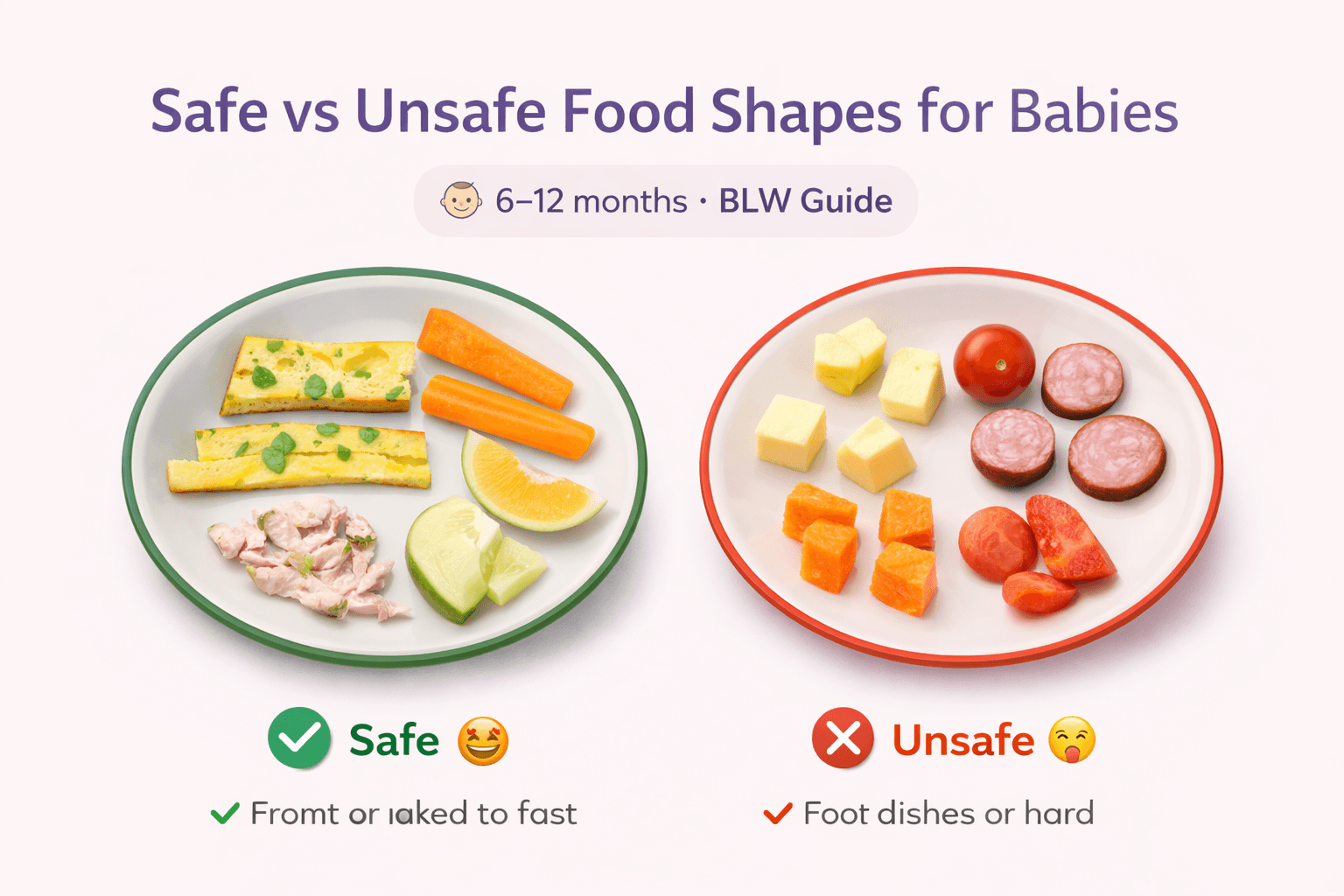
❌ Small hard cubes
Difficult to grip
Can slip to the back of the throat
Often swallowed whole
Examples:
Apple cubes, cheese cubes, firm meat chunks
❌ Round or coin-shaped pieces
Match the size of a baby’s airway
Can block airflow if swallowed
Examples:
Grapes, sausage slices, cherry tomatoes (uncut)
❌ Hard chunks
Require strong chewing skills
Not mashable with gums
Examples:
Raw vegetables, hard crackers, nuts
Safe food shapes for babies
Safe shapes are designed to support grasping, chewing, and gradual skill development.
✅ Long strips (finger-length)
Easy to hold with a palmar grasp
Encourage self-feeding
Allow baby to control bites
Best for: 6 months+
Examples:
Steamed vegetable sticks, omelet strips, soft fruit wedges
✅ Soft mashable clumps
Break apart easily in the mouth
Reduce choking risk
Ideal for early chewing practice
Best for: 6–9 months
Examples:
Soft scrambled egg, mashed vegetables, flaky fish
✅ Wedges and soft bite-sized pieces
Support chewing skills
Suitable once baby manages food confidently
Best for: 9–12 months+
Examples:
Soft fruit wedges, tender meat strips cut short
Safe food shapes by age
👶 6 months
Long, thick strips
Very soft textures
Food should mash easily between fingers
👶 9 months
Shorter strips or soft clumps
Slightly more texture
Still fully cooked and soft
👶 12 months+
Soft bite-sized pieces
Wedges instead of cubes
Mixed textures with supervision
Common mistakes parents make
Cutting food too small
Serving food that is too dry or hard
Offering round foods without modifying the shape
Advancing textures too quickly
Remember: smaller is not always safer.
Final safety tips
Always serve food fully cooked
Ensure food is soft and mashable
Supervise your baby while eating
Keep baby upright during meals
How YumYum helps
YumYum shows safe food shapes by age, so you never have to guess.
From first bites to confident meals, the app helps you choose the right shape at the right time.
👉 Explore safe food shapes with YumYum.
More
How to Serve Foods by Age: 6, 9, and 12 Months
How Babies Learn to Eat: All Feeding Stages Explained (6–24 Months)
BLW First Foods: Complete Safety & Serving Guide (6–12 Months)
If you’re building your baby’s first food journey, you may also find these guides helpful:
How to Serve Apple to a Baby (6, 9, and 12 Months)
How to Serve Avocado to a Baby (6, 9, 12 Months)
How to Serve Sweet Potato to a Baby (6, 9, 12 Months)
How to Serve Banana to a Baby (6, 9, 12 Months)How to Serve Egg to a Baby by Age: 6, 9, and 12 Months