BLW First Foods: Complete Safety & Serving Guide (6–12 Months)
Starting solid foods can feel overwhelming. Parents often worry about choking, portion sizes, and whether they’re doing things “right”.
This guide explains how to safely introduce first foods to babies using Baby-Led Weaning (BLW), with clear, age-appropriate guidance for 6, 9, and 12 months.
You’ll learn what foods are safe, how to cut and cook them properly, and how to reduce choking risk while supporting healthy feeding skills.
It’s designed to be simple, practical, and reassuring.
What Is Baby-Led Weaning (BLW)?
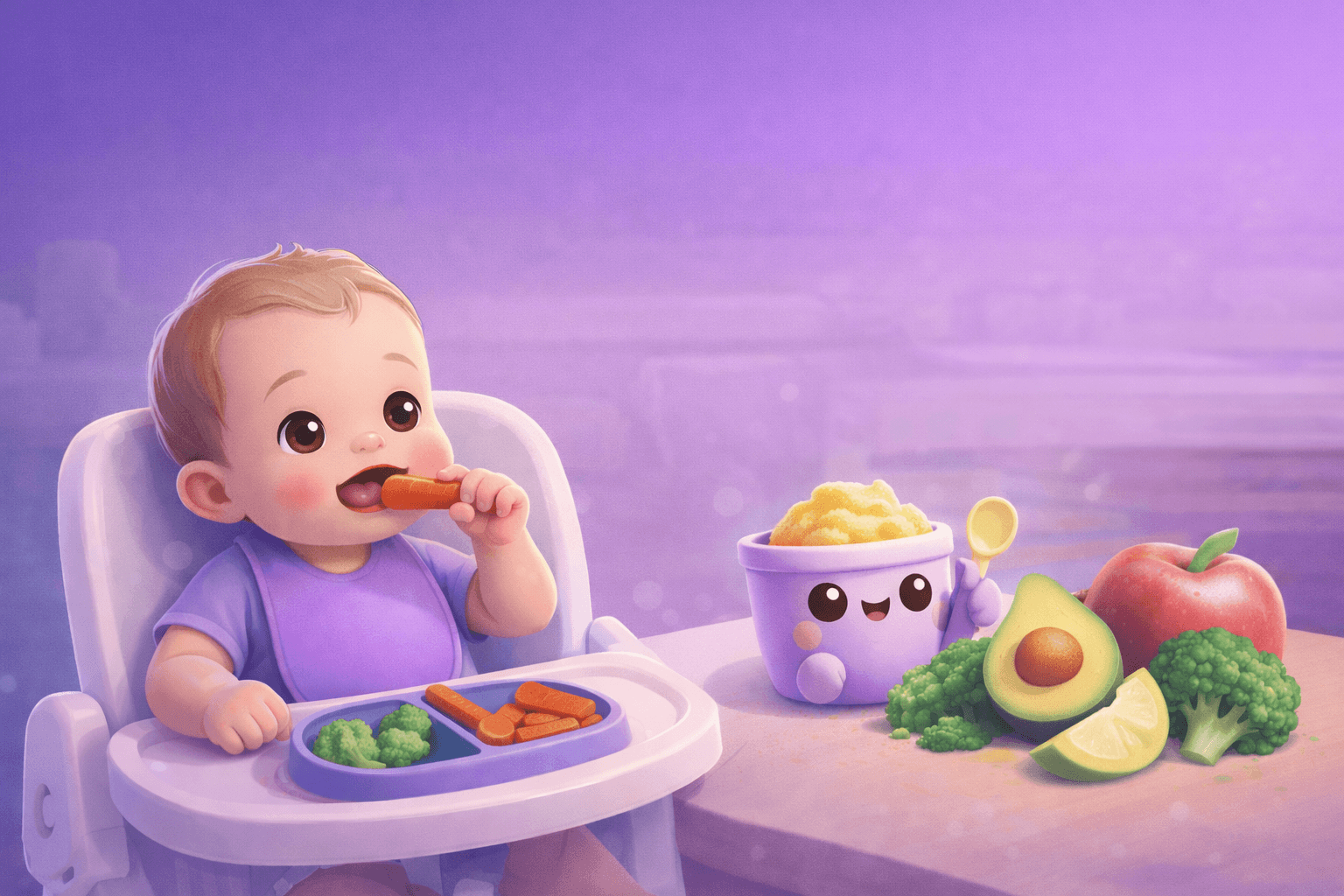
Baby-Led Weaning is a feeding approach where babies feed themselves from the start of solids, using real food in safe shapes and textures, instead of being spoon-fed purées.
In BLW:
babies sit upright and join family meals
food is offered in age-appropriate sizes
babies decide how much and how fast to eat
The focus is on learning skills, not on how much food is consumed.
BLW is supported by many pediatric feeding specialists and is commonly used worldwide as a responsive and development-friendly approach to starting solids.
When Are Babies Ready for Solid Foods?
Most babies are ready to start solid foods around 6 months of age, when they show developmental readiness signs rather than reaching a specific age.
sit with minimal support
bring food to their mouth
show interest in food
have good head and neck control
Every baby develops at their own pace. If unsure, consult your pediatrician.
Gagging vs Choking: What Parents Need to Know
Understanding the difference between gagging and choking is essential for BLW.
Gagging
loud
normal
protective reflex
helps babies learn to manage food
Choking
silent
dangerous
requires immediate action
Gagging is common when babies start solids and is a normal part of learning to eat. It helps babies protect their airway and is not the same as choking. Gagging does not mean that Baby-Led Weaning is unsafe.
How to Serve Foods Safely by Age
Food size and texture should change as babies grow.
How to Serve First Foods at 6 Months (BLW)
large, soft pieces
easy to grip with the whole hand
food should mash easily between fingers
How to Serve Foods at 9 Months (BLW)
smaller pieces
soft cubes or strips
supports developing pincer grasp
How to Serve Foods at 12 Months (BLW)
bite-sized pieces
more mixed textures
closer to family foods (low salt, no sugar)
Serving food by age reduces choking risk and supports skill development.
First Foods for Baby-Led Weaning
Below are some of the most common and safest first foods for Baby-Led Weaning. Each guide explains how to cut, cook, and serve the food safely by age.
Popular BLW First Food Guides
More food guides are added regularly.
Common BLW Mistakes Parents Make
offering foods that are too small too early
over-mashing foods for older babies
distracting babies during meals
worrying about intake instead of skills
BLW works best when babies are allowed to explore food at their own pace.
Frequently Asked Questions About BLW
Is baby-led weaning safe for babies?
Yes, when done correctly with age-appropriate foods and supervision.
Can baby-led weaning and spoon-feeding be combined?
Yes. Many families use a mixed approach, and that’s perfectly fine.
What foods are choking hazards for babies?
Hard, round, sticky foods (like whole nuts or grapes) should be modified or avoided.
How YumYum Helps Parents with First Foods
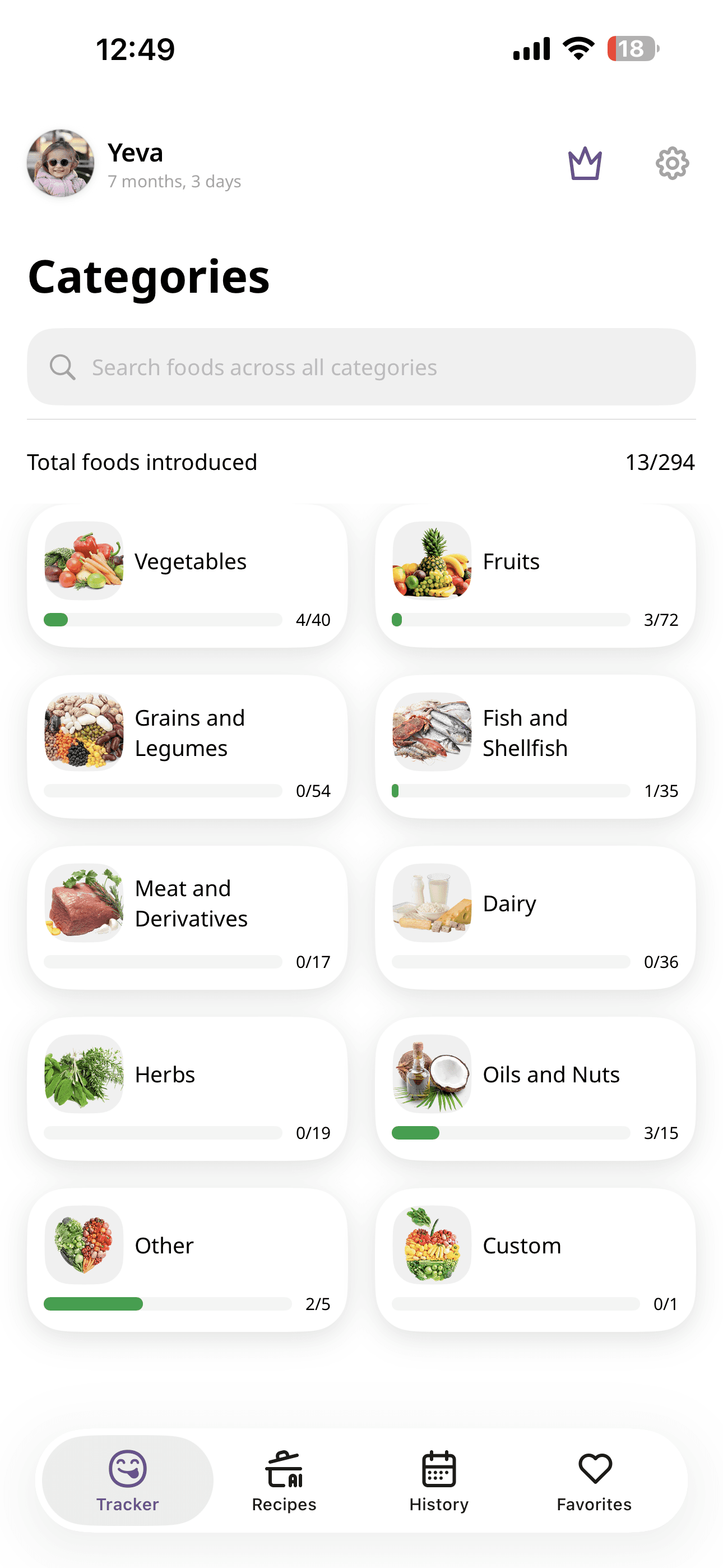
YumYum is a Baby-Led Weaning food tracker designed to support parents during the first foods journey.
YumYum — a BLW Baby Food Tracker — helps parents:
see how to serve foods safely by age
understand textures and portion sizes
track foods their baby has tried
feel confident during the first food journey
The app is designed to make baby feeding simple, safe, and stress-free.
👉 Explore how YumYum guides parents step by step through first foods.
Final Thoughts
Starting solids doesn’t have to be confusing.
With clear guidance, safe food preparation, and trust in your baby’s abilities, BLW can be a positive and enjoyable experience for the whole family.
This guide can be revisited as your baby grows and new foods are introduced.