Why Babies Want the Same Food Again and Again
Why Babies Want the Same Food Again and Again
When you start solids, you may imagine your baby happily trying avocado, broccoli, lentils, sweet potato, banana, eggs, yogurt, and every colorful food on the plate.
But real life often looks different.
Your baby may suddenly want the same food again and again.
Banana every morning.
Yogurt every afternoon.
Toast every day.
The same pasta.
The same puree.
The same favorite fruit.
And then you may start wondering:
Is this okay?
Should I be worried?
Do I need to push more variety?
Is my baby becoming picky?
The short answer:
Yes, repetition is normal. Babies often need repeated exposure to feel comfortable with foods.
Wanting the same food again and again does not mean you are doing anything wrong. It can actually be part of how babies learn, build confidence, and slowly accept new foods.
Repetition Is Learning
For babies, food is not just food.
Food is a whole sensory experience.
A new food can mean:
a new smell
a new color
a new texture
a new shape
a new temperature
a new taste
a new feeling in the mouth
a new skill to practice
That is a lot for a baby to process.
So when your baby wants the same food again, it may be because that food feels familiar and safe.
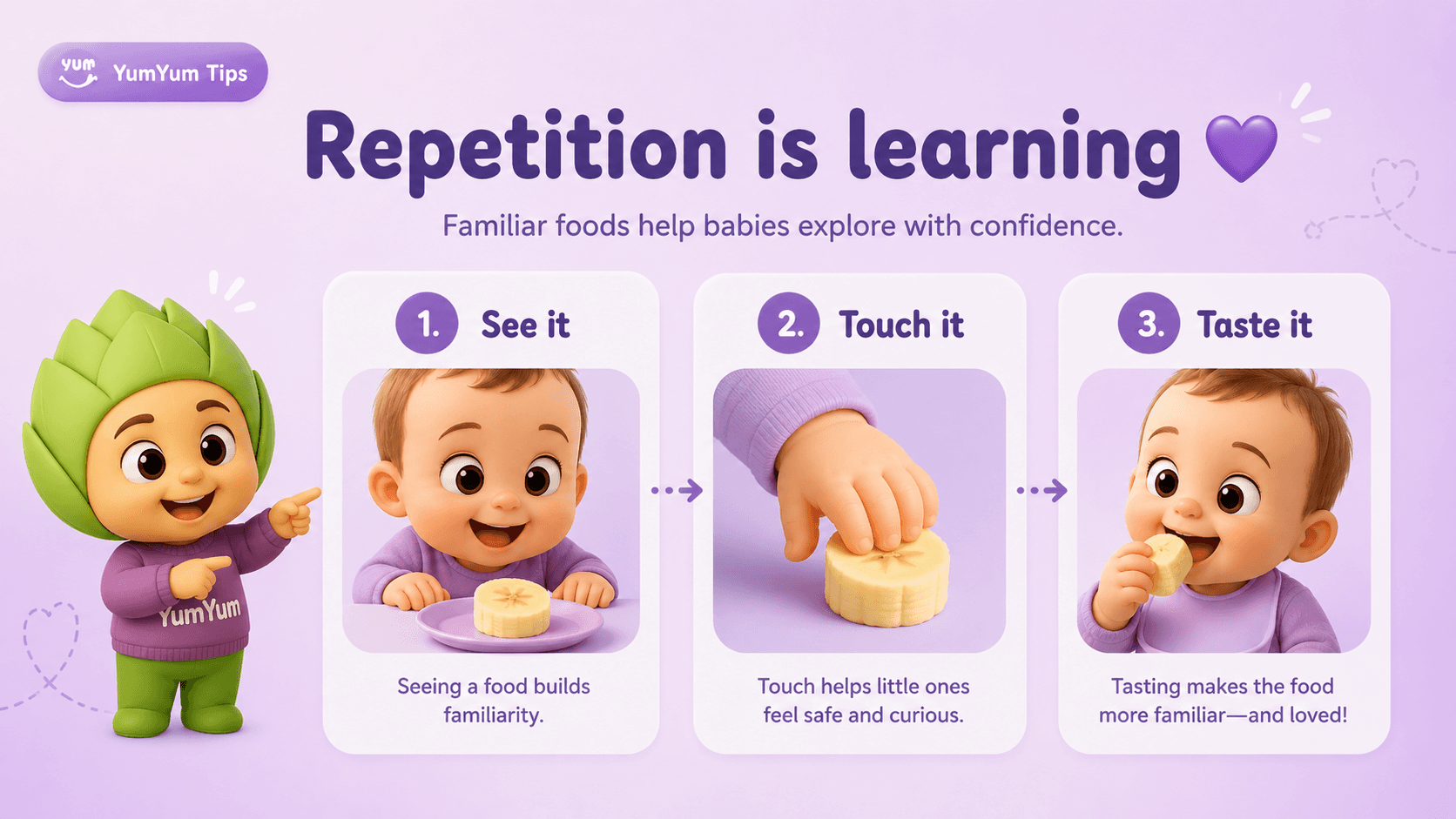
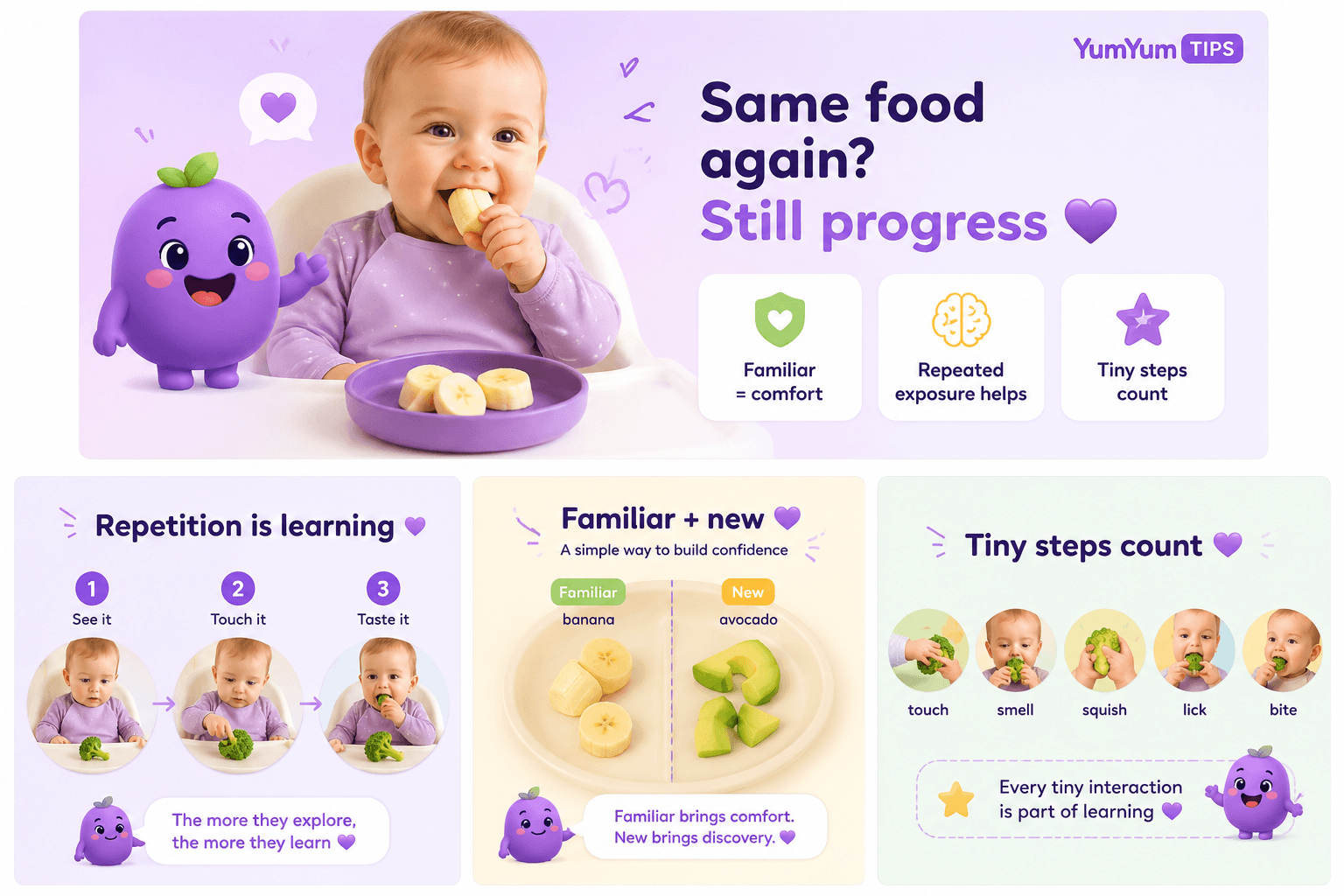
The more often they see it, touch it, smell it, and taste it, the more comfortable it can become.
Repetition helps babies learn:
“I know this food.”
“I have seen this before.”
“I know what to expect.”
“This feels safe.”
That comfort matters.
Familiar Foods Can Help Babies Feel Safe
Starting solids is a big transition.
Until now, your baby’s main nutrition may have come from breast milk or formula. Then suddenly, food appears with different smells, colors, textures, and tastes.
Some babies are curious right away.
Some babies are cautious.
Some babies need time.
A familiar food can act like an anchor.
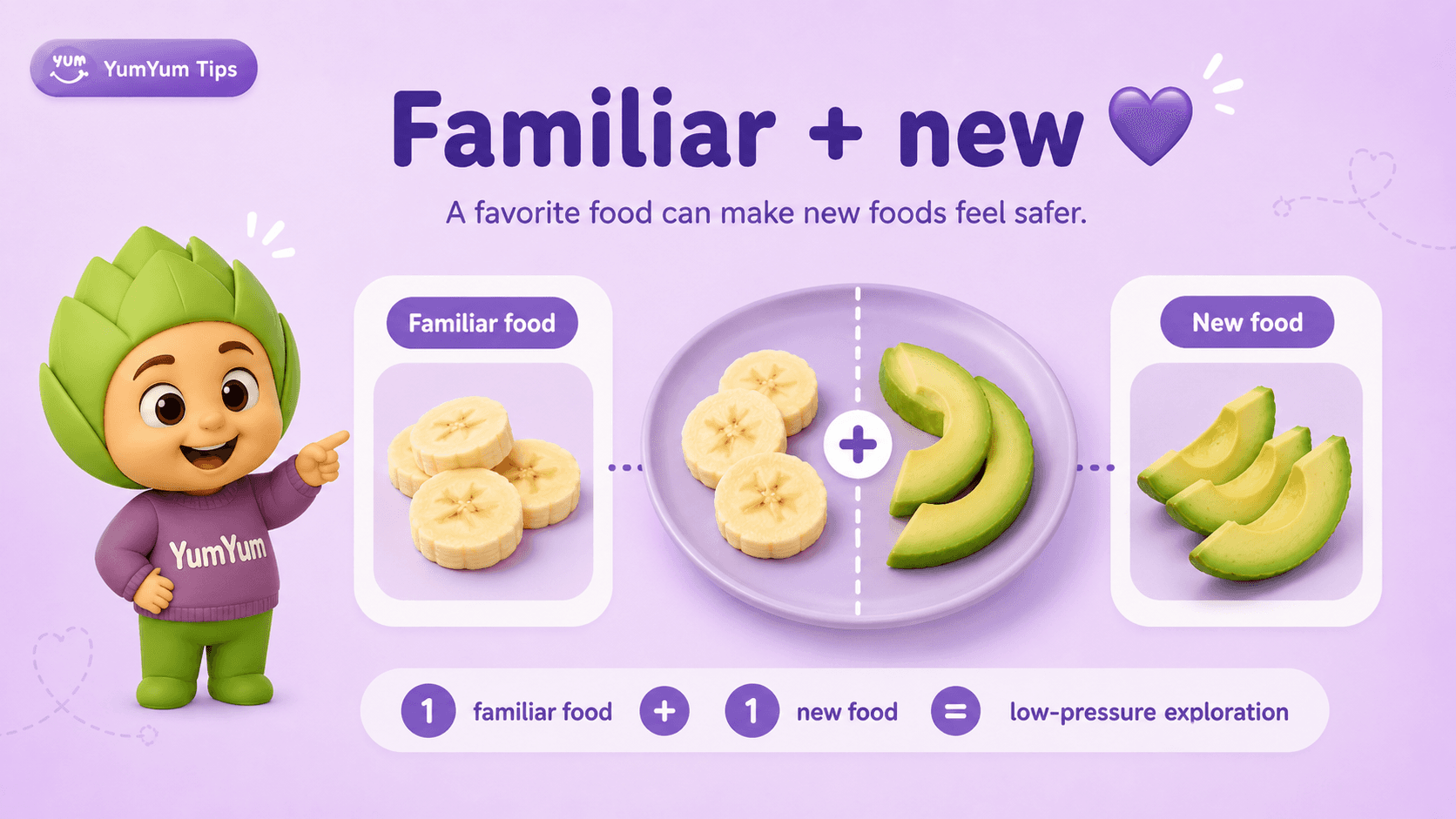
For example, if your baby likes banana, adding banana to the plate may make the whole meal feel less intimidating.
You can still offer something new next to it, but the familiar food gives your baby a sense of comfort.
This is why many parents use a simple approach:
1 familiar food + 1 new or less familiar food
For example:
Banana + avocado
Yogurt + strawberry
Toast + egg
Oatmeal + peanut butter
Sweet potato + lentils
Pasta + broccoli
The goal is not to force variety immediately.
The goal is to create a calm, low-pressure experience.
Does Repeating the Same Food Cause Picky Eating?
Not necessarily.
Repeating foods does not automatically cause picky eating.
In fact, repeated exposure can help babies become more comfortable with foods over time.
The concern usually comes when a baby is only offered a very small number of foods for a long period and has very few opportunities to explore variety.
But repetition itself is not the problem.
The key is balance:
It is okay to repeat familiar foods.
It is also helpful to gently keep offering variety.
You do not need to remove your baby’s favorite foods.
Instead, you can keep them on the plate while slowly introducing new options.
Repeated Exposure Does Not Mean Pressure
Repeated exposure simply means giving your baby another chance to experience a food.
It does not mean:
forcing bites
bribing
tricking
pressuring
begging baby to “just try one”
hiding every new food inside favorites
A repeated exposure can be very small.
Your baby may:
look at the food
touch it
smell it
squish it
lick it
take a tiny bite
spit it out
eat a little
eat a lot
All of these experiences can still be part of learning.
A baby does not have to finish a portion for the exposure to matter.
What Counts as Trying a Food?
Parents often think “trying” means swallowing a full bite.
But when babies are learning, trying can be much broader.
Your baby may be learning even if they only:
touch the food
bring it to their mouth
lick it
make a face
chew and spit it out
play with it
smell it
watch you eat it
This is especially true in baby-led weaning, where babies are learning through exploration.
A tiny interaction can still be progress.
That is why tracking foods can be helpful. Not because you need to be perfect, but because it helps you see that progress is happening even when meals feel messy or unpredictable.
Why Babies May Refuse a Food One Day and Love It Later
One of the most confusing parts of starting solids is how quickly preferences can change.
Your baby may love sweet potato on Monday and refuse it on Tuesday.
They may reject broccoli five times, then suddenly eat it happily.
They may enjoy yogurt for weeks, then push it away.
This can happen for many reasons:
mood
tiredness
teething
hunger level
illness
texture
temperature
distraction
growth changes
independence
new motor skills
It does not always mean the food is disliked forever.
Sometimes it just means:
Not today.
That is why the phrase “keep offering, no pressure” is so useful.
How Many Times Should You Offer the Same Food?
There is no perfect number.
Some babies accept a new food quickly. Others need many exposures before they feel comfortable.
Instead of counting exact attempts, focus on the overall pattern:
Is your baby getting regular chances to explore different foods?
Are meals calm and low-pressure?
Are you offering safe, age-appropriate textures?
Are you giving familiar foods and new foods?
Are you allowing your baby to go at their own pace?
If the answer is mostly yes, you are already supporting your baby’s learning.
How to Build Variety Without Pressure
If your baby keeps returning to the same favorite foods, you can still gently build variety.
Here are simple ways to do that.
1. Use the “familiar + new” method
Offer one food your baby already knows and one small new food.
Example:
familiar: banana
new: avocado
This helps the plate feel less overwhelming.
2. Change one small thing at a time
If your baby likes a food, you can slowly adjust the meal.
Example with oatmeal:
oatmeal
oatmeal with banana
oatmeal with cinnamon
oatmeal with yogurt
oatmeal with berries
This keeps a familiar base while adding variety.
3. Offer tiny portions of new foods
A new food does not need to be a big serving.
Sometimes a small piece is enough.
A tiny portion can feel less stressful for both baby and parent.
4. Let baby explore without needing to eat
If your baby only touches or smells the food, that still counts as exposure.
You can offer the food again another day.
5. Eat the food yourself
Babies often learn by watching.
If you eat the food calmly and naturally, your baby may become more curious over time.
6. Keep meals predictable
A simple routine can help babies feel safe.
For example:
sit in the high chair
offer a small plate
keep the mood calm
avoid pressure
allow exploration
clean up gently
Predictability can make new foods feel less scary.
When Repetition Can Be Helpful
Repetition can be especially helpful when:
baby is cautious with new foods
baby is learning a new texture
baby is practicing self-feeding
baby is recovering from illness
baby is teething
baby is going through a picky phase
baby is overwhelmed by too many new foods
In these moments, familiar foods can provide comfort.
That does not mean you stop offering variety. It just means you offer variety gently.
When to Ask a Professional
Every baby is different, and some feeding challenges may need extra support.
Consider speaking with your pediatrician or a qualified feeding professional if your baby:
refuses most foods consistently
has trouble swallowing
coughs or chokes often during meals
is not gaining weight as expected
has strong reactions to many textures
seems distressed at most meals
has possible allergy symptoms
has very limited foods over time
Trust your instincts. If something feels concerning, it is always okay to ask for guidance.
Repetition and the First 100 Foods Journey
Many parents enjoy tracking baby’s first 100 foods.
It can be a fun way to encourage variety and celebrate progress.
But the “first 100 foods” journey is not a race.
Your baby does not need to try something new every single day.
Some days are for new foods.
Some days are for familiar foods.
Some days are for practice.
Some days are just messy.
Repeating a food does not mean you are falling behind.
It means your baby is building familiarity.
And familiarity is part of confidence.
How YumYum Can Help
YumYum helps parents track the starting solids journey in a simple, visual way.
You can use YumYum to:
log foods your baby has tried
track baby’s first 100 foods
save favorite foods
note reactions and sensitivities
follow progress over time
remember which foods were accepted, refused, or repeated
This can help you see the bigger picture.
Maybe your baby repeated banana five times this week.
That is okay.
You can still see that they have also explored apple, yogurt, broccoli, sweet potato, oats, or avocado over time.
Progress does not have to look perfect.
It just has to keep moving.
One bite at a time.
Quick Summary
If your baby wants the same food again and again, it is usually normal.
Repetition can help babies feel safe and familiar with foods.
A repeated food can still support learning, especially when meals stay calm and pressure-free.
Try to balance familiar foods with gentle exposure to new foods.
Remember:
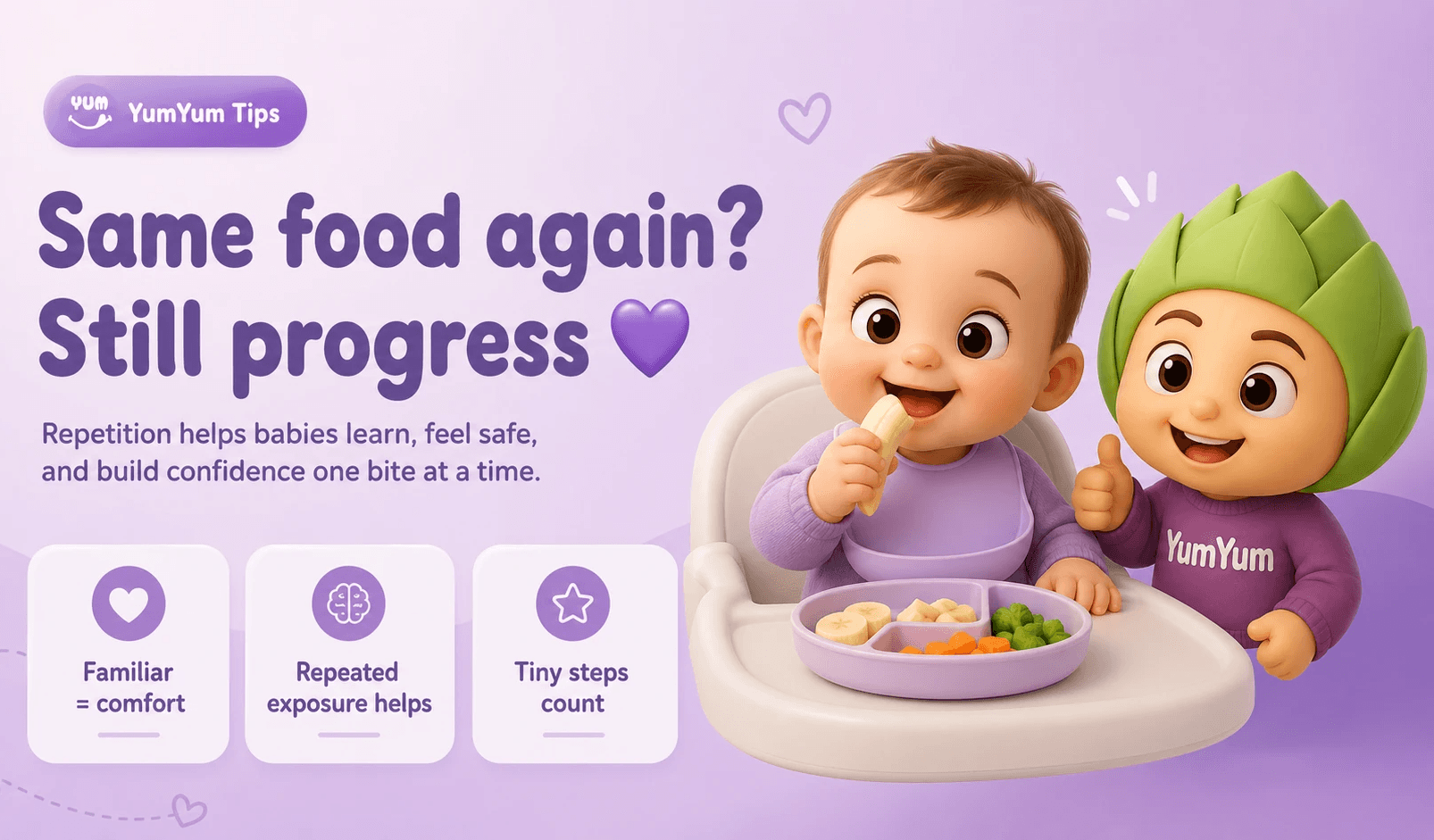
Same food again? Still progress.
Repetition is learning.
Tiny steps count.
FAQ: Babies Repeating the Same Food
Is it normal for my baby to want the same food every day?
Yes, it can be normal. Babies often like familiar foods because they feel safe and predictable. You can keep offering familiar foods while gently adding variety.
Does repeating foods cause picky eating?
Repeating foods does not automatically cause picky eating. The goal is to balance familiar favorites with regular, low-pressure exposure to different foods.
Should I stop offering my baby’s favorite food?
Usually, no. Favorite foods can help meals feel comfortable. You can serve a favorite food alongside a new or less familiar food.
What if my baby refuses everything except one food?
If this happens occasionally, it may be a phase. If your baby consistently eats very few foods or seems distressed during meals, consider speaking with your pediatrician or a feeding professional.
How many times should I offer a new food?
There is no exact number that works for every baby. Some babies need many chances to see, touch, smell, and taste a food before accepting it.
Does touching or licking food count as progress?
Yes. Touching, smelling, licking, squishing, or bringing food to the mouth can all be part of learning.
Should I pressure my baby to try one bite?
It is usually better to avoid pressure. Gentle, repeated exposure helps babies explore food at their own pace.
Can I offer the same breakfast every day?
Yes, familiar meals can be okay. You can slowly add variety by changing one small thing, such as adding a new fruit, spice, or texture.
Learn more in our First 100 Foods Guide
If you are just starting solids, read our BLW First Foods Guide
To choose safe textures by age, visit our Safe Serving by Age