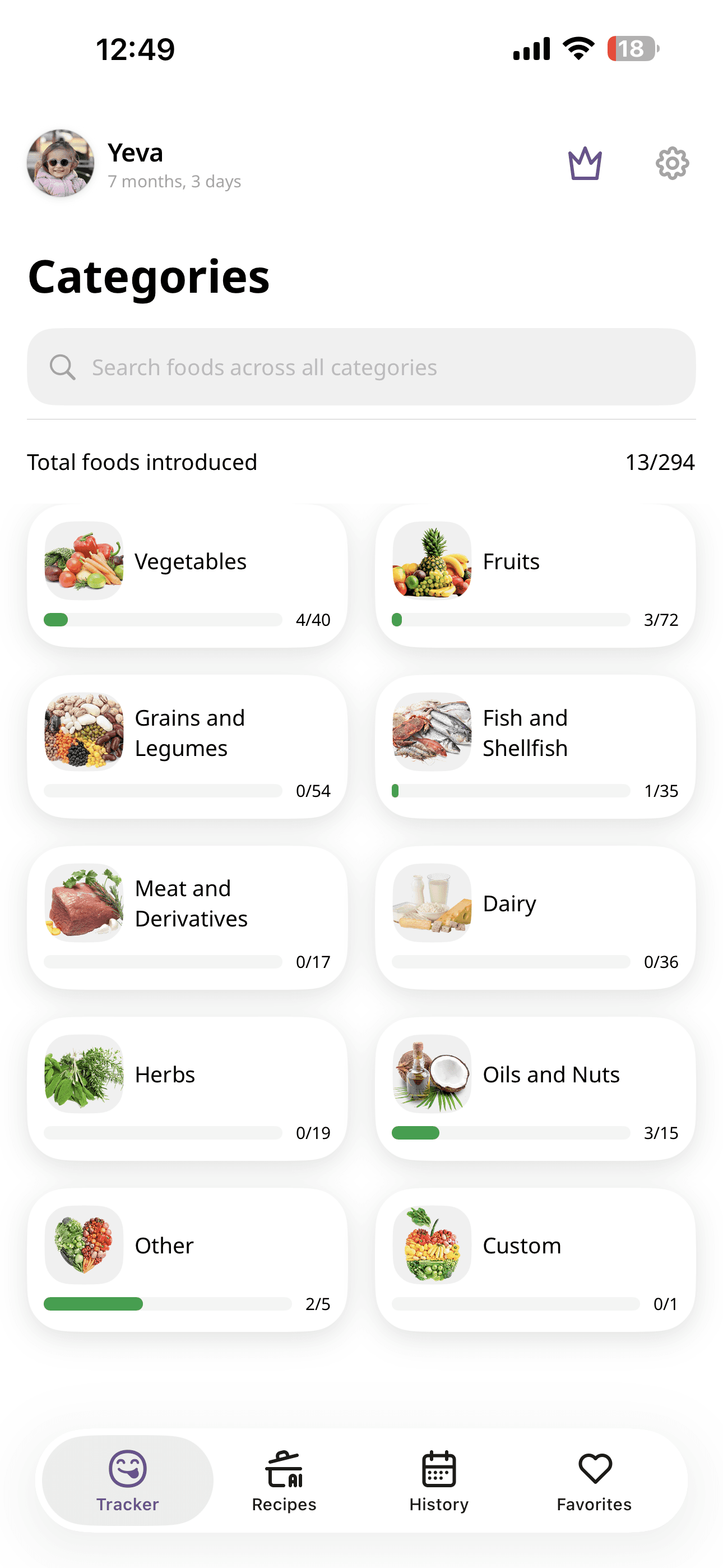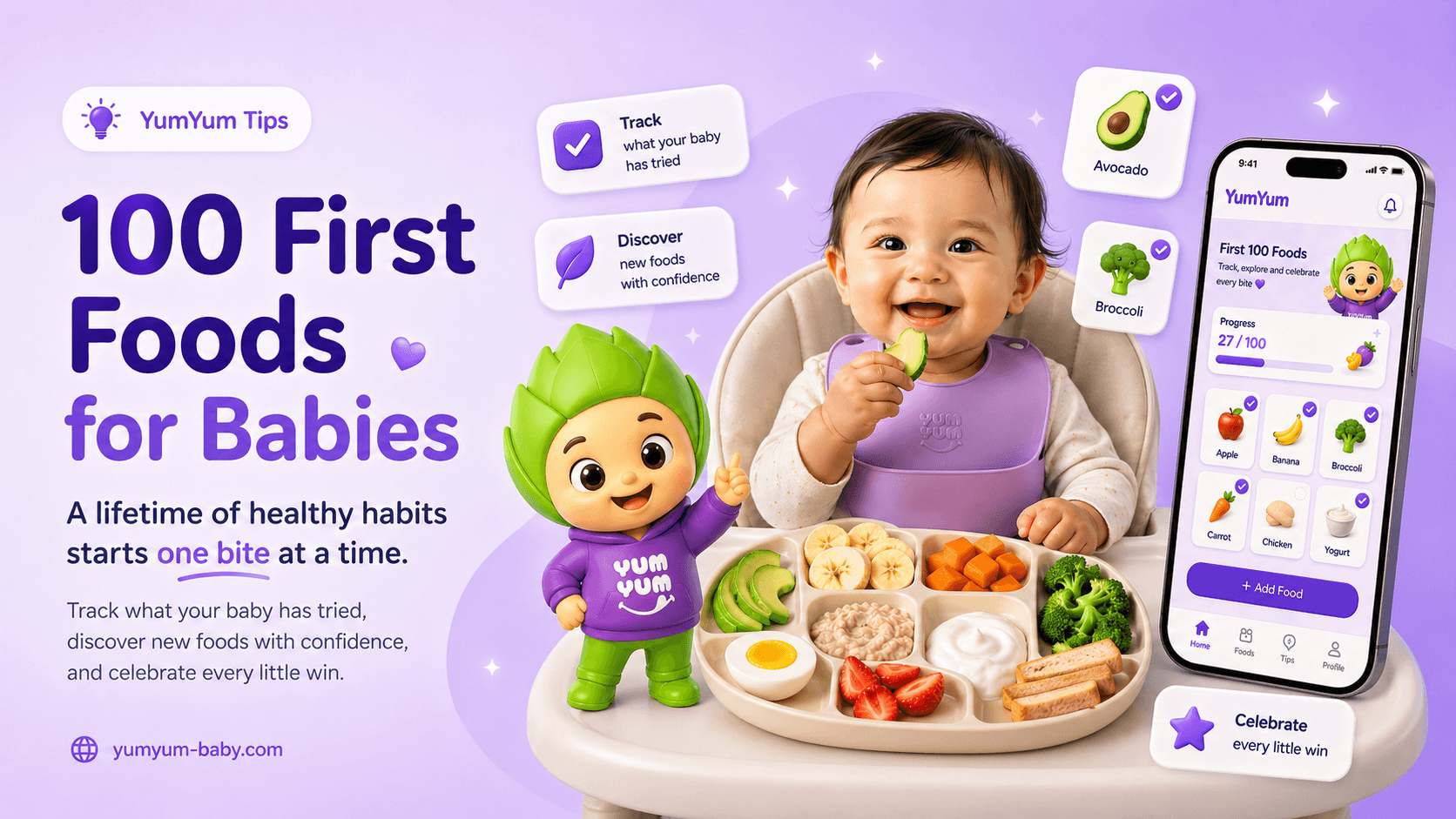
First 100 Foods for Babies: A Simple, Science-Based Guide for Parents
🧠 What are the “First 100 Foods”?
The “First 100 Foods” approach is a simple way to introduce variety into your baby’s diet during the first year.
Instead of focusing on perfect meals, parents aim to offer 100 different foods over time.
This helps babies:
build acceptance of new flavors
reduce picky eating later
get a wider range of nutrients
👶 When should you start introducing foods?
Most babies are ready around 6 months, when they can:
sit with support
hold their head steady
show interest in food
Always consult your pediatrician if unsure.
🥦 Why variety matters early
Early exposure is key.
Research shows that babies who are offered a wide variety of foods are more likely to:
accept new foods later
eat more fruits and vegetables
develop balanced eating habits
👉 The goal is not quantity — it’s exposure.
🔁 How many times should you offer a new food?
It can take 10+ tries for a baby to accept a new food.
If your baby refuses:
try again in a few days
keep portions small
stay calm and consistent
Refusal ≠ dislike.
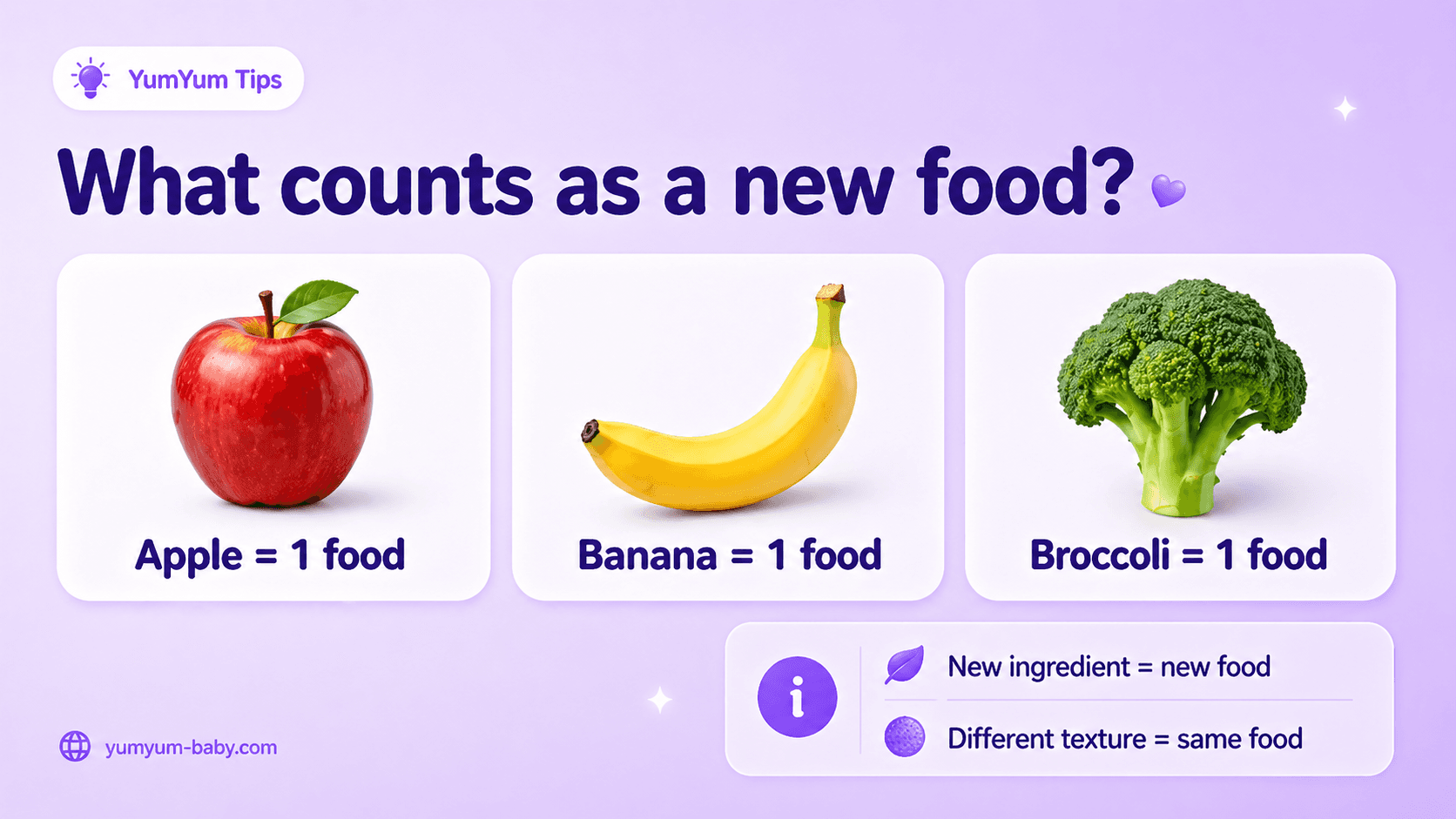
🧩 What counts as a “new food”?
Each unique ingredient counts.
Examples:
Apple = 1
Banana = 1
Broccoli = 1
Different textures or recipes don’t count as new foods — only new ingredients.
🍽️ How to build your first 100 foods list
A balanced list should include:
Vegetables
broccoli
carrot
zucchini
Fruits
apple
banana
pear
Proteins
chicken
lentils
eggs
Grains
oats
rice
quinoa
👉 Mix categories early — don’t wait.
⚠️ Common mistakes parents make
Avoid these:
❌ waiting too long to introduce variety
❌ stopping after one refusal
❌ focusing only on “safe” foods
❌ expecting babies to eat full portions
💡 What actually works
offer foods regularly
repeat exposure
keep meals low-pressure
let your baby explore
Mess is part of learning.
📊 How to track your baby’s foods
Tracking helps you:
see progress
avoid repeating the same foods
stay consistent
Many parents use simple trackers or apps to keep things organized.
💜 A simple mindset shift
It’s not about feeding your baby perfectly.
It’s about helping them discover food with confidence.
🚀 Make it easier with YumYum
YumYum helps you:
track your baby’s first foods
see what’s next
build variety without stress
👉 Start your First 100 Foods journey with confidence.
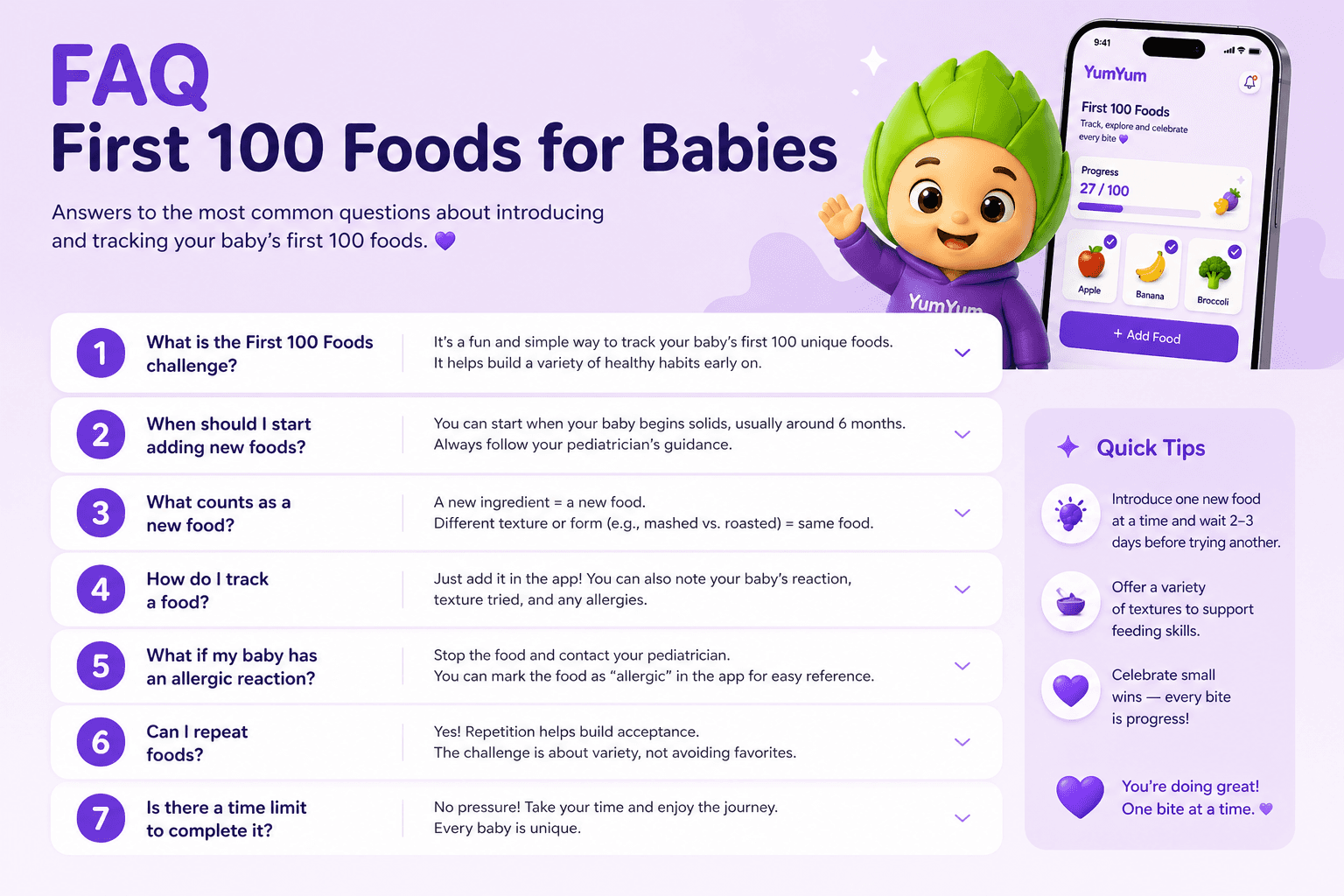
FAQ: First 100 Foods for Babies
How long does it take to reach 100 foods?
Most babies reach 100 foods within 3–6 months, but there’s no strict timeline.
Go at your baby’s pace — consistency matters more than speed.
What if my baby refuses most foods?
This is completely normal.
Babies often need multiple exposures (10+ times) before accepting a food.
Keep offering without pressure.
Do small tastes count as trying a food?
Yes. Even a tiny lick or bite counts as exposure.
The goal is familiarity, not quantity.
Should I introduce one food at a time?
You can, especially for allergens.
But in general, it’s safe to introduce a variety of foods once your baby is ready.
What about allergens?
Common allergens (like eggs, peanuts, dairy) can be introduced early in small, safe forms.
Always follow pediatric guidance and watch for reactions.
Can I repeat foods or should everything be new?
Repeat foods often.
Repetition builds acceptance — new foods add variety.
You need both.
Do different textures count as new foods?
No.
Only new ingredients count as new foods — not different forms of the same food.
What if I don’t reach 100 foods by age one?
That’s okay.
The number is just a guideline to encourage variety — not a strict rule.
Is baby-led weaning required for the 100 foods approach?
No.
You can follow BLW, purées, or a mix — the goal is exposure to different foods.
How do I keep track of everything?
You can use a simple list, notes, or a tracking app.
Tracking helps you stay consistent and avoid repeating the same foods.