Messy Eating in Babies: Why It’s Normal and Part of Learning
Starting solids can be exciting, sweet, and surprisingly messy. Food ends up on the tray, the floor, the bib, and sometimes everywhere except in your baby’s mouth. For many parents, that mess can feel frustrating or confusing.
But messy eating is often a normal part of learning.
When babies begin solids, they are not only learning to swallow food. They are learning how food feels, how to hold it, how to bring it to the mouth, and how to explore different textures with growing confidence.
The mess is not always a sign that something is going wrong. In many cases, it is part of the process.
If you want more practical support with first foods and feeding confidence, explore our baby feeding guides.
Why babies are messy when they start solids
Eating is a new skill. Babies do not begin solids already knowing how to pick up food neatly, take the right-sized bite, or keep everything on the tray.
In the beginning, many babies:
squeeze food
drop food
smear food
throw pieces around
spit some out
touch food more than they eat it
This is common, especially in the early months of solids.
Babies learn through repetition and sensory exploration. What looks messy to an adult may be practice to a baby.
Download YumYum on the App Store and make baby feeding simpler. 📲💜
What babies are learning through messy eating
Messy eating can support several important feeding skills.
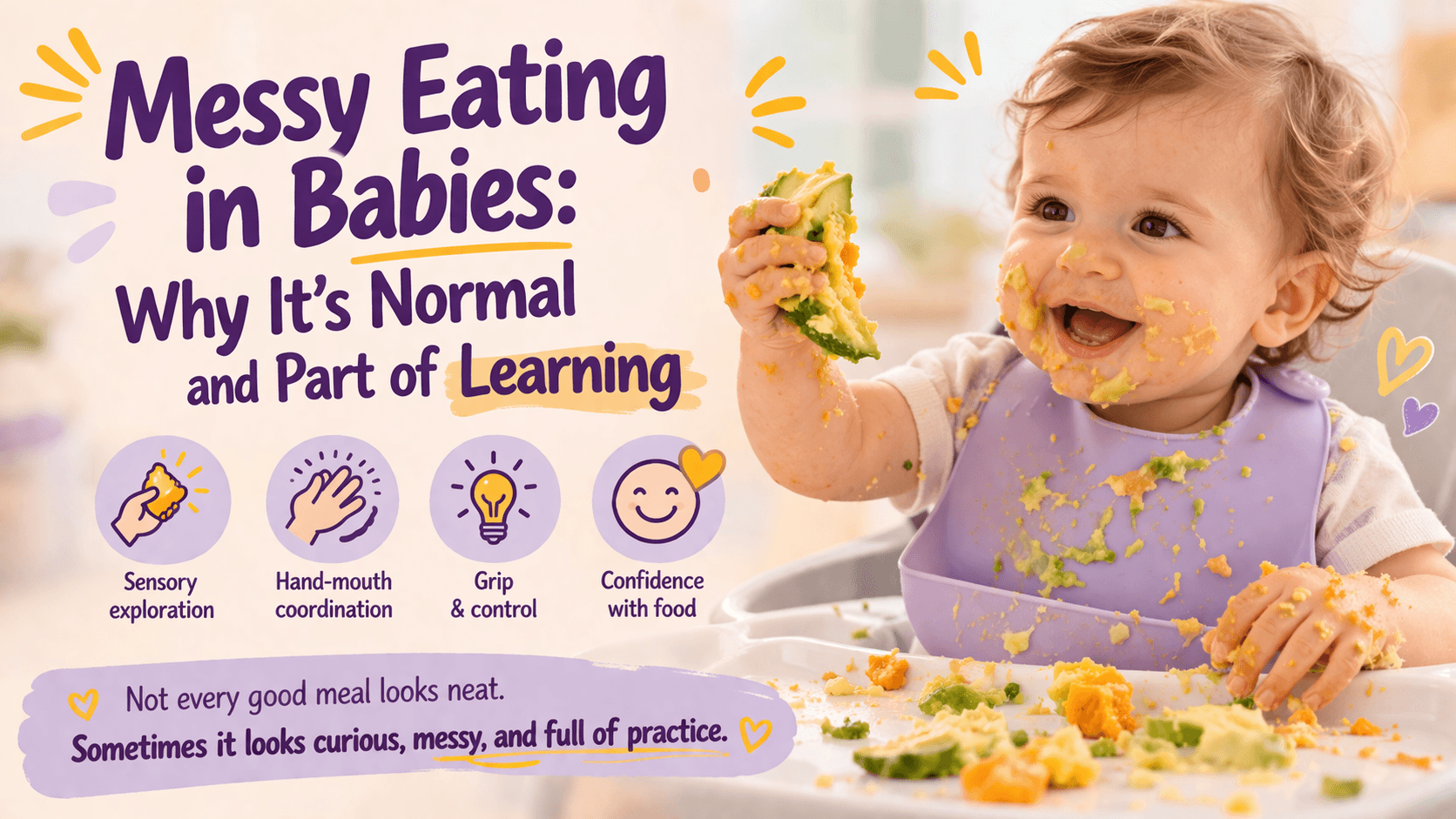
1. Sensory exploration
Babies learn a lot by touching food. They notice whether it feels soft, slippery, wet, squishy, sticky, or firm.
This matters because sensory familiarity can help babies feel more comfortable with food over time.
2. Hand-mouth coordination
Before babies become more efficient eaters, they need practice picking food up and moving it toward the mouth.
That takes time. It also takes many messy attempts.
3. Grip and control
Different foods require different hand movements. A soft avocado slice feels very different from a steamed carrot stick or a piece of banana.
Messy eating helps babies learn how much pressure to use and how to manage different shapes and textures.
4. Confidence with food
Babies often build confidence by exploring first. Touching, squishing, tasting, and trying again are all part of becoming more comfortable at mealtimes.
For more first food ideas and safe serving guidance, visit our feeding guides hub.
Does messy eating mean my baby is not eating enough?
Not necessarily.
In the beginning, solids are often more about learning than quantity. Many babies eat small amounts at first. Some mostly touch and taste. Some seem interested one day and less interested the next.
That can still be normal.
Progress does not always look like a finished plate. It can also look like:
touching a new food
bringing food to the mouth
tasting once
staying calm at the table
trying again tomorrow
These small steps still count.
Why messy eating can actually be a good sign
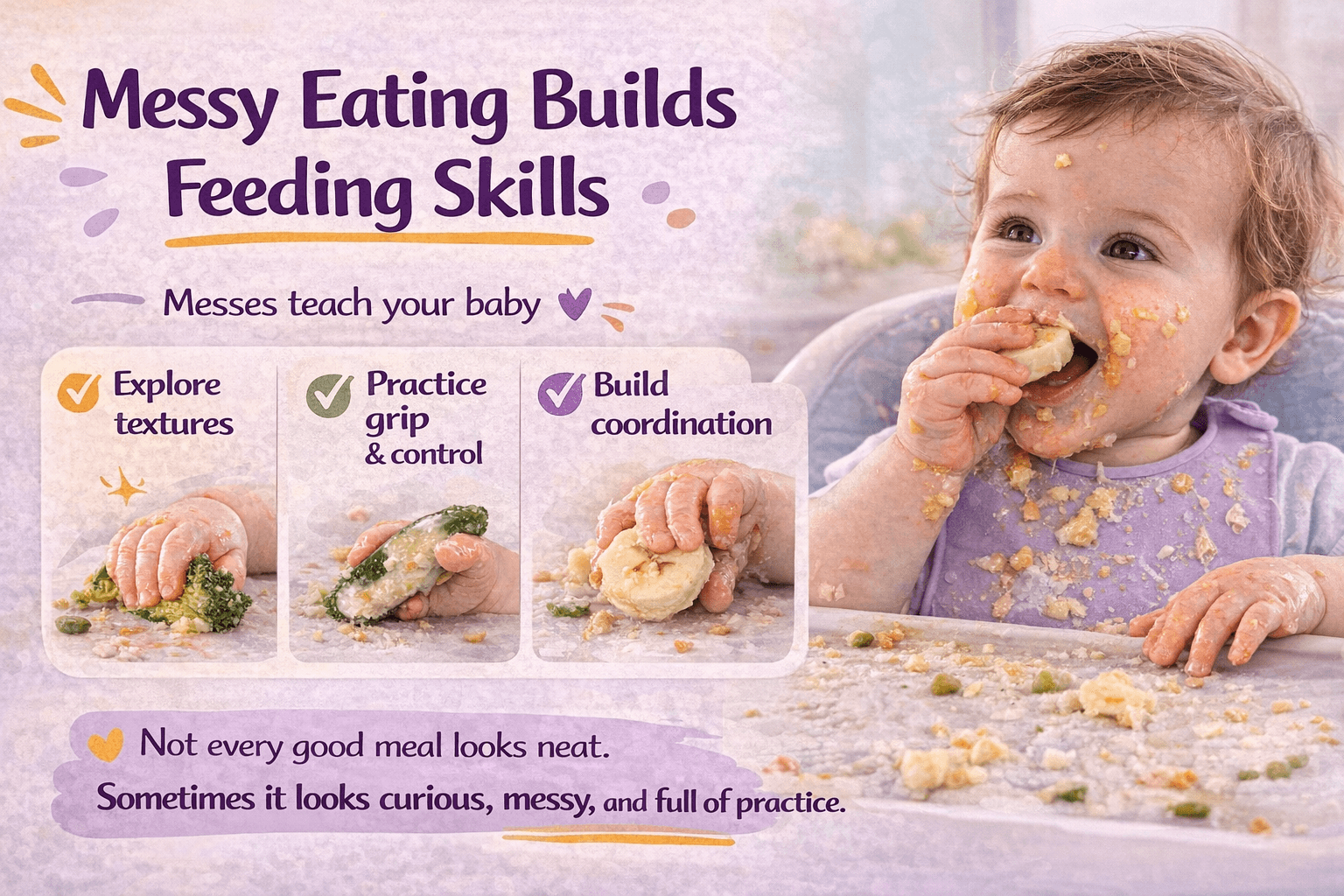
Messy eating can be a sign that your baby is actively engaged with food.
A baby who touches food, explores texture, and experiments with movement is often learning valuable feeding skills. Not every successful meal looks tidy. Sometimes a successful meal looks curious, playful, and a little chaotic.
That does not mean every mess is easy to enjoy, but it can help to remember that the mess may have a purpose.
How to make messy mealtimes easier
You do not have to love the mess to support the learning. A few small changes can help.
1. Keep portions small
Serving small amounts at a time can make mealtimes feel more manageable.
2. Use easy-to-clean setups
A wipeable mat, bib, or towel under the chair can make cleanup faster.
3. Expect practice, not perfection
Your baby is learning, not performing.
4. Stay calm
When mealtimes feel low-pressure, babies often have more space to explore and learn.
5. Let baby move at their own pace
Some babies jump in quickly. Others need more time with texture and touch.
When messy eating is normal and when to look closer
Mess is usually normal when babies begin solids, especially during the early stages. It is common for babies to drop, smear, spit, or play with food while learning.
It may help to get extra support if:
your baby seems very distressed around food
your baby avoids all textures over time
feeding feels consistently difficult with little progress
you are worried about swallowing or feeding safety
If something feels off, it is okay to ask your pediatrician or a feeding specialist for guidance.
A calmer way to think about the mess
Many parents feel pressure for meals to look neat and successful right away. But starting solids is not about perfect meals. It is about helping your baby build skills and confidence over time.
A messy tray does not always mean a failed meal.
Sometimes it means your baby touched something new.
Sometimes it means they practiced grip.
Sometimes it means they felt safe enough to explore.
That is learning too.
Final takeaway
Messy eating is often a normal and meaningful part of starting solids. It can help babies explore food, build coordination, practice self-feeding, and become more confident at mealtimes.
Not every good meal looks neat.
Sometimes a good meal looks curious, messy, and full of practice.
Explore more baby feeding guides
Looking for more help with first foods, textures, and baby-led weaning?
Explore the full YumYum Guides Hub for practical, parent-friendly feeding articles.