What Counts as a New Food for Babies? A Simple Guide for Starting Solids
What Counts as a New Food for Babies?
Starting solids is exciting — but it can also bring a lot of tiny questions.
Does mashed banana count separately from banana slices?
Is cooked apple different from raw apple?
If baby tries broccoli in a puree and later as a floret, is that one food or two?
The simple answer:
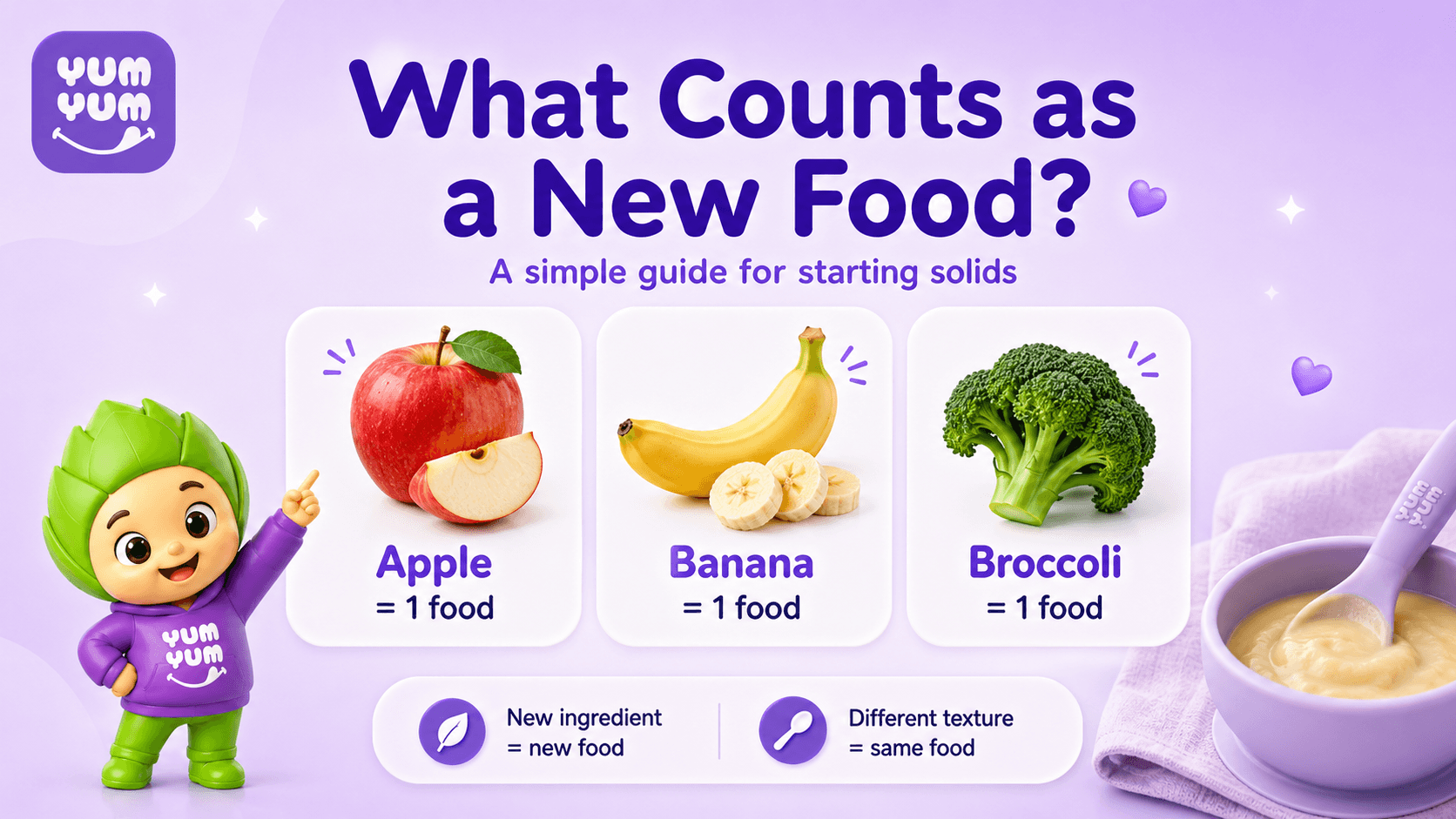
A new ingredient usually counts as a new food. A different texture or preparation of the same ingredient usually counts as the same food.
That means:
Apple = 1 food
Banana = 1 food
Broccoli = 1 food
Mashed apple and baked apple = still apple
Banana puree and banana spears = still banana
Broccoli puree and steamed broccoli florets = still broccoli
This simple rule helps parents track variety without making the process more stressful than it needs to be.
The Simple Rule: Ingredient First
When tracking your baby’s first foods, focus on the main ingredient.
For example:
Baby tried | Count as |
|---|---|
Apple puree | Apple |
Steamed apple slices | Apple |
Baked apple wedges | Apple |
Banana mashed with a fork | Banana |
Banana spears | Banana |
Broccoli puree | Broccoli |
Steamed broccoli florets | Broccoli |
The preparation can change, but the ingredient stays the same.
So if your baby has already tried apple, you usually do not need to count every apple texture as a brand-new food.
New Ingredient = New Food
A food usually counts as new when the ingredient itself is new to your baby.
Examples:
Apple
Banana
Avocado
Broccoli
Sweet potato
Egg
Yogurt
Oatmeal
Lentils
Salmon
Each of these can count as one new food when introduced for the first time.
This is especially helpful if you are working toward a goal like baby’s first 100 foods.
Instead of tracking every tiny variation, you can focus on building variety across fruits, vegetables, grains, proteins, healthy fats, and iron-rich foods.
Different Texture = Same Food
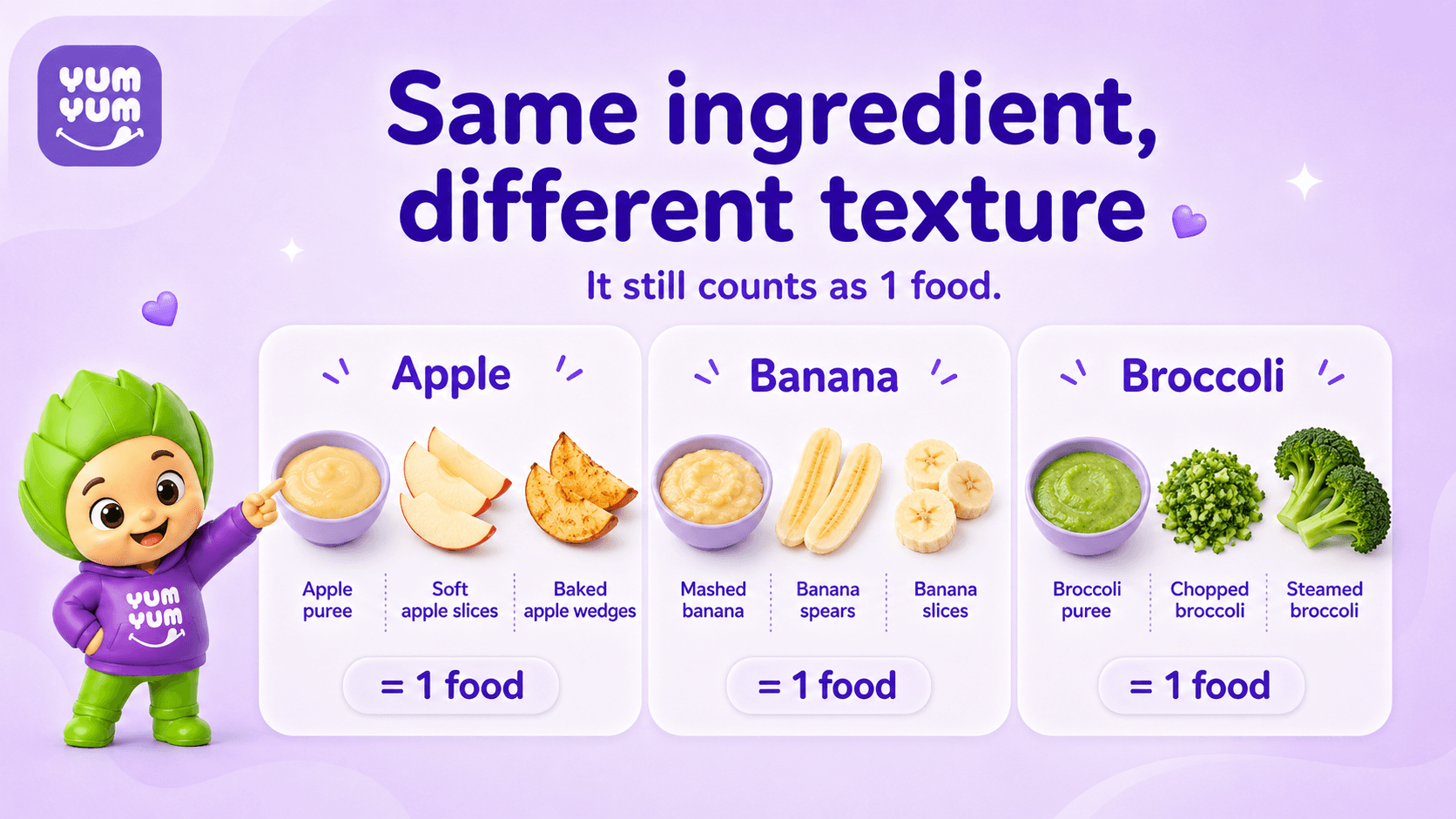
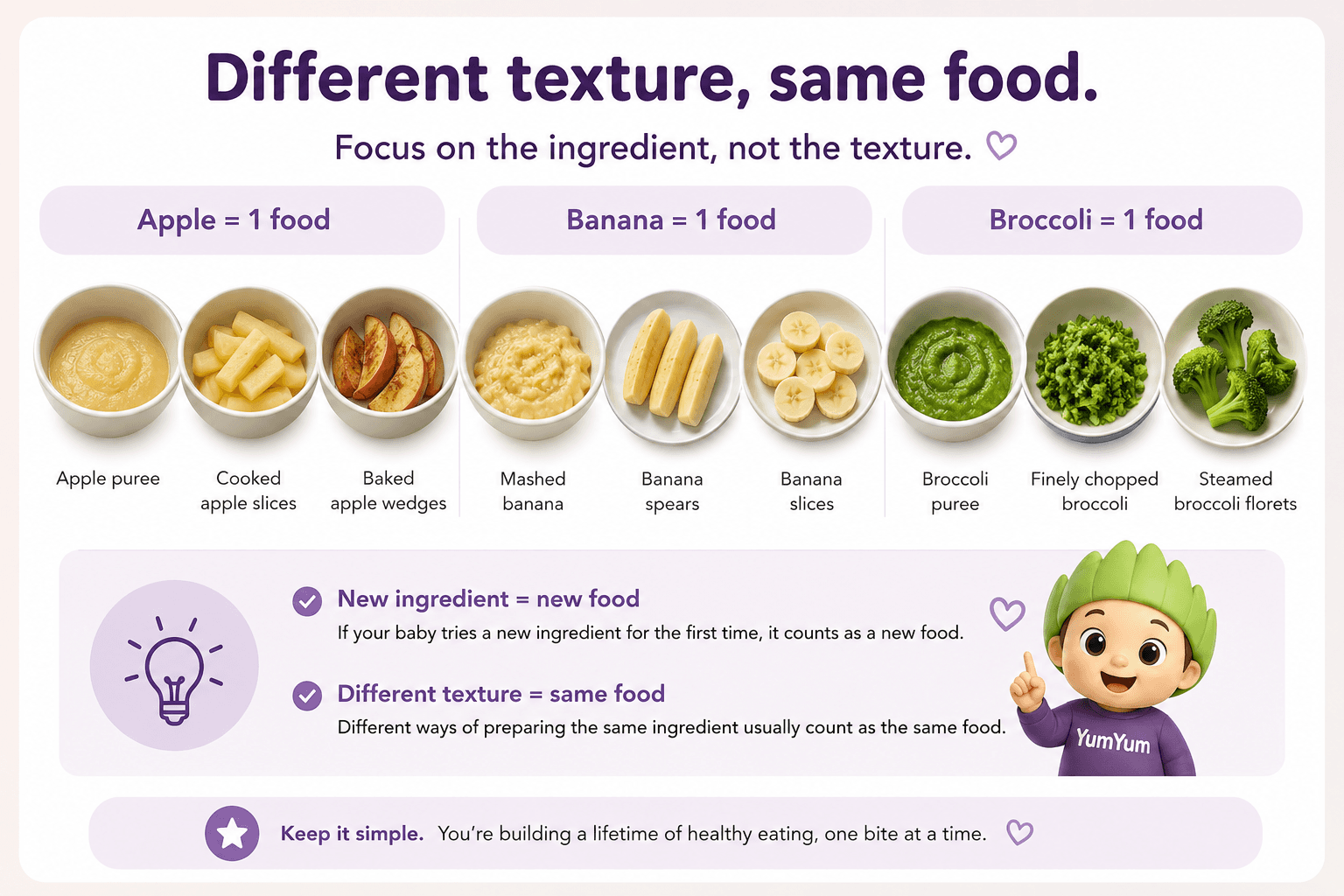
Different textures usually do not need to count as separate foods.
For example:
Apple may be served as:
puree
soft cooked slices
baked wedges
grated apple
thin slices for older babies
But it is still apple.
Banana may be served as:
mashed banana
banana spears
banana slices
banana mixed into oatmeal
But it is still banana.
Broccoli may be served as:
puree
finely chopped broccoli
steamed florets
broccoli mixed into eggs or pasta
But it is still broccoli.
Texture matters for safety and development, but for tracking first foods, it is usually the same ingredient.
What About Mixed Foods?
Mixed foods can be a little more confusing.
A good rule is:
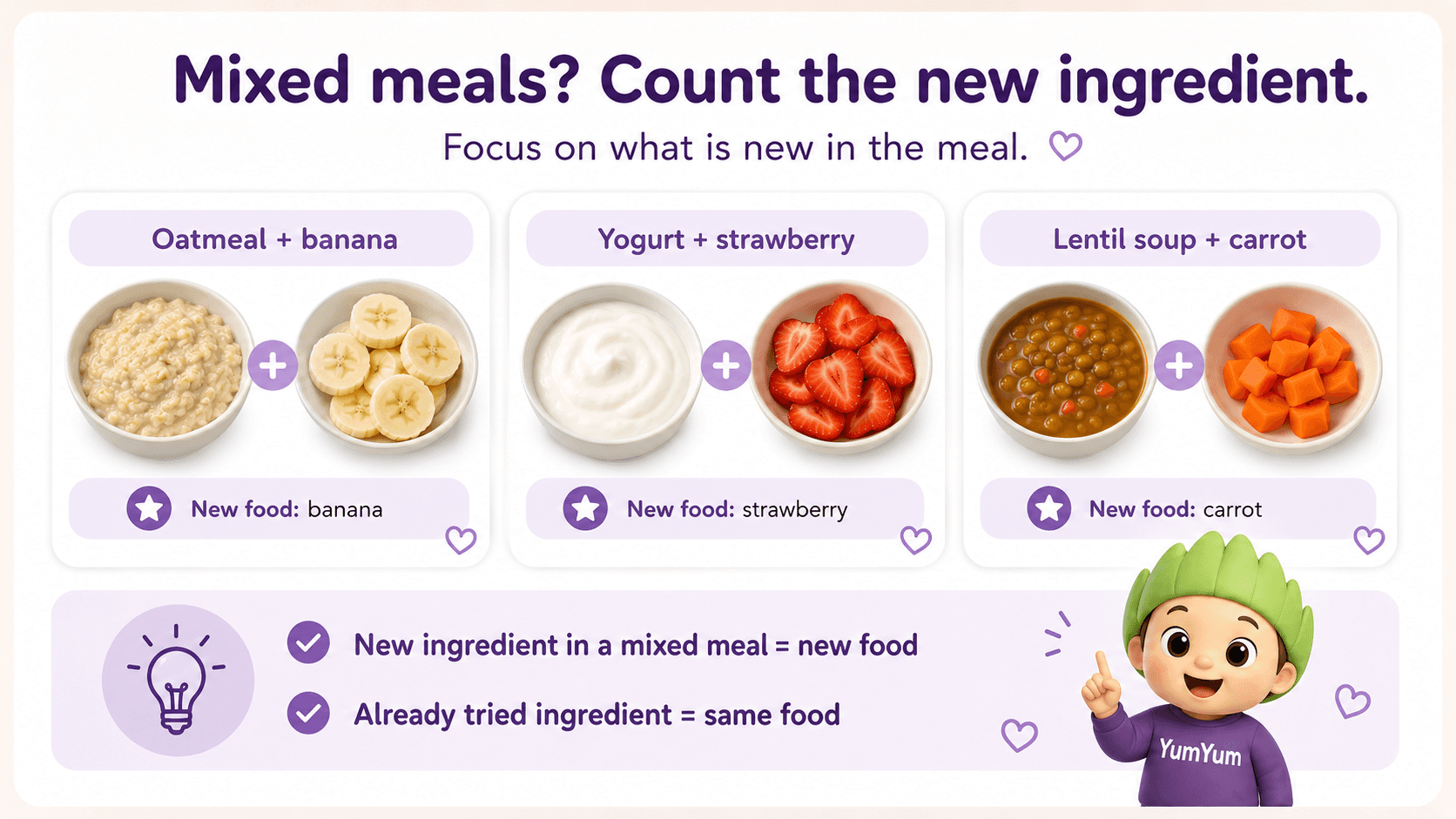
If a meal includes a new ingredient, count the new ingredient separately.
For example:
Example 1: Oatmeal with banana
If baby has already tried oatmeal but has never tried banana:
Oatmeal = already tried
Banana = new food
So you would add banana as the new food.
Example 2: Yogurt with strawberry
If baby has tried yogurt before but strawberry is new:
Yogurt = already tried
Strawberry = new food
So you would add strawberry.
Example 3: Lentil vegetable soup
If the soup includes lentils, carrot, celery, and potato, and some of those are new, you may want to track each new ingredient separately.
For early solids, many parents find it easier to introduce simple foods first, then combine them later.
What About Allergens?
Common allergens are often tracked carefully because parents may want to notice reactions and remember when each one was introduced.
Examples of common allergen foods include:
egg
peanut
tree nuts
milk
wheat
soy
fish
shellfish
sesame
When introducing allergens, many parents prefer to track them clearly in a baby food log, especially if there is a family history of allergies or if their pediatrician has given specific guidance.
If your baby has a reaction or you are unsure about a symptom, contact your pediatrician.
Should You Count Spices and Herbs?
Usually, small amounts of herbs and spices do not need to be counted the same way as core foods, unless you personally want to track them.
For example:
cinnamon in oatmeal
parsley in soup
basil in pasta
garlic in a vegetable dish
These can be helpful for flavor exposure, but most parents focus their “first foods” list on main ingredients.
Still, if your goal is to track everything your baby has tasted, you can include herbs and spices too.
Should Water Count as a Food?
No. Water does not usually count as a first food.
It can be part of learning to drink from an open cup or straw cup, but it is not counted as a food in a first foods tracker.
Why Tracking First Foods Can Help
Tracking first foods is not about being perfect.
It helps you:
remember what your baby has already tried
notice variety over time
track possible reactions
feel more confident with new foods
build a balanced food journey
celebrate small wins
Starting solids can feel overwhelming, especially in the beginning. A simple tracker can make the process feel calmer and more organized.
How YumYum Helps Track First Foods
YumYum is designed to help parents track their baby’s food journey in a simple, visual way.
You can use YumYum to:
log foods your baby has tried
track baby’s first 100 foods
save favorite foods
note reactions and sensitivities
follow progress over time
discover food ideas by category
The goal is not pressure.
The goal is confidence.
One new food at a time.
One tiny step at a time.
One bite at a time.
Quick Summary
What counts as a new food for babies?
A new food usually means a new ingredient your baby has not tried before.
Different textures or preparations usually count as the same food.
For example:
Apple puree and baked apple = apple
Mashed banana and banana spears = banana
Broccoli puree and steamed broccoli = broccoli
If a meal has multiple ingredients, track the new ingredients separately.
FAQ: What Counts as a New Food?
Does mashed banana and banana spears count as two foods?
No. They are usually counted as the same food: banana. The texture is different, but the ingredient is the same.
Does cooked apple and raw apple count separately?
Usually no. Both are apple. However, the serving method should still be age-appropriate and safe for your baby.
Does a puree count as a food?
Yes. If your baby tries apple puree for the first time, apple can count as a new food.
Do mixed recipes count as one food or many?
It depends on the ingredients. If the recipe includes new ingredients, you can track each new ingredient separately.
Should I count allergens separately?
Yes, it is helpful to track allergen foods clearly, especially foods like egg, peanut, milk, wheat, soy, fish, shellfish, sesame, and tree nuts.
Do spices count as first foods?
Usually parents focus on main ingredients first. But you can track herbs and spices if you want a more detailed food history.
What if my baby spits the food out?
It can still count as exposure. Babies often need repeated opportunities to explore a new food before accepting it.
What if my baby only touches or licks the food?
That is still part of learning. You may choose to mark it as “offered” or “tried,” depending on how you track foods.
How many first foods should a baby try?
There is no perfect number. Some families enjoy tracking milestones like the first 25, 50, or 100 foods as a fun way to encourage variety.
Continue Learning
Starting solids is easier when you have simple guidance in one place.
Explore more YumYum guides: