Starting Solids: Simple Baby Feeding Rules Every Parent Should Know
Starting Solids: Simple Baby Feeding Rules Every Parent Should Know
Starting solids can feel exciting, confusing, and a little scary all at once.
One day your baby is only drinking breast milk or formula, and suddenly you are thinking about bananas, broccoli, eggs, allergens, gagging, choking, textures, mess, and whether your baby has eaten “enough.”
The good news: starting solids does not need to be perfect.
Your baby is learning. You are learning too.
This guide brings together the most important baby feeding rules in one calm, practical place.
Important note: this article is for general education only and is not medical advice. Always speak with your pediatrician or health professional if your baby was born premature, has feeding difficulties, allergies, medical conditions, poor growth, or if you are unsure whether your baby is ready.
When can babies start solids?
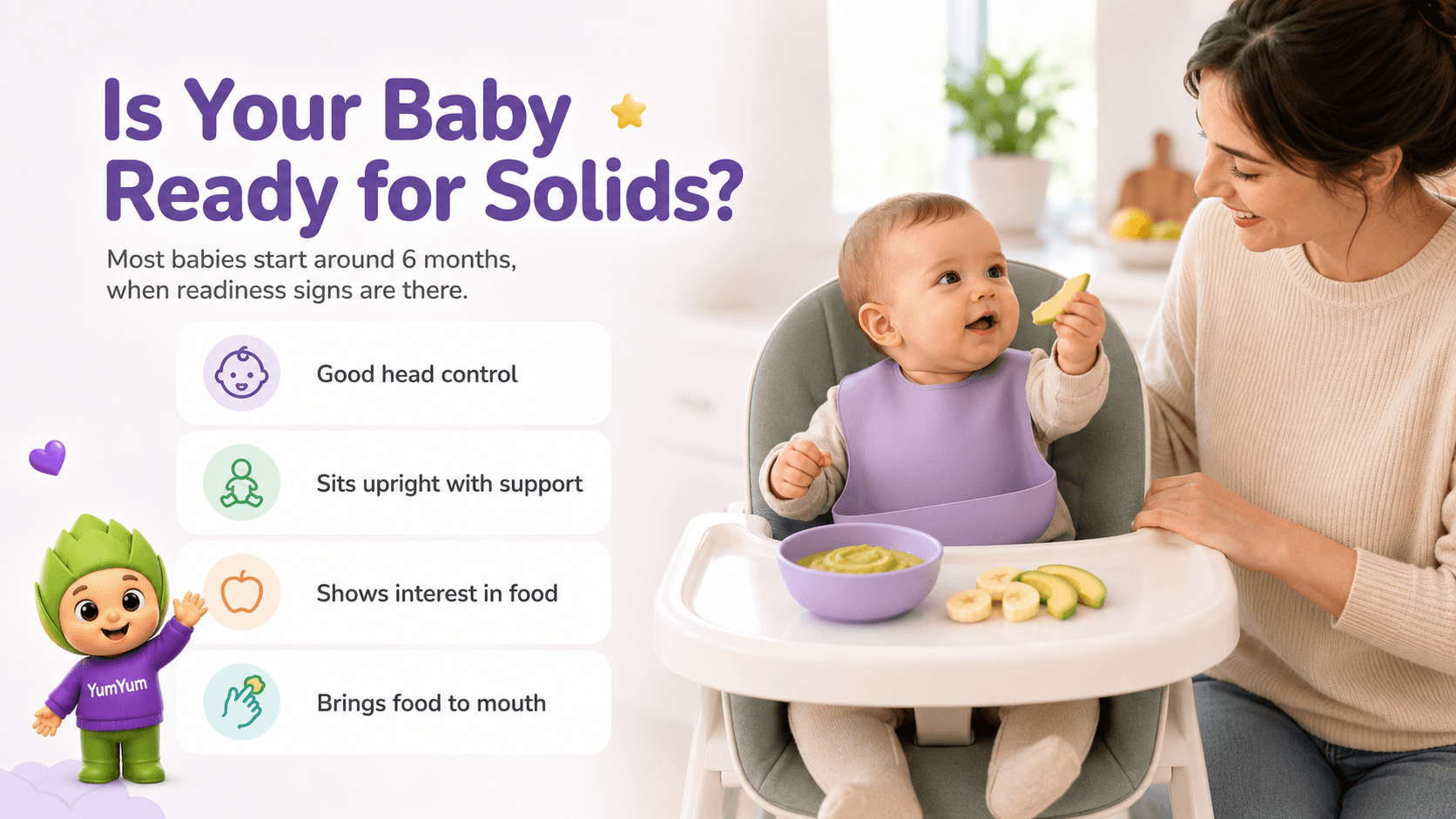
Most babies are ready to begin solid foods around 6 months old.
Age matters, but readiness matters too. Your baby should show signs that their body is ready to handle food safely.
Common readiness signs include:
good head and neck control
sitting upright with support
showing interest in food
bringing objects toward the mouth
opening the mouth when food is offered
being able to move food back and swallow, rather than pushing everything out with the tongue
Try not to rush. Starting earlier does not mean your baby will eat better. Starting when your baby is developmentally ready makes the process calmer and safer.
Rule 1: Start small
At the beginning, your baby may only eat a tiny amount.
That is normal.
A few tastes, a spoonful or two, or a small amount of soft food can be enough at first. In the early days, solids are mostly about learning:
new textures
new smells
new flavors
how to move food in the mouth
how to pick up food
how mealtimes work
Your baby does not need to finish the plate.
Rule 2: Breast milk or formula still matters
When solids begin, breast milk or infant formula remains an important part of your baby’s nutrition.
Solid food gradually becomes a bigger part of the diet over time. In the beginning, think of solids as practice, exploration, and learning — not a full replacement for milk feeds.
Rule 3: Sit baby upright and stay close
Always feed your baby while they are sitting upright and well supported.
A safe mealtime setup means:
baby is seated upright
baby is supported in a high chair
baby is awake and alert
an adult stays close
no eating while lying down, crawling, walking, playing, or in the car seat
no unsupervised meals
Supervision is one of the most important safety rules.
Rule 4: Texture matters
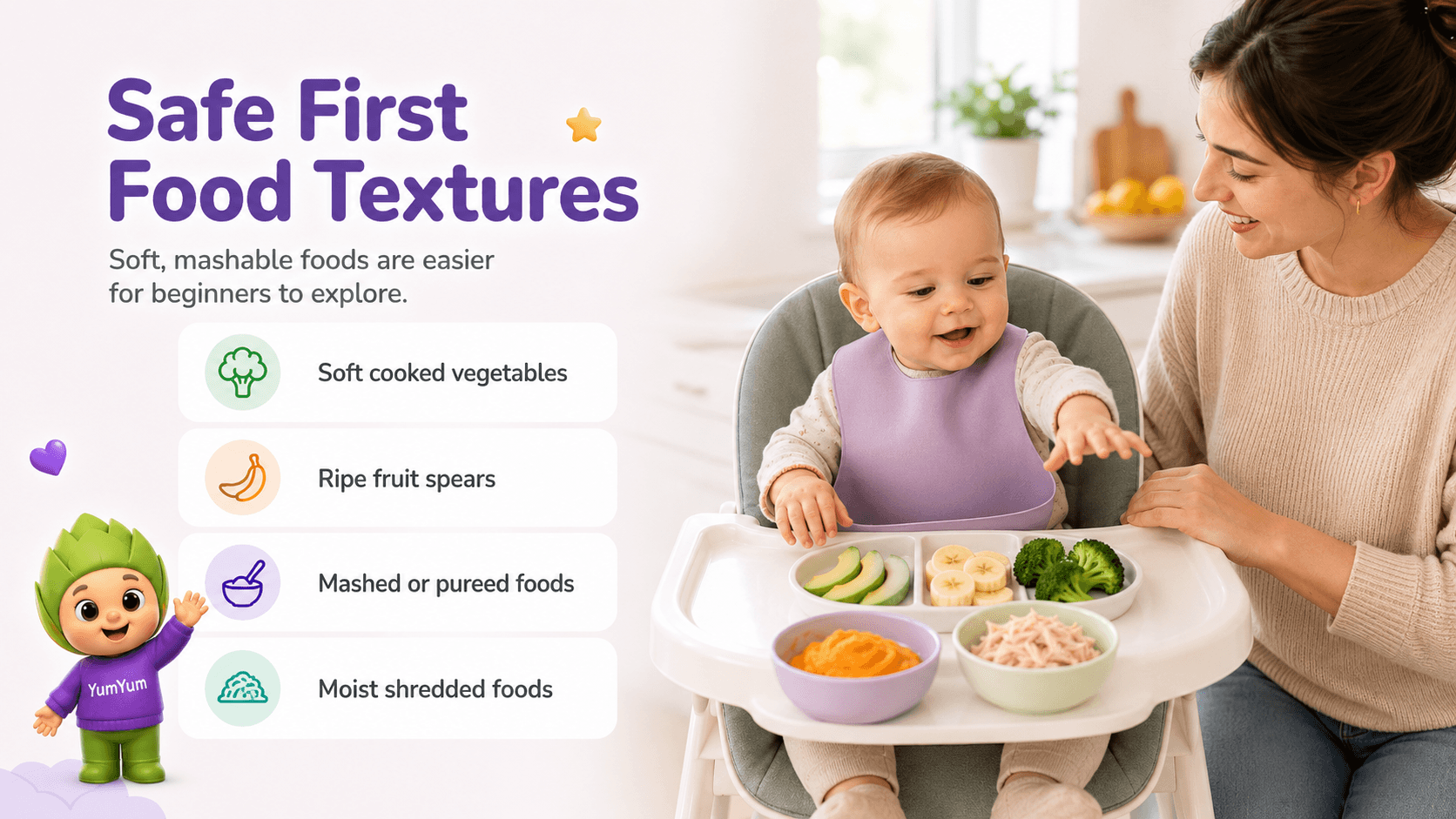
For early eaters, food should usually be soft enough to mash between your fingers.
Good beginner textures include:
smooth puree
mashed food
soft cooked vegetables
soft ripe fruit
moist shredded meat
soft omelet strips
soft pasta
thick yogurt
soft lentil mash
Be careful with foods that are:
hard
round
sticky
slippery
dry
tough
small and firm
difficult to chew
The same food can be safe or unsafe depending on how it is prepared.
For example:
raw hard apple chunks are risky for a beginner
peeled apple cooked until very soft can be more appropriate
whole grapes are unsafe
grapes cut lengthwise into quarters are safer for older babies and toddlers
thick peanut butter by the spoonful is risky
peanut butter thinned into yogurt or spread very thinly can be safer
Rule 5: Avoid common choking hazards
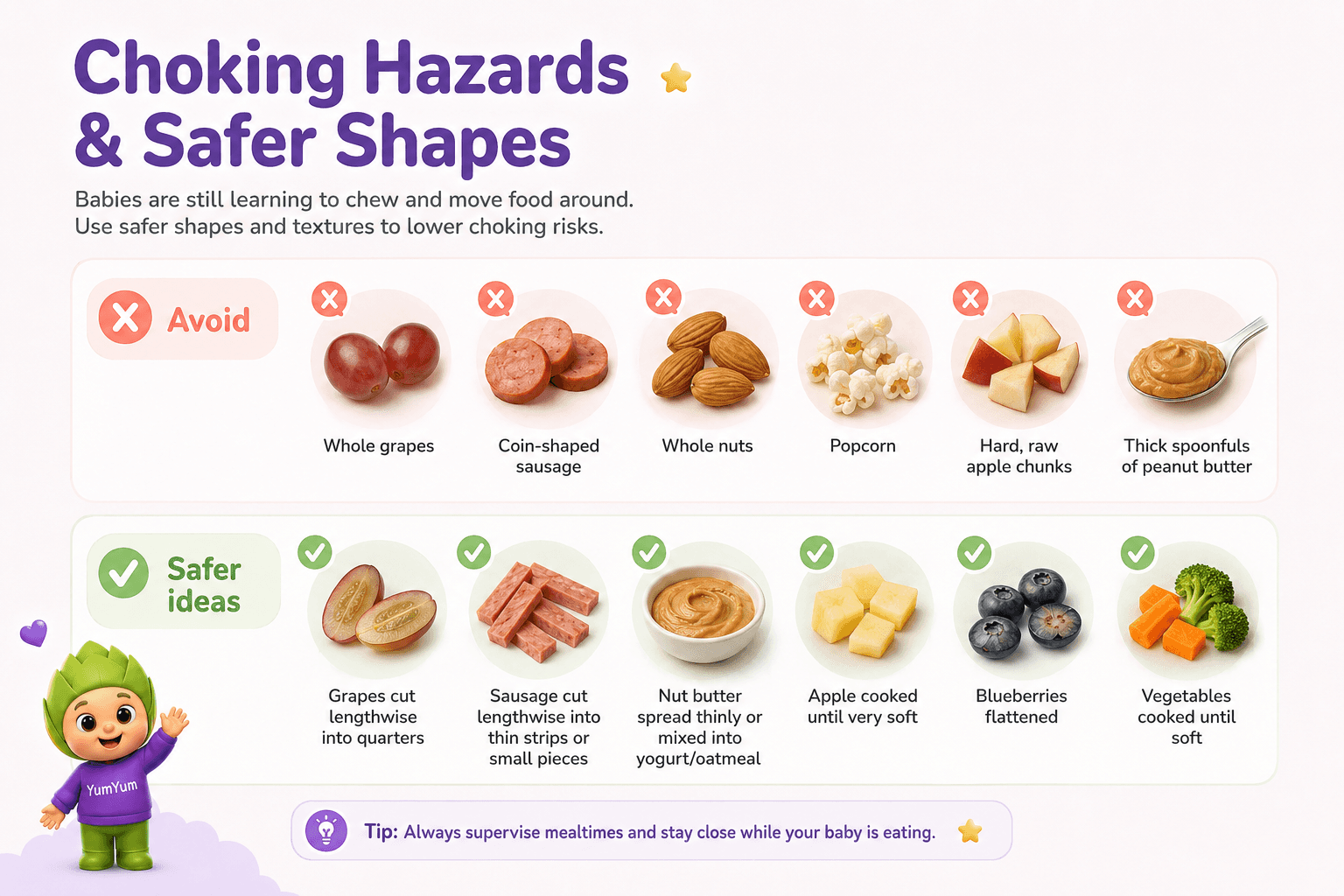
Some foods are risky because of their shape, size, or texture.
Be especially careful with:
whole grapes
whole cherry tomatoes
whole nuts
popcorn
hard raw carrot
hard raw apple chunks
chunks of meat or cheese
sausages or hot dogs cut into coin shapes
thick globs of nut butter
hard candy
sticky candy
large dry pieces of food
Many foods can be made safer by changing the shape or texture:
cook until soft
mash
flatten
shred
slice lengthwise
cut into age-appropriate pieces
add moisture with sauce, yogurt, broth, or puree
Rule 6: Gagging and choking are not the same
Gagging can happen when babies are learning to manage food. It may look scary, but it can be part of learning.
Gagging is often noisy. Your baby may cough, retch, push food forward with the tongue, or have watery eyes.
Choking is different. Choking can be silent and needs immediate action.
Because choking is serious, parents and caregivers should learn infant first aid and choking response from a qualified source or local health provider.
The goal is not to avoid all texture forever. The goal is to offer safe, age-appropriate textures while always supervising closely.
Rule 7: Introduce allergens in safe forms
Common allergens include:
egg
peanut
tree nuts
milk
wheat
soy
fish
shellfish
sesame
Many families introduce allergens once baby is ready for solids, using safe forms and small amounts.
Examples of safer forms:
well-cooked soft egg
smooth peanut butter thinned into yogurt or oatmeal
plain full-fat yogurt
soft fish with all bones removed
hummus or sesame-containing foods if appropriate for your family
Avoid unsafe forms such as whole nuts, thick nut butter, hard pieces, or dry sticky textures.
If your baby has eczema, a known allergy, or a strong family allergy history, speak with your pediatrician before introducing allergens.
Rule 8: No honey before 12 months
Do not give honey to babies under 12 months.
This includes honey added to food, drinks, pacifiers, baked goods, cereals, snacks, or yogurt.
Honey can carry bacteria that may cause infant botulism, which can be very serious for babies.
Rule 9: Limit salt and added sugar
Babies do not need added salt or added sugar.
Try to avoid:
salty sauces
processed meats
salty snacks
sugary yogurts
sweetened baby desserts
juice
added sugar in everyday foods
Flavor does not have to mean sugar or salt. You can use gentle herbs, spices, fruit, vegetables, healthy fats, and natural food flavors.
Rule 10: Messy eating is learning
Messy meals can feel stressful.
But for babies, touching, squishing, smelling, licking, and exploring food is part of learning.
Messy eating helps babies learn:
texture
temperature
smell
grip
hand-to-mouth coordination
confidence around food
Your baby is not “just making a mess.”
They are learning how food works.
Rule 11: Follow hunger and fullness cues
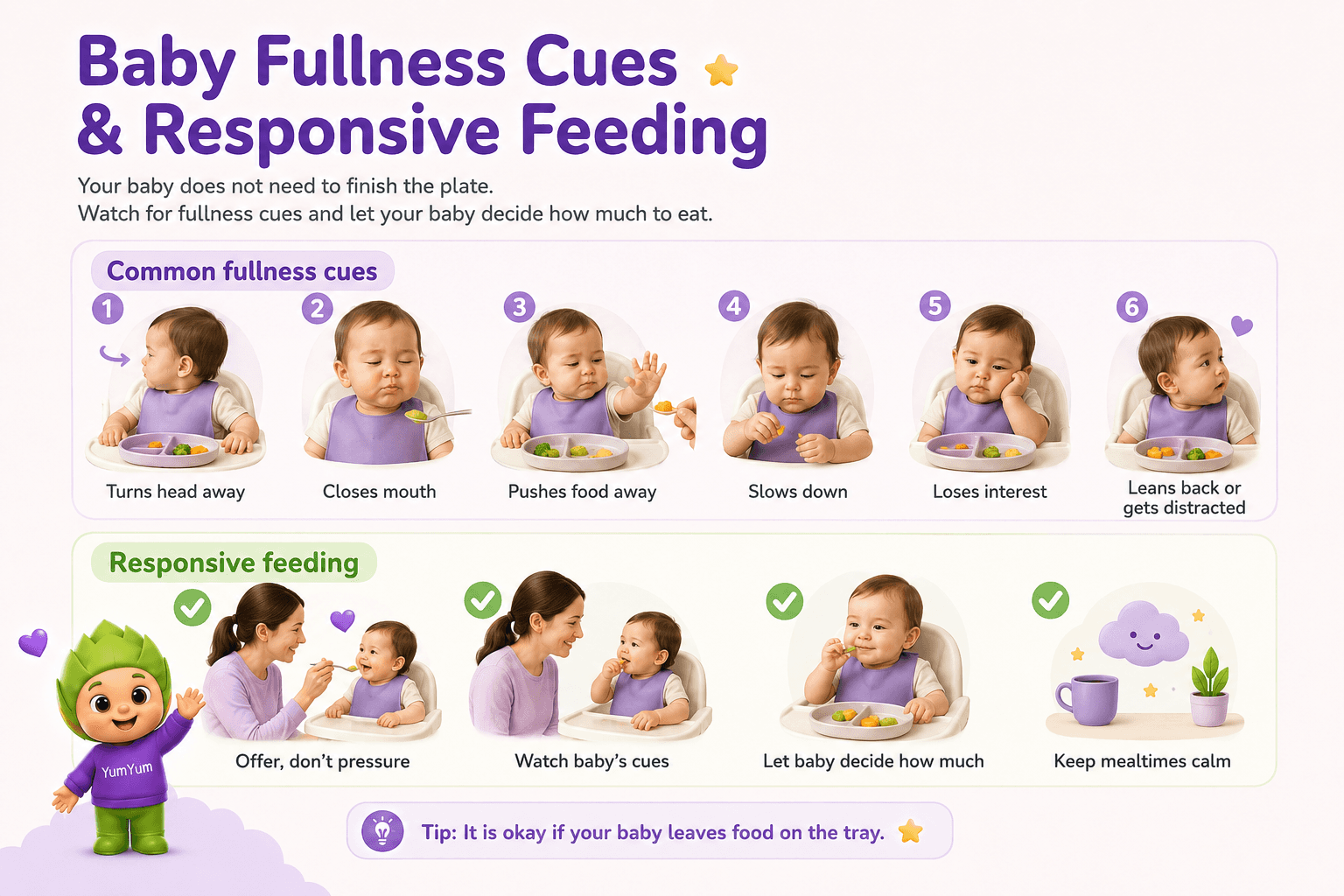
Your baby does not need to finish the plate.
Fullness cues may include:
turning the head away
closing the mouth
pushing food away
slowing down
becoming distracted
losing interest
leaning back
refusing more food
Hunger cues may include:
leaning toward food
opening the mouth
reaching for food
showing excitement when food is offered
continuing to eat calmly
Responsive feeding means you offer food, but your baby decides how much to eat.
Rule 12: Repetition is normal
Babies often need to see, touch, smell, and taste a food many times before they accept it.
One refusal does not mean your baby hates that food forever.
Try offering foods again in different ways:
mashed
sliced
cooked softer
mixed with another familiar food
served at a different time of day
offered without pressure
Progress is not always linear.
Rule 13: Variety matters over time
You do not need to offer everything at once.
Over time, try to include a variety of:
vegetables
fruits
grains
legumes
meat
fish
eggs
dairy foods
healthy fats
herbs and mild spices
Iron-rich foods are especially important around the start of solids.
Examples include:
meat
fish
egg
lentils
beans
iron-fortified cereals
tofu
nut or seed butters in safe forms
Rule 14: BLW and purees can work together
You do not have to choose one “perfect” feeding style.
Some families use baby-led weaning.
Some families use purees.
Many families use both.
A mixed approach can be practical and flexible.
The most important things are:
safe texture
safe shape
baby sitting upright
close supervision
no pressure
responsive feeding
calm mealtimes
Rule 15: Track what your baby tries
Tracking first foods can help you remember:
what your baby tried
when they tried it
how it was served
whether they liked it
possible reactions
allergens introduced
foods to repeat
progress over time
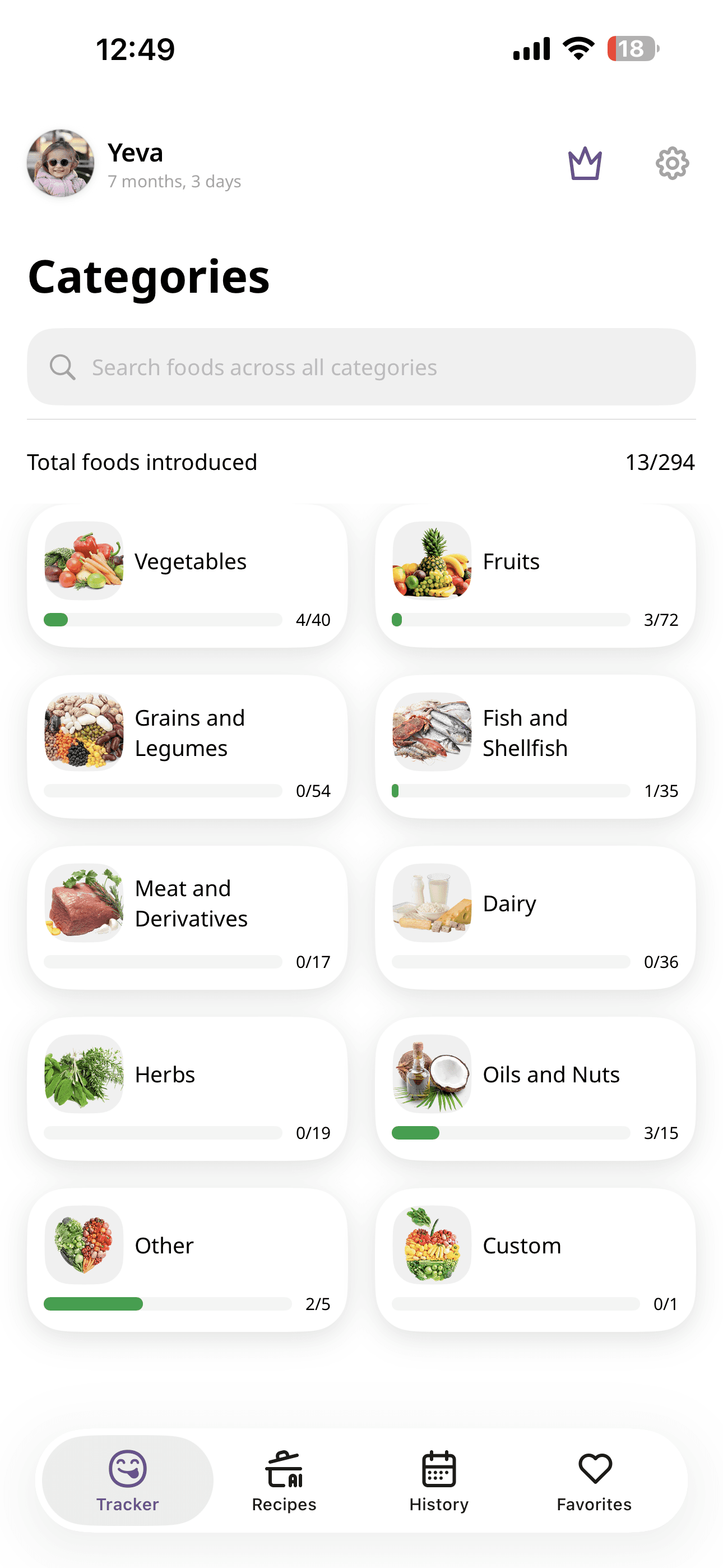
This is where YumYum can help.
YumYum helps parents track first foods, follow progress, save notes, and feel more organized during the starting-solids journey.
Simple first-food examples
Here are a few examples of how the same food can be served more safely:
Apple:
For beginners, avoid raw hard apple chunks. Serve peeled apple cooked until very soft.
Banana:
For beginners, half a ripe banana with some peel left on can make it easier to hold.
Avocado:
Serve ripe avocado spears. If slippery, roll lightly in ground oats or another safe coating for grip.
Carrot:
Avoid raw hard carrot sticks. Cook until very soft.
Broccoli:
Steam until soft and offer a large floret with a soft stem as a handle.
Egg:
Serve well-cooked soft egg, such as omelet strips or soft scrambled egg.
Peanut butter:
Never serve thick spoonfuls. Thin it into yogurt, oatmeal, or spread very thinly.
Grapes:
Never serve whole grapes. Cut lengthwise into quarters when appropriate for your child’s stage.
Blueberries:
For beginners, flatten or smash blueberries.
Chicken:
Keep chicken moist and soft. Dry chunks can be difficult for babies to manage.
A simple starting-solids checklist
Before starting:
Baby is around 6 months
Baby has good head control
Baby can sit with support
Baby shows interest in food
You have a safe high chair setup
You know basic choking safety
You are ready to supervise closely
At each meal:
Baby sits upright
Food is soft and age-appropriate
Round foods are modified
Hard foods are cooked or avoided
Sticky foods are thinned or spread thinly
No honey under 12 months
No pressure to finish
Follow hunger and fullness cues
Expect mess
Track new foods if helpful
Final thoughts
Starting solids is not about perfect meals.
It is about helping your baby safely explore real food, build confidence, and learn one small step at a time.
Some days your baby may eat a lot.
Some days they may only touch the food.
Some days they may refuse something they liked yesterday.
That is normal.
Stay close. Keep food safe. Follow your baby’s cues. Let it be messy. Let it be slow.
And if you want a simple way to track first foods, progress, and mealtime notes, YumYum is here to help.
Track your baby’s first foods with YumYum.
Search “YumYum BLW” in the App Store.
Learn more in our First 100 Foods Guide
If you are just starting solids, read our BLW First Foods Guide
To choose safe textures by age, visit our Safe Serving by Age
This guide is for general educational purposes only and is not a substitute for medical advice. Always speak with your pediatrician or healthcare professional if you have concerns about your baby’s feeding, allergies, growth, development, or safety.
Sources and further reading
This article is for general education only and is not medical advice. For personal feeding concerns, allergies, growth issues, prematurity, or medical conditions, speak with your pediatrician or healthcare professional.
Centers for Disease Control and Prevention (CDC)
“When, What, and How to Introduce Solid Foods”
https://www.cdc.gov/infant-toddler-nutrition/foods-and-drinks/when-what-and-how-to-introduce-solid-foods.html
CDC
“Choking Hazards”
https://www.cdc.gov/infant-toddler-nutrition/foods-and-drinks/choking-hazards.html
CDC
“Foods and Drinks to Avoid or Limit”
https://www.cdc.gov/infant-toddler-nutrition/foods-and-drinks/foods-and-drinks-to-avoid-or-limit.html
NHS
“Your baby’s first solid foods”
https://www.nhs.uk/baby/weaning-and-feeding/babys-first-solid-foods/
NHS
“Choking and gagging on food”
https://www.nhs.uk/best-start-in-life/baby/weaning/safe-weaning/choking-and-gagging-on-food/
HealthyChildren.org / American Academy of Pediatrics
“Choking Prevention for Babies & Children”
https://www.healthychildren.org/english/health-issues/injuries-emergencies/pages/choking-prevention.aspx
HealthyChildren.org / American Academy of Pediatrics
“Baby-Led Weaning: Is It Safe?”
https://www.healthychildren.org/English/ages-stages/baby/feeding-nutrition/Pages/baby-led-weaning-is-it-safe.aspx