Soft First Foods for Babies: 15 Gentle Ideas to Start Solids
Soft First Foods for Babies: 15 Gentle Ideas to Start Solids
Starting solids is a big milestone — and it can feel a little overwhelming at first.
You may wonder:
What foods are safe?
Should I start with purées or finger foods?
How soft should baby food be?
What if my baby only touches the food and does not eat much?
The good news: first foods do not need to be complicated. Soft, simple foods can help your baby explore new tastes, textures, and feeding skills at their own pace.
Many babies begin solid foods around 6 months, when they show signs of developmental readiness. The CDC says children can begin eating solid foods at about 6 months, while introducing foods before 4 months is not recommended. (CDC)
This guide shares gentle soft first foods for babies, plus easy serving ideas for baby-led weaning, purées, and mixed feeding.
What makes a good soft first food?
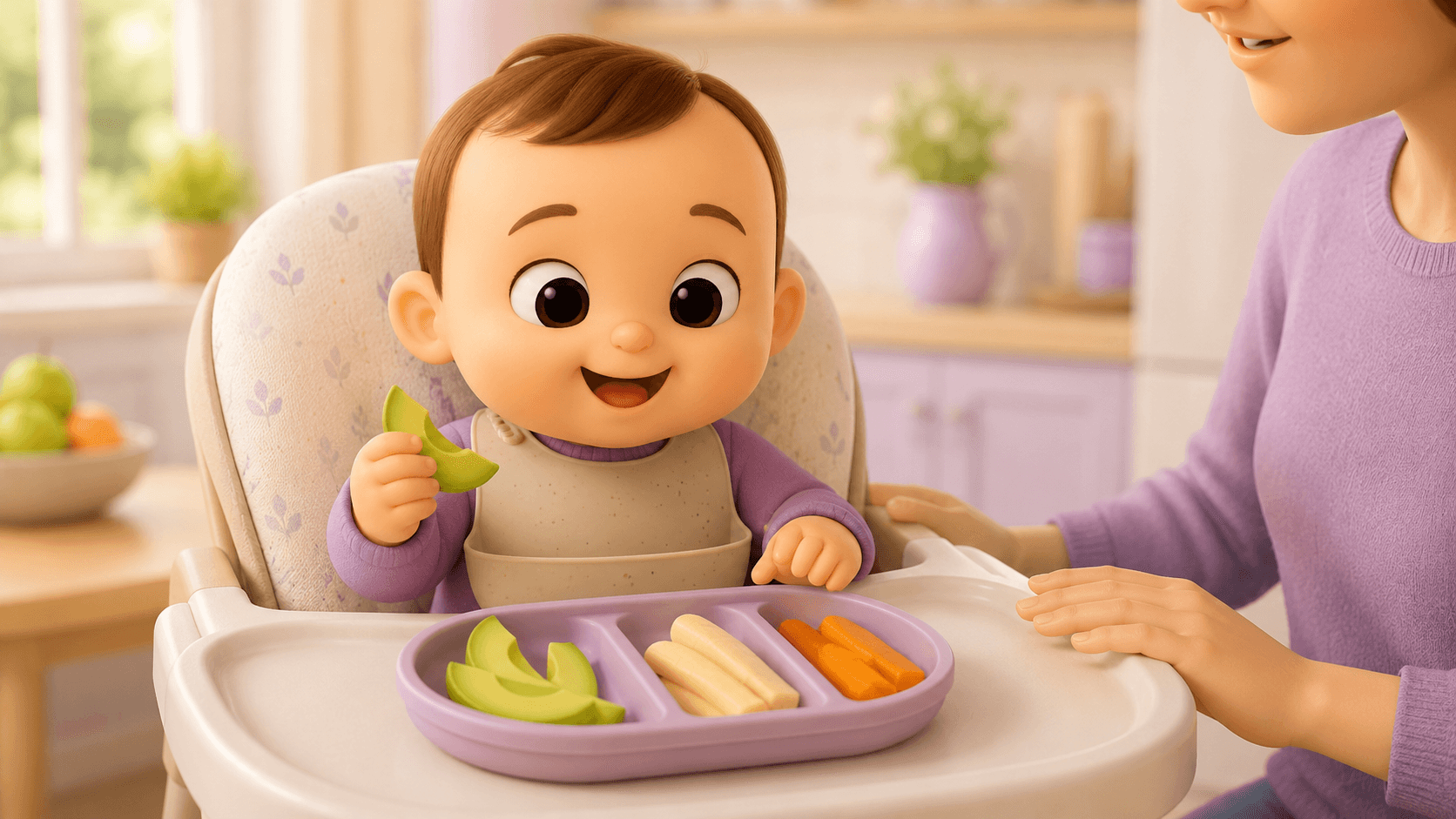
A good soft first food is usually:
easy to mash between your fingers
mild enough for early exploration
simple to prepare
easy to serve as a purée, mash, or soft finger food
not hard, round, sticky, or tough
For babies starting solids, texture matters. The NHS notes that after starting solid foods around 6 months, babies can gradually move from puréed or blended foods to mashed, lumpy, or finger foods as soon as they can manage them. (nhs.uk)
Soft foods are helpful because they let babies practice chewing motions, moving food around their mouth, and exploring textures safely.
Before you start: signs of readiness
Age is only part of the picture. Your baby should also show signs that they are ready for solids.
Common readiness signs include:
sitting with support and holding their head steady
showing interest in food
opening their mouth when food is offered
bringing objects or food toward their mouth
being able to swallow food rather than pushing everything out
If you are unsure whether your baby is ready, speak with your pediatrician.
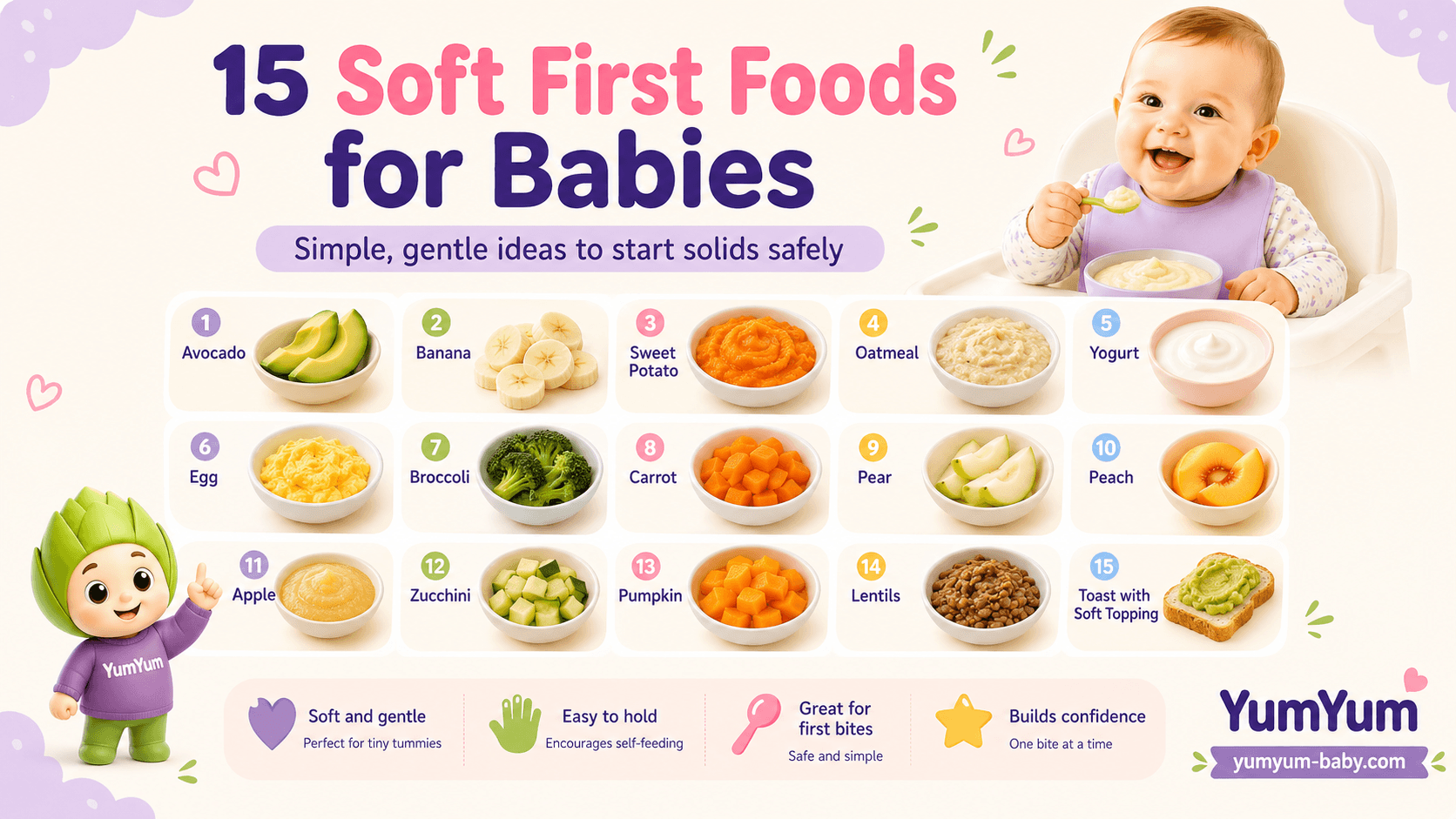
15 soft first foods for babies
1. Avocado
Avocado is one of the easiest first foods. It is naturally soft, creamy, and rich in healthy fats.
How to serve it
For purées: mash avocado with a fork until smooth.
For BLW: offer thick avocado wedges with a little texture on the outside so they are easier to grip.
For mixed feeding: preload a spoon with mashed avocado and let your baby bring it to their mouth.
YumYum tip
Log avocado as one of your baby’s first foods and note whether they liked the texture, taste, or temperature.
2. Banana
Banana is soft, sweet, and easy to prepare. It is also a useful food for practicing self-feeding.
How to serve it
For purées: mash banana until smooth.
For BLW: offer a long banana spear or a section with part of the peel left on as a handle.
For older babies: offer small soft pieces when they are ready for more precise picking up.
Safety note
Banana can be slippery. Roll pieces in finely ground oats or crushed cereal to make them easier to hold.
3. Sweet potato
Sweet potato is gentle, naturally sweet, and easy to mash.
How to serve it
Steam or roast until very soft.
Mash with a fork for spoon-feeding.
Cut into thick soft wedges for BLW.
Serve as a smooth purée or a thicker mash.
Why parents like it
Sweet potato works well with many other foods, including lentils, chicken, yogurt, avocado, and mild spices.
4. Oatmeal
Oatmeal is warm, soft, and easy to adjust in texture.
How to serve it
Cook oats until soft.
Blend if your baby prefers a smoother texture.
Serve thicker oatmeal on a preloaded spoon.
Mix with mashed fruit, yogurt, or nut butter thinned safely.
Good pairings
Banana, pear, berries, apple purée, yogurt, or cinnamon.
5. Yogurt
Plain full-fat yogurt can be a simple soft food for babies, depending on your pediatrician’s guidance and your baby’s needs.
How to serve it
Offer plain yogurt on a spoon.
Mix with mashed fruit.
Use it as a dip for soft finger foods.
Serve with oatmeal or soft fruit.
What to choose
Choose plain yogurt without added sugar. Avoid sweetened yogurts marketed as dessert-style products.
6. Egg
Egg is soft, nutrient-dense, and versatile. It is also a common allergen, so introduce it thoughtfully.
How to serve it
Offer soft scrambled egg pieces.
Cut omelet into soft strips.
Mash hard-boiled egg with yogurt or avocado.
Serve fully cooked egg in small, manageable pieces.
Allergy note
If your baby has eczema, known allergies, or a higher allergy risk, ask your pediatrician about the best way to introduce egg and other allergens.
7. Broccoli
Broccoli can be a great first vegetable when cooked until soft.
How to serve it
Steam broccoli until the stem is soft enough to mash between your fingers.
Offer a large soft floret with the stem as a handle.
Finely chop cooked broccoli into egg, lentils, or pasta.
Blend into a green purée with potato or peas.
Texture tip
Very soft is key. Firm broccoli stems can be difficult for early eaters.
8. Carrot
Carrot is familiar, mild, and easy to serve safely when cooked well.
How to serve it
Steam or roast carrot until very soft.
Mash into a purée.
Offer thick soft sticks for BLW.
Mix mashed carrot with lentils, sweet potato, or chicken.
Safety note
Do not offer raw carrot sticks to babies. Raw hard vegetables can be choking hazards. The AAP lists raw vegetables among foods to avoid for babies because they can be choking risks. (HealthyChildren.org)
9. Pear
Ripe pear can be soft, juicy, and easy to mash.
How to serve it
Serve very ripe pear mashed.
Steam firmer pear until soft.
Offer soft pear slices when baby is ready.
Mix pear into oatmeal or yogurt.
Good to know
Pear can be slippery, so larger soft pieces may be easier for BLW than tiny cubes at the beginning.
10. Peach
Peach is soft, sweet, and easy to blend or mash when ripe.
How to serve it
Offer mashed ripe peach.
Steam if needed to soften.
Serve soft slices with skin removed if it feels tough.
Mix with yogurt or oatmeal.
Texture tip
Choose ripe fruit that gives slightly when pressed.
11. Apple
Apple can be a first food, but it must be prepared safely.
How to serve it
Cook apple until very soft.
Mash or blend into applesauce.
Offer soft cooked apple wedges.
Mix with oatmeal or yogurt.
Safety note
Avoid raw apple chunks for babies. The AAP specifically lists fruit chunks, such as apple chunks, among choking hazards for babies. (HealthyChildren.org)
12. Zucchini
Zucchini is mild, soft, and easy to pair with other foods.
How to serve it
Steam or roast until soft.
Offer soft spears for BLW.
Mash with potato, carrot, or lentils.
Finely chop into egg or pasta.
Parent-friendly idea
Zucchini is a good “bridge” vegetable because it blends easily into meals without a strong flavor.
13. Pumpkin
Pumpkin is smooth, mild, and naturally sweet.
How to serve it
Steam or roast until soft.
Mash into a thick purée.
Mix with lentils, yogurt, or oatmeal.
Offer soft roasted strips if they hold together well.
Good pairings
Lentils, chicken, cinnamon, yogurt, or olive oil.
14. Lentils
Lentils are soft when cooked and can be served many ways.
How to serve it
Cook until very soft.
Mash with a fork.
Blend into a smooth purée.
Serve as a thick lentil mash on a preloaded spoon.
Mix with tomato, carrot, or sweet potato.
Why they are useful
Lentils are affordable, easy to batch cook, and work well for both spoon-feeding and BLW-style meals.
15. Toast with a soft topping
Toast can help babies practice holding food, but it should be prepared thoughtfully.
How to serve it
Use lightly toasted bread cut into strips.
Spread a thin layer of soft topping.
Try avocado, hummus, yogurt, mashed beans, ricotta, or smooth nut butter thinned safely.
Safety note
Avoid thick sticky spreads. The AAP lists chunks of peanut butter as a choking hazard for babies. (HealthyChildren.org)
BLW, purées, or both?
You do not need to choose one method forever.
Some families start with smooth purées.
Some start with soft finger foods.
Many do both.
The NHS explains that some babies like mashed, lumpy, or finger foods from the start, while others need more time and may prefer smooth or blended foods on a spoon at first. (nhs.uk)
A mixed approach can look like:
mashed avocado on a spoon
soft sweet potato wedges on the tray
oatmeal on a preloaded spoon
steamed broccoli florets for exploring
yogurt as a dip for soft foods
The goal is not to follow a perfect method. The goal is to offer safe, appropriate foods and let your baby build skills over time.
Safety tips for soft first foods
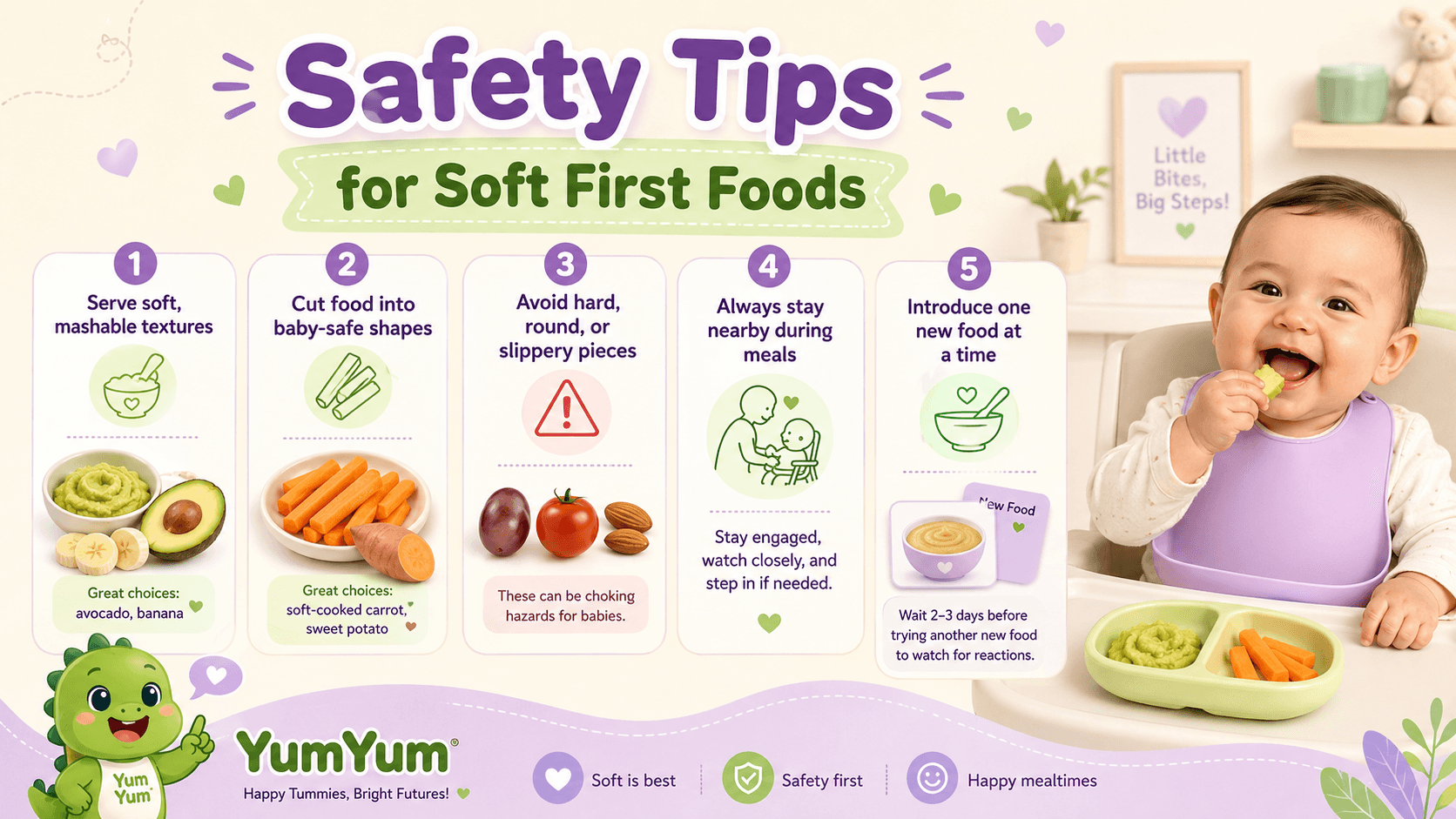
Soft does not automatically mean safe. Shape, size, texture, and supervision still matter.
The CDC recommends avoiding small, sticky, or hard foods that are difficult for young children to chew and swallow. (CDC)
Keep these basics in mind:
Always supervise meals.
Keep your baby seated upright.
Serve foods soft enough to mash between your fingers.
Avoid hard, round, sticky, or tough foods.
Modify common choking hazards.
Avoid whole grapes, popcorn, nuts, raw hard vegetables, and chunks of meat or cheese.
Do not let babies eat while walking, crawling, playing, or lying down.
Avoid honey before 12 months.
Avoid added salt and added sugar where possible.
The AAP also advises avoiding foods that require chewing at this stage or that can be choking hazards, including whole grapes, nuts and seeds, popcorn, raw vegetables, fruit chunks like apple chunks, and chunks of meat or cheese. (HealthyChildren.org)
How much should baby eat at first?
At the beginning, your baby may only taste, lick, touch, or spit food out. That is normal.
Early solids are about learning:
how food feels
how to move food in the mouth
how to swallow
how to self-feed
how to explore different smells, colors, and textures
Try not to focus only on quantity. A tiny taste can still be progress.
How to build variety gently
You do not need to introduce 10 new foods in one week.
A simple rhythm could be:
Day 1: avocado
Day 2: avocado again + banana
Day 3: sweet potato
Day 4: sweet potato + yogurt
Day 5: oatmeal + pear
Day 6: broccoli + egg
Day 7: lentils + carrot
Repeating foods is not boring. Repetition helps babies build familiarity and confidence.
How YumYum can help
When starting solids, it is easy to forget:
what your baby tried
when they first tried it
whether they liked it
whether there was a reaction
which foods you want to try next
YumYum helps you keep your baby’s food journey organized in one place.
With YumYum, you can:
track first foods
log reactions and sensitivities
follow your baby’s progress
build variety over time
keep notes on textures and preferences
discover new foods to try next
Small bites become easier to remember when everything is tracked clearly.
Download YumYum: BLW Baby Food Tracker and start tracking your baby’s first foods today.
FAQ
What are the best soft first foods for babies?
Good soft first foods include avocado, banana, sweet potato, oatmeal, yogurt, egg, broccoli, carrot, pear, peach, cooked apple, zucchini, pumpkin, lentils, and toast with a soft topping. The best choice depends on your baby’s readiness, texture tolerance, and family preferences.
When can babies start soft foods?
Many babies are ready for solid foods around 6 months, when they show developmental readiness. The CDC says children can begin eating solid foods at about 6 months and recommends not introducing foods before 4 months. (CDC)
Should first foods be puréed?
They can be, but they do not have to be. Some babies start with purées, some start with mashed or soft finger foods, and many families use a mix. NHS guidance notes that babies can move from puréed or blended foods to mashed, lumpy, or finger foods as soon as they can manage them. (nhs.uk)
What soft foods should babies avoid?
Avoid foods that are hard, round, sticky, tough, or difficult to chew and swallow. Examples include whole grapes, popcorn, nuts, raw vegetables, raw apple chunks, chunks of meat or cheese, and thick globs of nut butter. (HealthyChildren.org)
Is banana a good first food?
Yes, banana is a common soft first food. It can be mashed, served as a spear, or offered in a baby-friendly shape. Because it can be slippery, you can roll it in finely ground oats or crushed cereal to make it easier to grip.
Is avocado a good first food?
Yes. Avocado is soft, creamy, easy to mash, and simple to serve as a purée or finger food. It is also easy to pair with other foods.
Can I combine BLW and purées?
Yes. You can offer soft finger foods and spoon-fed textures in the same meal. For example, you might offer sweet potato wedges on the tray and mashed lentils on a preloaded spoon.
How do I know if food is soft enough?
A simple test: press the food between your thumb and finger. If it mashes easily, it is usually closer to the right texture for early eaters. Always consider your baby’s age, skill level, and ability to manage the food safely.
Learn more in our First 100 Foods Guide
If you are just starting solids, read our BLW First Foods Guide
To choose safe textures by age, visit our Safe Serving by Age