YumYum Tips: Why Gagging Is Actually a Good Sign in BLW
YumYum Tips: Why Gagging Is Actually a Good Sign in BLW
When babies start solids, one reaction scares parents more than anything:
Gagging.
It looks dramatic.
It sounds intense.
Sometimes it even feels like something is wrong.
But here’s the part most parents don’t know:
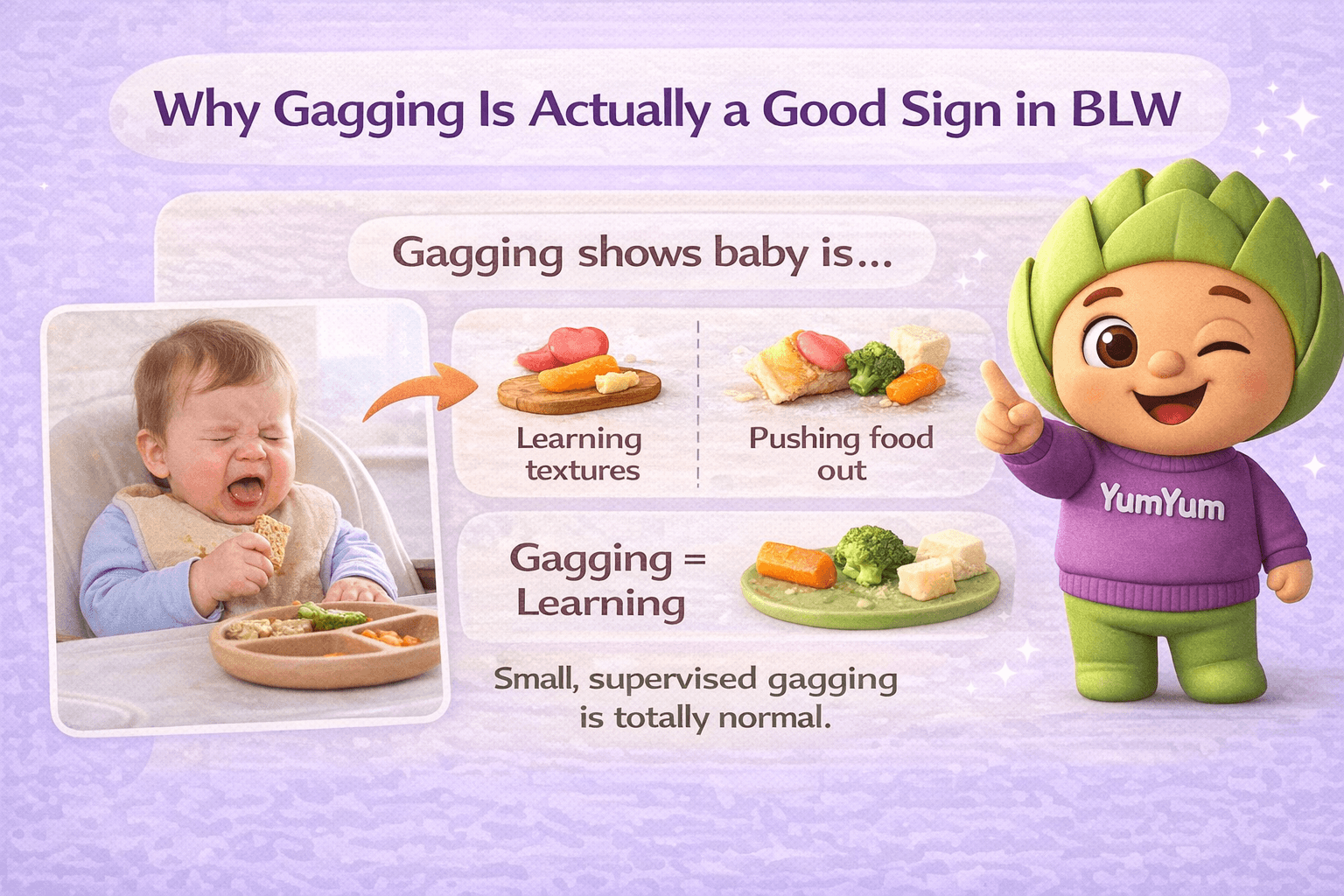
Gagging is often a sign that your baby is learning exactly as they should.
🧠 Gagging Is a Protective Reflex
Babies are born with a strong gag reflex.
In fact, it’s positioned more forward in the mouth than in adults.
Why?
Because their bodies are designed to protect them while they learn to eat.
When food touches a sensitive spot:
The tongue pushes forward
The body reacts
The food is moved out
Air is still flowing.
Baby is still making noise.
That’s protection — not danger.
If you’re unsure how choking differs from gagging, read our full safety breakdown here:
👉Safe vs Unsafe Food Shapes for Babies (BLW Guide)
👶 Why Gagging Means Learning Is Happening
When babies gag, they are:
Figuring out texture
Learning how to move food with their tongue
Coordinating chewing and swallowing
Building oral motor skills
Without these moments, skill development slows.
That’s why small, supervised gagging episodes are normal during baby-led weaning.
🥕 When Gagging Happens Most
You’ll see it more often when:
Introducing finger foods
Moving from purées to soft solids
Offering new textures
Baby takes a bigger bite than expected
The solution is not to avoid solids.
The solution is to serve them correctly.
If you’re unsure how to serve food by age, start here:
👉 /how-to-serve-foods-by-age-6-9-and-12-months
🚨 When It’s NOT Normal
Choking is different.
Choking usually looks like:
Silence
No cough
No sound
Difficulty breathing
If baby is coughing loudly and pushing food out — that’s gagging.
If baby is silent and struggling — that’s choking.
Understanding this difference builds confidence at the table.
💜 Why Visual Guidance Reduces Fear
Many feeding fears come from uncertainty.
Parents often ask:
Is this size correct?
Is this texture soft enough?
Is this shape safe?
That’s why visual serving guides matter.
See how proper food preparation looks here:
👉 How to Serve Apple to a Baby (6, 9, and 12 Months)
👉 How to Serve Avocado to a Baby (6, 9, 12 Months)
When you can see how food should look and break, panic decreases.
🎯 The Goal Is Not to Avoid Gagging
The goal is to:
Stay calm
Supervise properly
Serve food safely
Support skill development
Gagging doesn’t mean failure.
It means learning.
And learning sometimes looks messy.
✅ Key Takeaway
If your baby gags, coughs, and makes noise — their body is protecting them.
That reflex is a good sign.
Confidence changes feeding.
And calm parents raise confident eaters.