What Counts as Progress When Starting Solids?
What Counts as Progress When Starting Solids?
Starting solids can feel confusing.
One day your baby tastes something new.
The next day they refuse the same food.
Sometimes they only touch it.
Sometimes they make a funny face.
Sometimes they throw the spoon, lick one tiny bit, or simply stare at the plate.
It is easy to wonder:
“Did this meal even count?”
The answer is often yes.
When babies start solids, progress is not only about eating more food. Progress can also mean exploring, touching, smelling, learning new textures, building confidence, and trying again over time.
YumYum helps parents track these tiny first-food moments, so baby’s food journey feels less random and easier to understand.
Quick answer
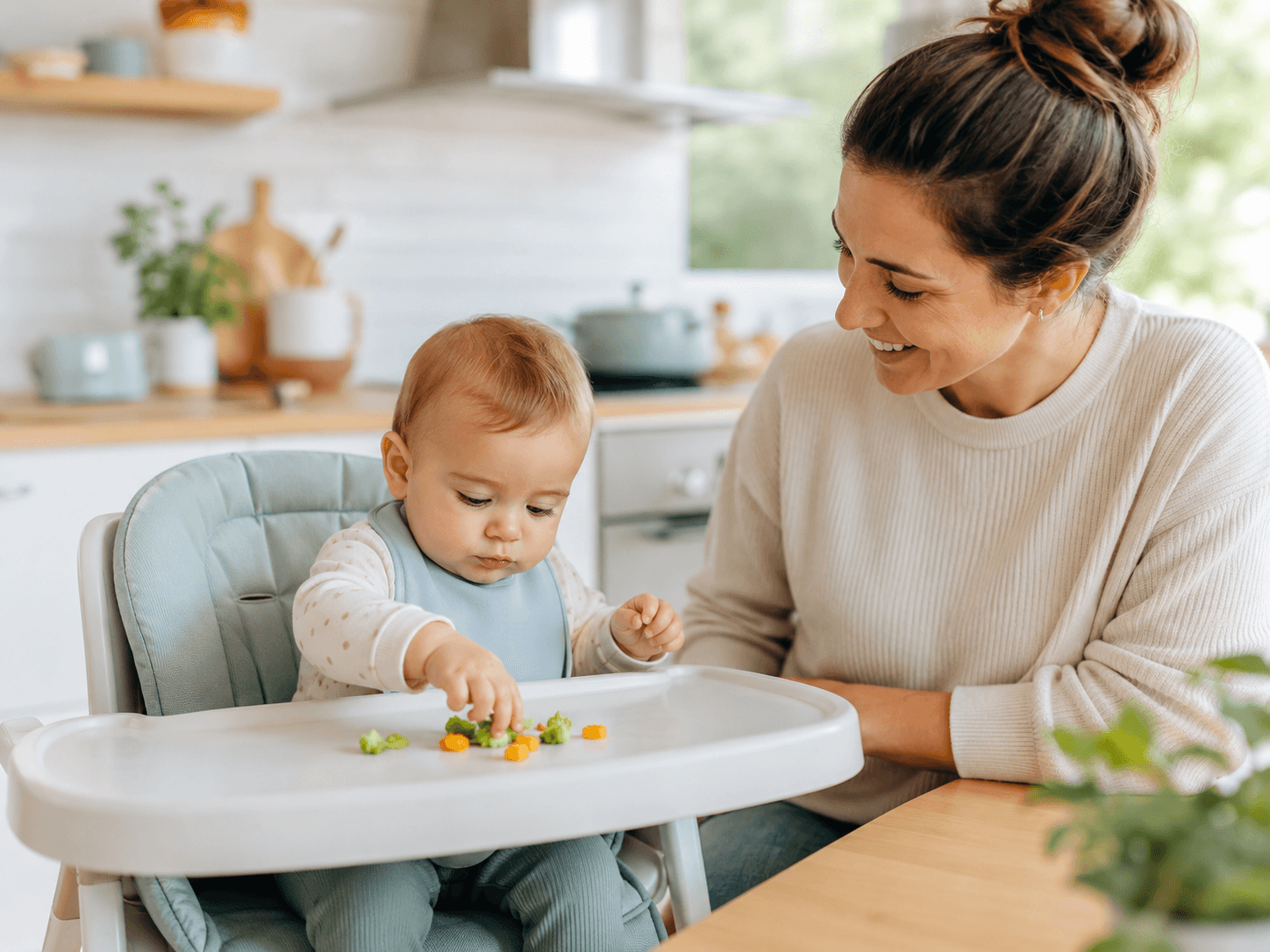
Progress when starting solids can include much more than swallowing food. A baby may be making progress when they touch a new food, smell it, bring it to their mouth, lick it, spit it out, accept a new texture, sit calmly during meals, or try the same food again later.
Starting solids is a learning process, not a daily test.
Why “eating more” is not the only goal
Many parents expect starting solids to look like this:
Baby opens mouth.
Baby eats the food.
Meal is successful.
But real baby feeding is usually much messier and slower.
A baby may need time to understand:
what a new food looks like
how it feels in their hands
how it smells
how it moves in the mouth
how much pressure to use when chewing
whether the texture feels safe and familiar
how to communicate “yes”, “no”, or “not now”
The CDC notes that babies can start solid foods at about 6 months, while continuing breast milk or infant formula as an important source of nutrition during the first year.
Source: CDC: When, What, and How to Introduce Solid Foods
That means early meals are not only about calories. They are also about practice.
Tiny wins that count as progress
Here are small moments that can count as progress when your baby is starting solids.
1. Looking at a new food
This may sound too simple, but it matters.
A baby who looks at a new food is noticing it. They are learning that food can have different colors, shapes, and textures.
Today they may only look.
Next time they may touch.
Later they may taste.
2. Touching food
Touching food is one of the first steps of learning.
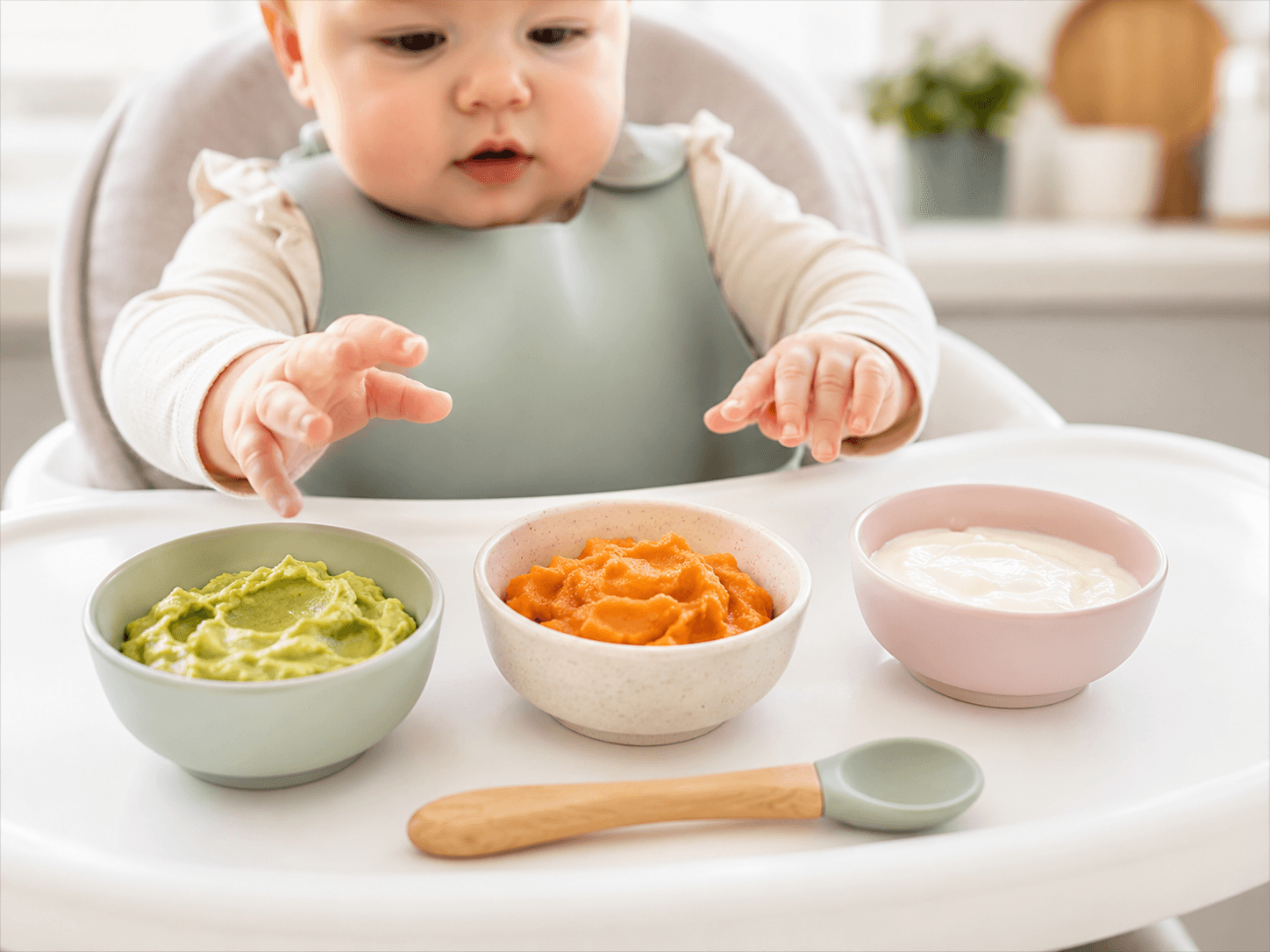
Your baby may squish avocado, tap yogurt, pick up sweet potato, or press a banana strip between their fingers.
This is sensory learning.
It helps babies understand food before it even reaches the mouth.
3. Smelling food
Babies learn through smell too.
A baby may bring food close to their face, pause, and then pull away. That does not always mean they dislike it. It may simply mean the smell is new.
4. Bringing food to the mouth
Even if your baby does not swallow, bringing food to the mouth is a meaningful step.
They are practicing hand-to-mouth coordination. They are learning how food feels near the lips, tongue, and gums.
5. Licking or tasting a tiny amount
A tiny lick counts.
A small taste counts.
A baby does not need to eat a full portion for the experience to matter.
Many first tastes are very small, especially with strong flavors or new textures.
6. Spitting food out
Spitting food out can look like rejection, but it can also be part of learning.
Babies are figuring out how to move food around the mouth. They may spit out food because the texture is new, the bite is too large, they are surprised, or they are still learning how to manage it.
If your baby seems uncomfortable, coughing, choking, or struggling to breathe, stop and seek appropriate medical help. Always supervise meals closely.
7. Refusing food calmly
Refusal can still be information.
Maybe your baby is tired.
Maybe they are not hungry.
Maybe the texture is too new.
Maybe they want to hold the spoon themselves.
Maybe today is simply not the day.
A refusal does not always mean “never offer this again.”
It can mean “try again later.”
8. Trying the same food again
Repeated exposure is one of the biggest parts of starting solids.
The NHS notes that it can take 10 tries or more before a baby accepts a new food or texture.
Source: NHS: Your baby’s first solid foods
This is why tracking can help.
Instead of thinking:
“Baby hates broccoli.”
You can record:
“Exposure 1: touched only.”
“Exposure 2: licked once.”
“Exposure 3: held calmly.”
“Exposure 4: took a tiny bite.”
That is progress.
9. Accepting a new texture
Texture progress is a big part of starting solids.
Your baby may move from smooth puree to mashed foods, then to soft lumps, then to soft finger foods.
The CDC explains that babies and toddlers can be introduced to different tastes and textures as they grow and become developmentally ready.
Source: CDC: Tastes and Textures
Texture progress may look like:
accepting a thicker puree
touching lumpy food
managing soft mashed food
holding a soft finger food
chewing with gums
staying calm with a new mouthfeel
10. Staying calm at the table
Sometimes progress is not about the food at all.
It may be:
sitting calmly in the high chair
watching a parent eat
touching the spoon
joining family mealtime
showing curiosity
ending the meal without stress
A calm experience helps babies build trust around food.
What is not a “failed” meal?
A meal is not automatically failed if your baby:
eats very little
refuses one food
makes a funny face
spits something out
throws food
only touches the food
wants the spoon instead
gets messy
loses interest quickly
These moments are normal parts of learning.
Of course, if you notice signs of allergy, repeated vomiting, breathing changes, swelling, rash, poor growth, feeding pain, or strong distress around meals, contact your pediatrician or healthcare professional.
How YumYum helps you see progress over time
It can be hard to remember what happened across many tiny meals.
YumYum helps parents track:
first foods
dates introduced
textures
reactions
favorites
allergens
notes
food history
repeated exposure
progress over time
This helps you see patterns.
Maybe your baby accepts sweet potato when it is mashed but not as strips.
Maybe they prefer finger foods over spoon-feeding.
Maybe they need several exposures before accepting green vegetables.
Maybe they love yogurt but dislike cold textures.
Maybe they touch a food many times before tasting it.
Without tracking, these details are easy to forget.
With tracking, they become part of the story.
Simple way to log progress
You do not need to write long notes.
A simple YumYum-style log can look like this:
Food: Broccoli
Date: August 3
Texture: Soft steamed floret
Reaction: Touched only
Notes: Picked it up, squished it, did not taste. Calm at the table.
Next time:
Food: Broccoli
Date: August 8
Texture: Soft steamed floret
Reaction: Unsure
Notes: Licked once, made a funny face, no visible reaction after meal.
Later:
Food: Broccoli
Date: August 15
Texture: Soft steamed pieces
Reaction: Liked it
Notes: Took two tiny bites and stayed interested.
That is a real progression.
Safety reminder
Progress matters, but safety comes first.
Always serve foods in a safe shape, size, and texture for your baby’s age and development. The CDC recommends preparing foods to reduce choking risk, such as cutting foods into appropriate pieces and avoiding common choking hazards.
Source: CDC: Choking Hazards
Avoid common choking hazards such as:
whole grapes
nuts
popcorn
hard raw carrot
hard apple chunks
large pieces of meat or cheese
round sausage slices
sticky spoonfuls of nut butter
Always supervise your baby during meals.
This article is educational and is not medical advice. Always follow your pediatrician’s guidance for your baby’s age, development, allergies, and feeding needs.
Key takeaways
Progress when starting solids is not only about how much your baby eats.
Progress can be:
looking at food
touching food
smelling food
licking food
tasting a tiny amount
accepting a new texture
refusing calmly
trying again later
joining family meals
staying curious
Every tiny step helps your baby learn.
YumYum helps parents track these first foods, reactions, textures, allergens, favorites, and little wins in one simple place.
Search “YumYum BLW” in the App Store.
FAQ
Does touching food count as progress?
Yes. Touching food helps babies learn about texture, temperature, shape, and smell. It can be an important step before tasting.
Does a funny face mean my baby hates the food?
Not always. A funny face may simply mean the taste or texture is new. Many babies make strong faces when trying something unfamiliar.
Should I offer a refused food again?
Often, yes, if the food was prepared safely and there was no medical reaction. Some babies need many exposures before accepting a new food.
How many times should I offer a new food?
There is no perfect number for every baby, but repeated exposure matters. The NHS notes that it may take 10 tries or more before a baby accepts a new food or texture.
Should I track foods my baby did not swallow?
Yes. You can track “touched only,” “licked,” “spit out,” or “refused.” These notes can help you understand progress over time.
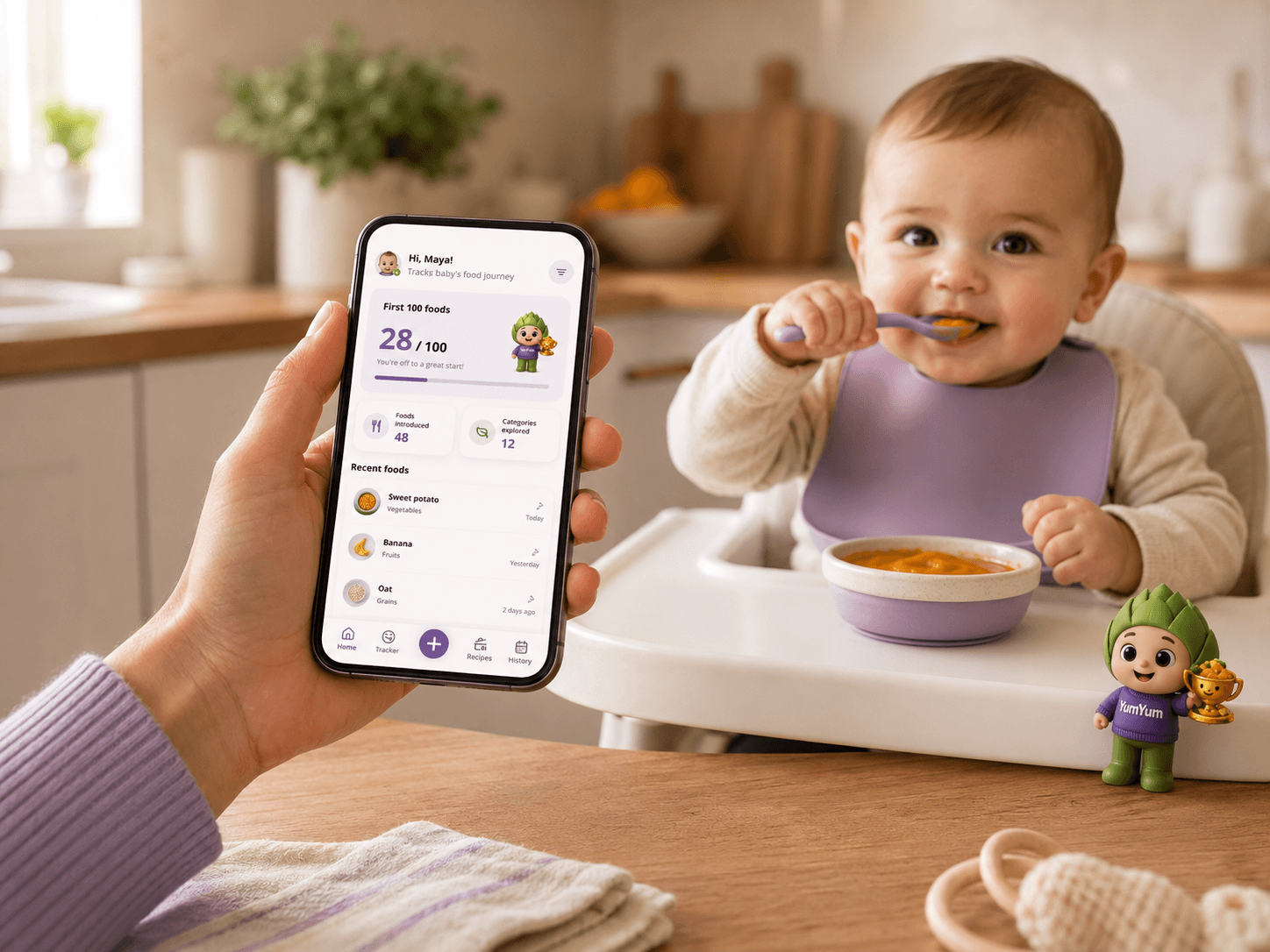
Can YumYum help track baby food progress?
Yes. YumYum helps parents track first foods, reactions, textures, allergens, favorites, and food history during starting solids and baby-led weaning.
Related articles
Read more:
How to Track Baby’s First Foods, Reactions, and Tiny Mealtime Moments
Starting Solids: Simple Baby Feeding Rules Every Parent Should Know
Easy-to-Hold First Foods for Babies: 8 Simple BLW Ideas
Explore: