Why Babies Gag: What’s Normal, What’s Not, and How to Stay Calm
Gagging can look scary, especially when you are just starting solids. Many parents see gagging for the first time and immediately worry that something is wrong.
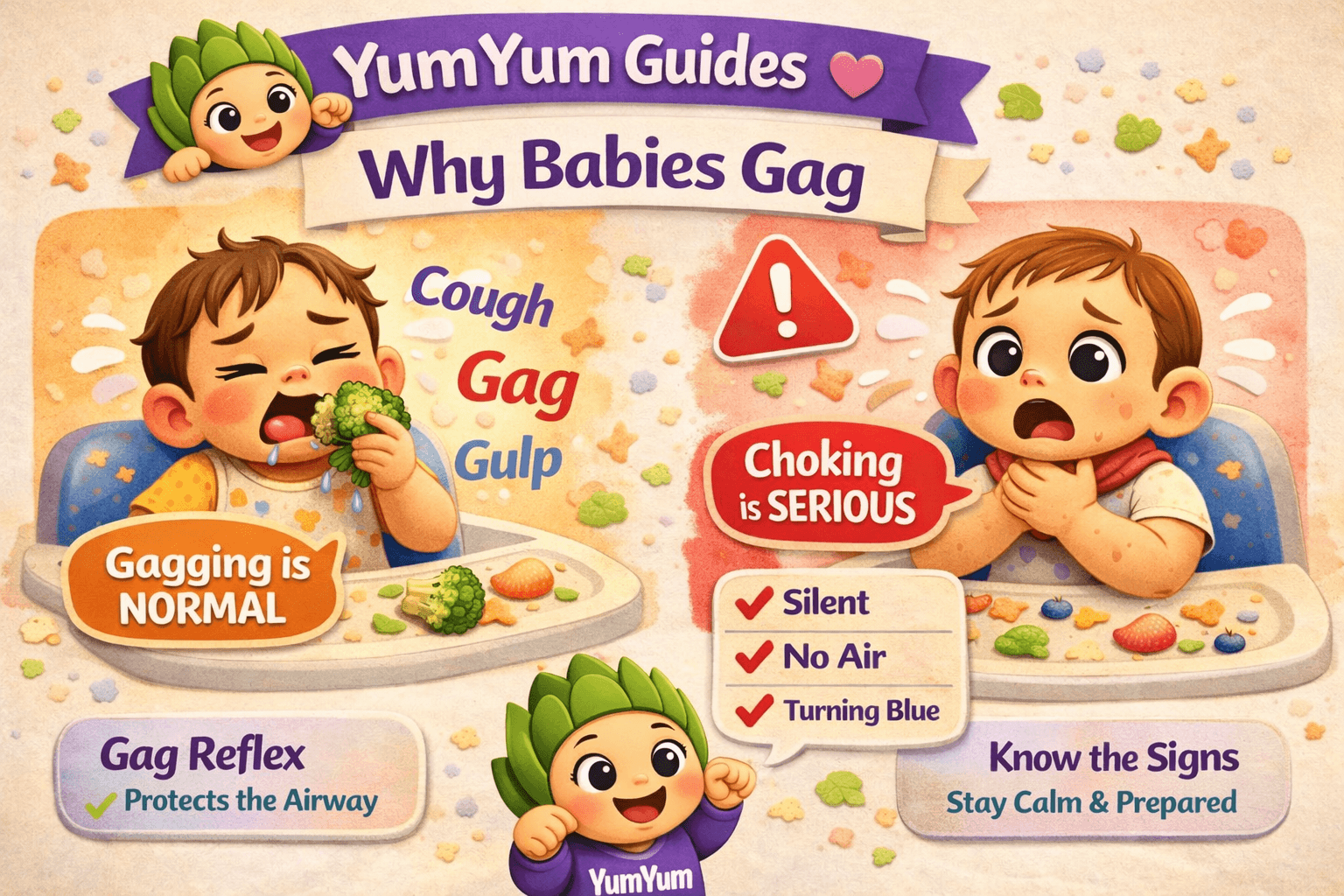
In most cases, gagging is a normal protective reflex. It helps babies move food forward and prevent it from going too far back before they are ready to manage it well.
That means gagging is often part of learning to eat.
If you are starting solids and want more practical feeding help, explore our baby feeding guides for parent-friendly BLW tips, first foods, and texture guidance.
Quick answer: is gagging normal in babies?
Yes, gagging is often normal during baby-led weaning and early feeding.
Many babies gag when they are:
learning how to handle food in the mouth
trying new textures
taking bites that feel unfamiliar
practicing chewing and moving food around
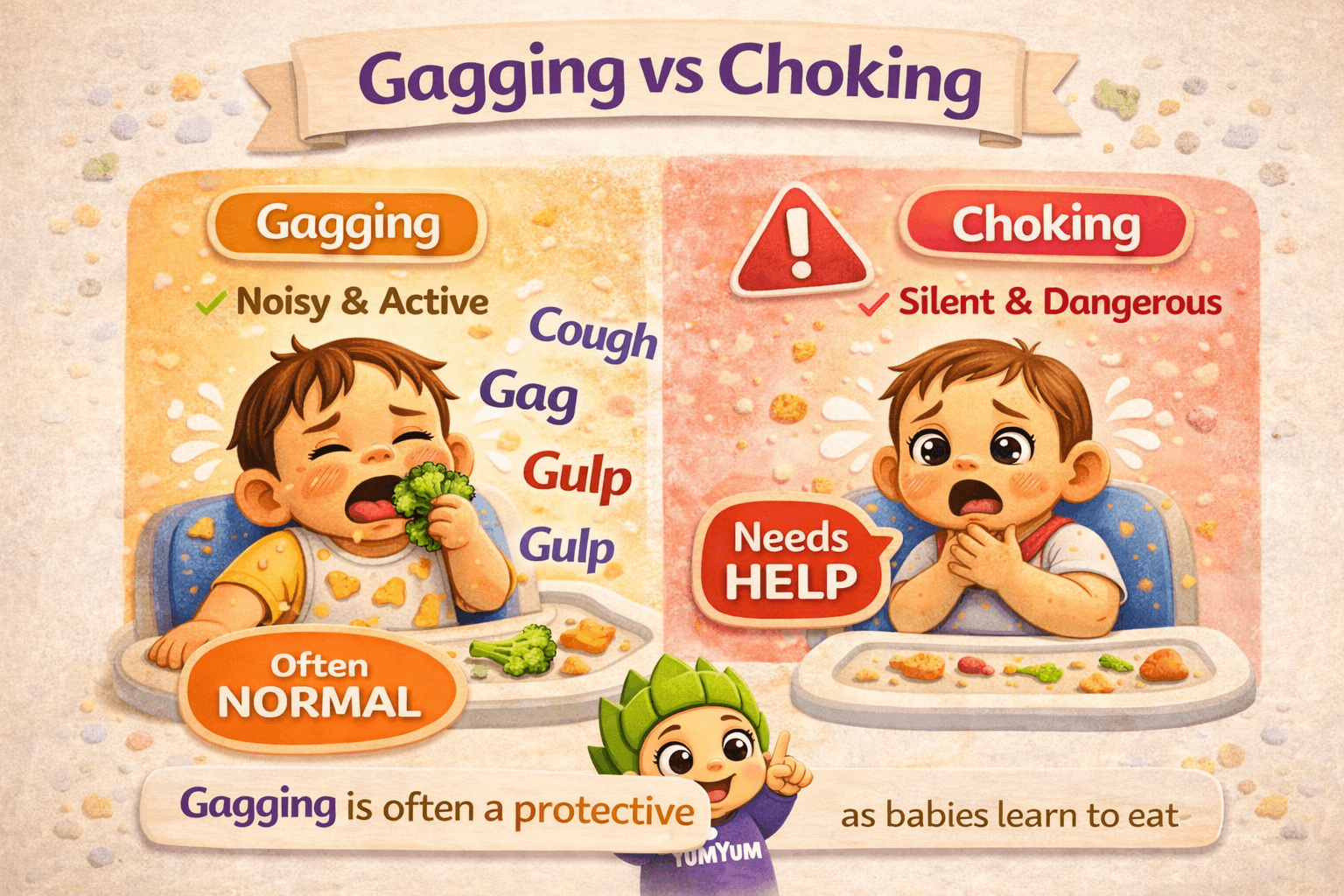
Gagging is not the same as choking. Gagging is usually noisy and active. Choking is often silent and needs immediate attention.
What gagging looks like
Gagging can include:
coughing or sputtering
tongue thrusting
watery eyes
red face
loud sounds while trying to move food forward
It may look dramatic, but it often means your baby’s body is doing exactly what it is meant to do: protecting the airway while learning.
Why babies gag more when starting solids
Babies are beginners. They are learning how to:
bite
chew
move food from side to side
control the size of a mouthful
swallow safely
Their gag reflex is also more forward in the mouth when they are younger. This can make gagging happen more often in the early stages of solids, especially with new textures and bigger pieces.
That does not automatically mean the food is unsafe. It often means your baby is still learning.
For more help with first foods and age-appropriate serving ideas, visit our feeding guides hub.
Gagging vs choking: the difference parents need to know
This is one of the most important feeding topics for parents.
Gagging
Gagging is often:
noisy
active
dramatic-looking
part of learning
A gagging baby may cough, sputter, push food forward, and recover on their own.
Choking
Choking is more serious. It may look like:
silence
inability to cry
difficulty breathing
weak or no sound
blue or pale skin
panic without effective coughing
If you think your baby is choking, act immediately and follow emergency guidance.
How to respond when your baby gags
Your reaction matters. Babies often look to parents to understand whether something is dangerous.
Try to:
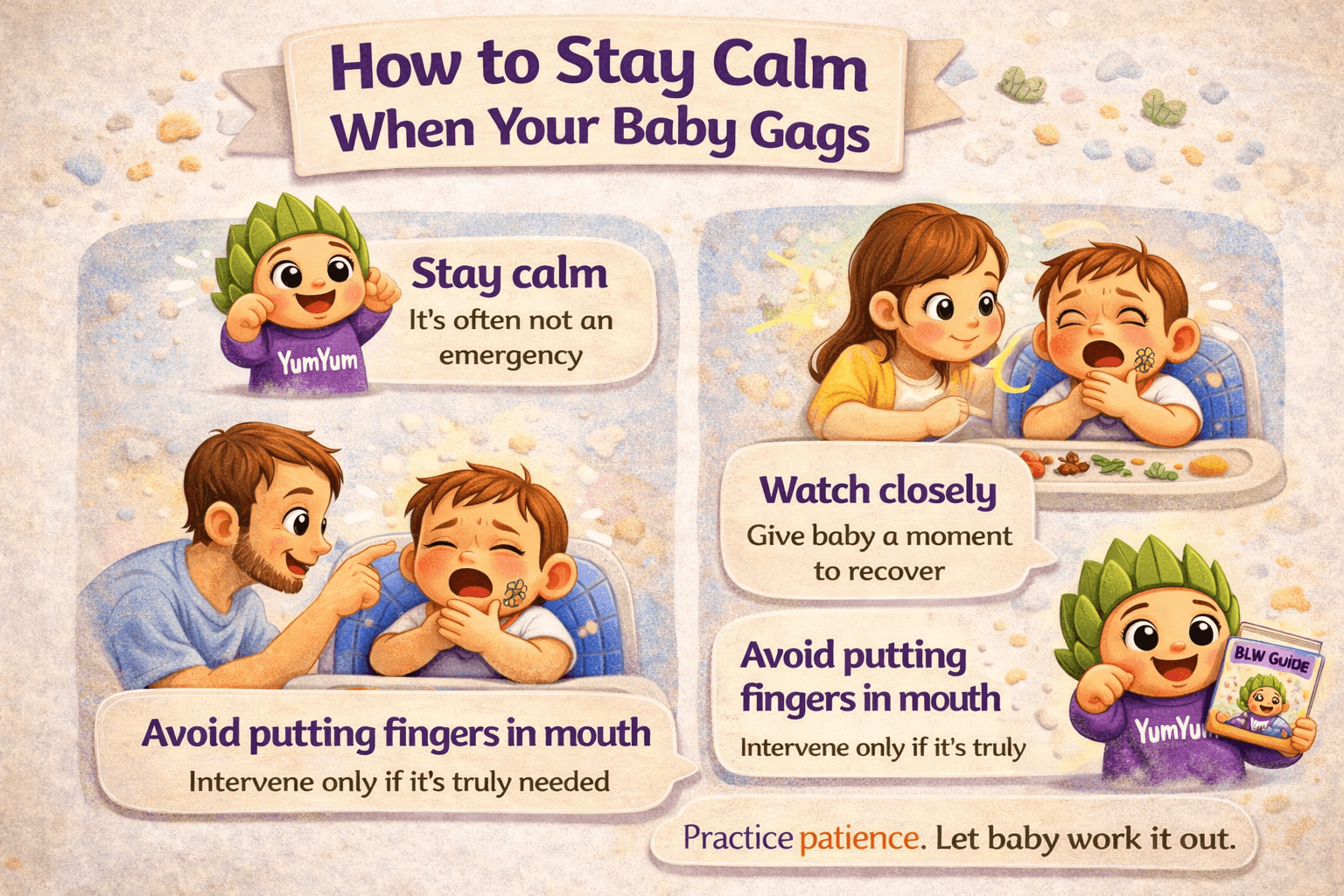
stay as calm as possible
watch before rushing in
give your baby a moment to work it out
avoid putting your fingers into the mouth unless it is clearly necessary
Sometimes quick adult reactions can make the moment more stressful.
A calm response helps protect your baby’s confidence at mealtime.
Foods and situations that may lead to more gagging
Some babies gag more with:
slippery foods
mixed textures
very soft foods that break apart unexpectedly
overfilled mouths
new or unfamiliar textures
This is one reason why safe serving matters. Food shape, softness, and size can change how manageable a food feels for a baby.
You can explore more texture and serving examples in our baby feeding guides.
Is gagging a bad sign?
Usually, no.
Gagging often means your baby is:
exploring texture
learning oral control
practicing chewing
figuring out how much food to manage at once
It can be uncomfortable to watch, but it is often part of the normal learning process.
Not every gag means something went wrong. Sometimes it means your baby is gaining experience.
How to support safer, more confident eating
A few simple habits can help:
1. Seat baby upright
Always feed in a safe, upright seated position.
2. Offer age-appropriate textures
Choose food shapes and textures your baby can manage more easily.
3. Avoid pressure
Do not rush bites or push “just one more.”
4. Let baby practice
Self-feeding supports learning over time.
5. Stay informed
Knowing the difference between gagging and choking can make mealtimes feel much less stressful.
When to get extra help
Talk to your pediatrician or feeding specialist if:
gagging seems extreme or constant
your baby is distressed at most meals
progress with textures feels very limited over time
you are worried about swallowing or feeding safety
If something feels off, it is okay to ask for guidance.
Final takeaway
Gagging is often a normal part of learning to eat. It can look alarming, but in many cases it is a protective reflex, not an emergency.
The more parents understand gagging, the calmer and more confident mealtimes can feel.
Learning to eat takes practice.
And sometimes, gagging is part of that practice.
Explore more baby feeding guides
Want more help with first foods, textures, safe serving, and BLW confidence?
Explore the full YumYum Guides Hub for practical, parent-friendly feeding articles.
Explore Feeding Guides