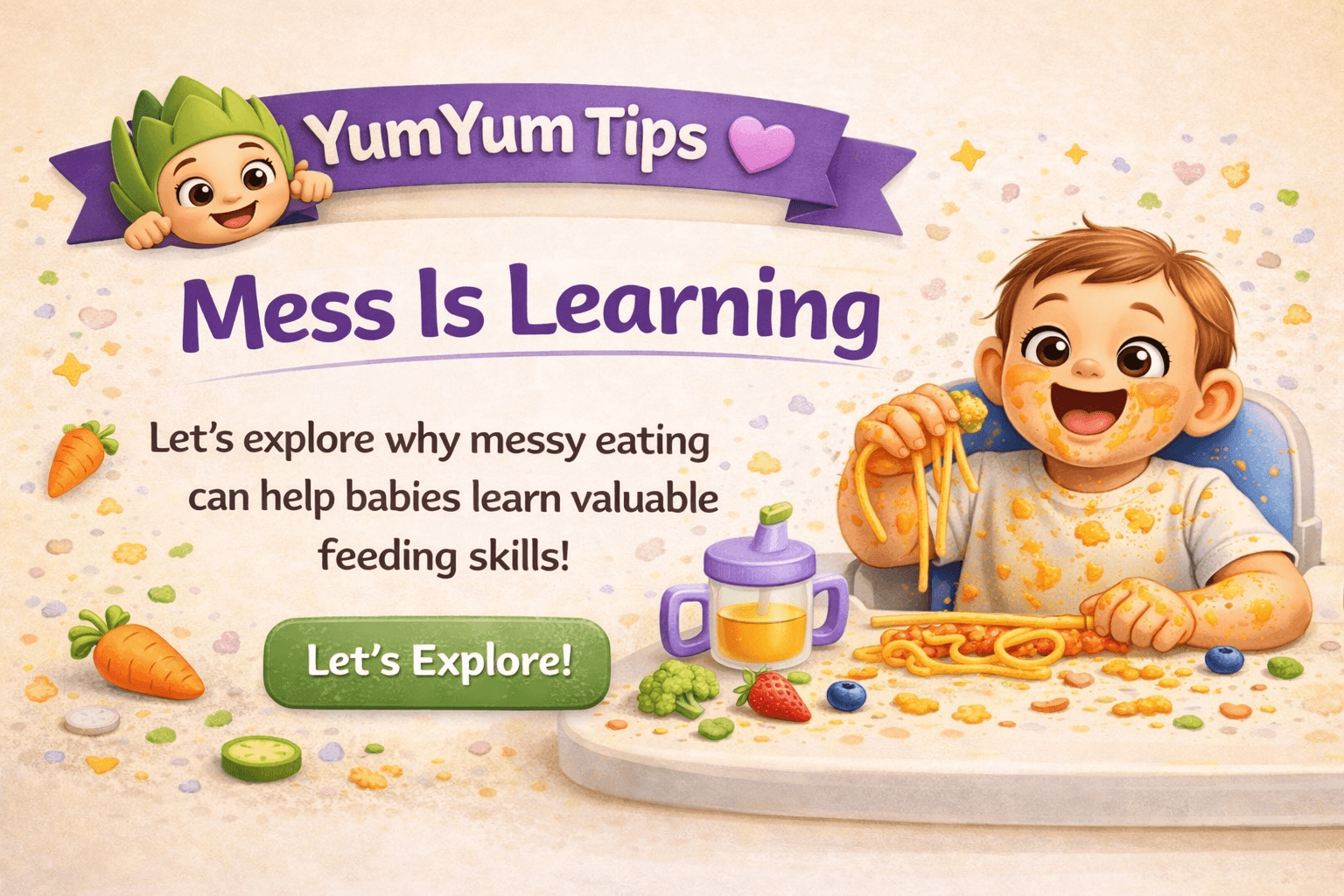
Mess Is Learning: Why Messy Eating Is Part of Baby-Led Weaning
Starting solids can feel exciting, emotional, and sometimes very messy. One day your baby seems curious and eager to explore food, and the next day there is puree on the tray, broccoli on the floor, and fruit in their hair. For many parents, messy eating can feel like something is going wrong.
But in baby-led weaning, mess is often a sign that learning is happening.
Messy eating is not just random play. It helps babies explore food with all their senses, practice self-feeding, and build confidence over time. When we look at mealtime through this lens, it becomes easier to see the mess as part of the process, not a problem to fix.
If you’re just starting solids and want more practical BLW help, explore our baby feeding guides for simple, parent-friendly support.
Why babies make a mess with food
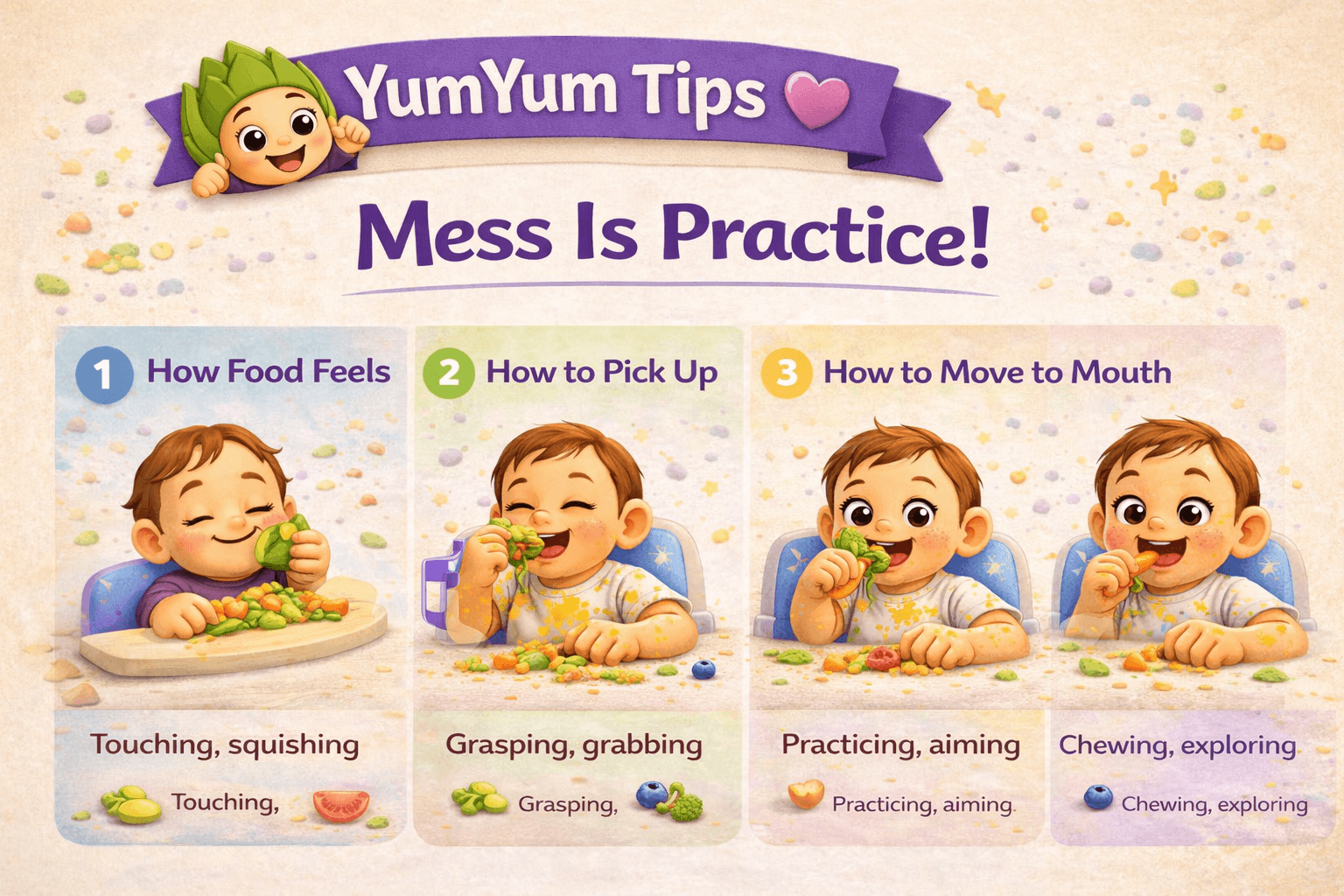
Babies do not start solids already knowing how to eat neatly. Eating is a completely new skill. Before they can comfortably chew and swallow, they need time to touch, hold, squeeze, drop, smear, and inspect food.
This kind of exploration helps babies learn:
how food feels in their hands
how slippery, soft, wet, or firm it is
how to pick it up and bring it to the mouth
how much pressure to use
how different textures change when chewed
What may look messy to an adult often looks like practice to a baby.
Mess supports sensory learning
Babies learn through sensory experiences. At mealtime, they are taking in new information through touch, smell, taste, sight, and movement. When a baby squishes avocado, smears yogurt, or drops a soft piece of banana, they are gathering information about that food.
This sensory learning matters because it can help babies become more familiar and comfortable with different textures over time. That comfort is an important part of learning to eat.
Some babies need more sensory exposure than others. They may want to touch food many times before tasting it. That is normal. Mealtime does not always begin with eating. Sometimes it begins with exploring.
You can find more beginner-friendly feeding ideas in our BLW guides.
Mess helps build self-feeding skills
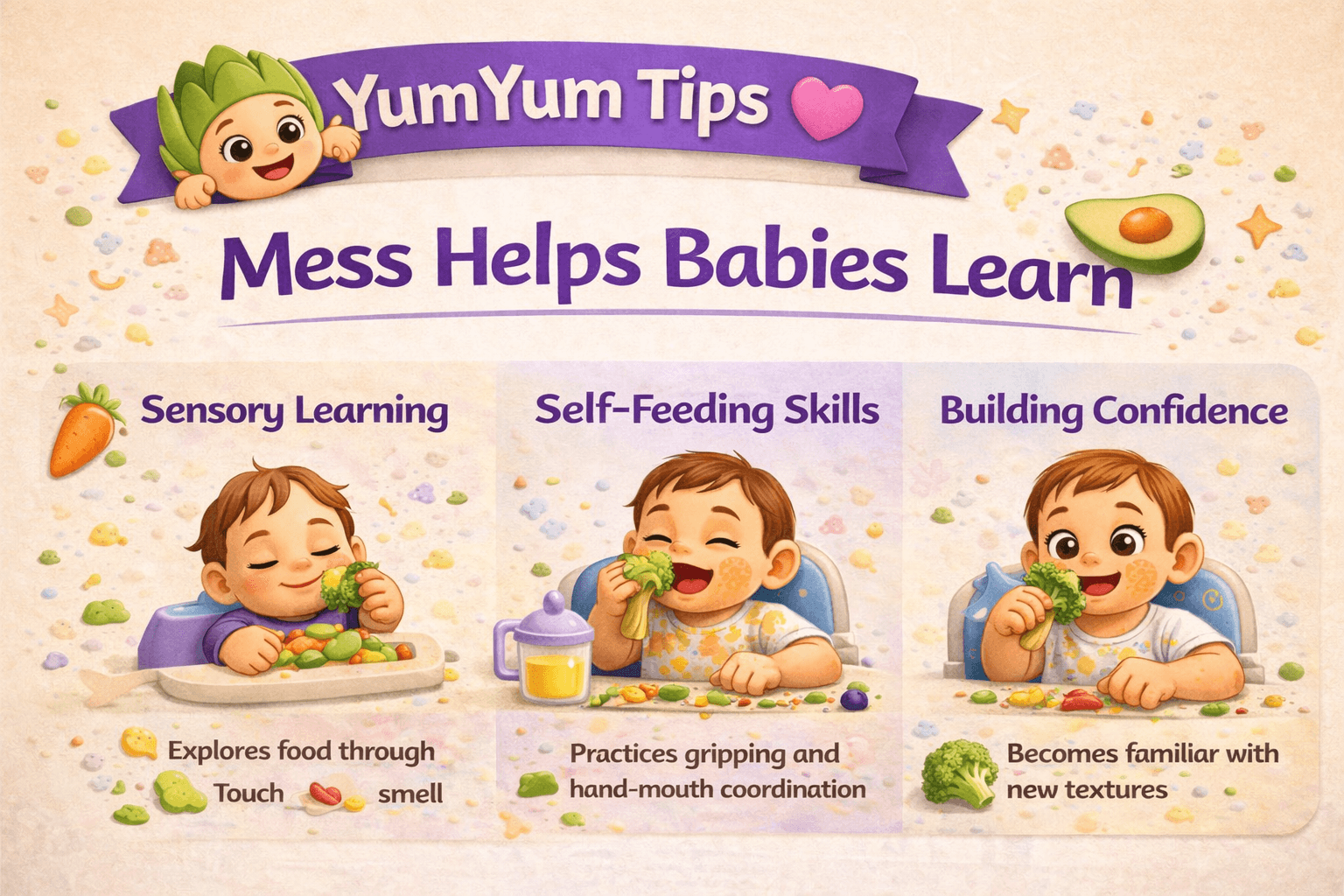
Self-feeding is a skill that develops with practice. When babies are allowed to interact with food directly, they begin building coordination and control.
Messy eating helps babies practice:
grasping and releasing food
moving food from hand to mouth
adjusting grip for different shapes and textures
hand-eye coordination
mouth mapping and oral awareness
These small repeated actions lay the foundation for more efficient eating later.
Mess can be a sign of confidence
A baby who is willing to touch, smear, taste, or play with food is often showing curiosity. Curiosity is valuable during the solids journey. It means your baby is engaging with the experience.
Not every successful meal ends with a lot of food swallowed. A successful meal may also look like:
touching a new food without fear
licking a food for the first time
holding a slippery piece more confidently
tolerating a new texture on the tray
staying relaxed around unfamiliar foods
These are meaningful steps forward.
Why parents often worry about messy eating
It is understandable to feel stressed when food ends up everywhere. Parents often worry that their baby is wasting food, not eating enough, or turning mealtime into playtime.
These concerns are common, but mess alone does not mean your baby is failing to learn. In fact, many babies need this stage in order to become more skilled and comfortable eaters.
The early months of solids are not about perfect table manners. They are about learning.
If you want more confidence with first foods, textures, and serving ideas, visit our feeding guides hub.
How to support messy eating without feeling overwhelmed
You do not have to love the mess to support the learning. A few practical adjustments can make mealtimes feel easier:
1. Dress for mess
Use a bib, easy-to-clean clothes, or serve meals in just a diaper if that works for your routine.
2. Protect the space
A splat mat, towel, or easy-wipe surface under the highchair can make cleanup faster.
3. Offer manageable portions
Serving smaller amounts at a time can reduce overwhelm for both baby and parent.
4. Stay calm
Babies often pick up on pressure and stress. A calm environment helps them focus on learning.
5. Expect exploration
Not every meal will be about eating a large amount. Sometimes the goal is exposure and practice.
When mess is normal and when to look closer
Messy eating is usually a normal part of baby-led weaning, especially in the beginning. It is expected for babies to drop food, smear it, throw some of it, and explore it with their hands.
However, it may help to look more closely if your baby consistently seems distressed around food, refuses all textures over time, or struggles significantly with feeding in a way that does not improve. In those cases, a pediatrician or feeding specialist can help guide next steps.
The bigger picture: less pressure, more learning
When parents expect solids to look neat, calm, and efficient from the start, mealtimes can feel disappointing. But when we understand that mess is part of learning, the experience often becomes less stressful.
Baby-led weaning is not about creating perfect meals. It is about helping babies build skills, confidence, and a positive relationship with food.
So if the tray is covered, the floor is messy, and your baby is proudly squishing sweet potato in both hands, take a breath.
That mess may be learning in action.
Final takeaway
Messy eating is not something that needs to be fixed right away. In many cases, it is a normal and important part of how babies learn to eat. Through touching, squishing, dropping, and tasting, babies build sensory awareness, coordination, and confidence.
A little mess does not mean mealtime went badly.
Sometimes, it means mealtime went exactly the way it needed to.
Explore more baby feeding guides
Looking for more help with first foods, textures, baby-led weaning, and feeding confidence?
Explore the full YumYum Guides Hub for practical, parent-friendly articles.