How to Start Solids Without Stress: A Simple Guide for Parents
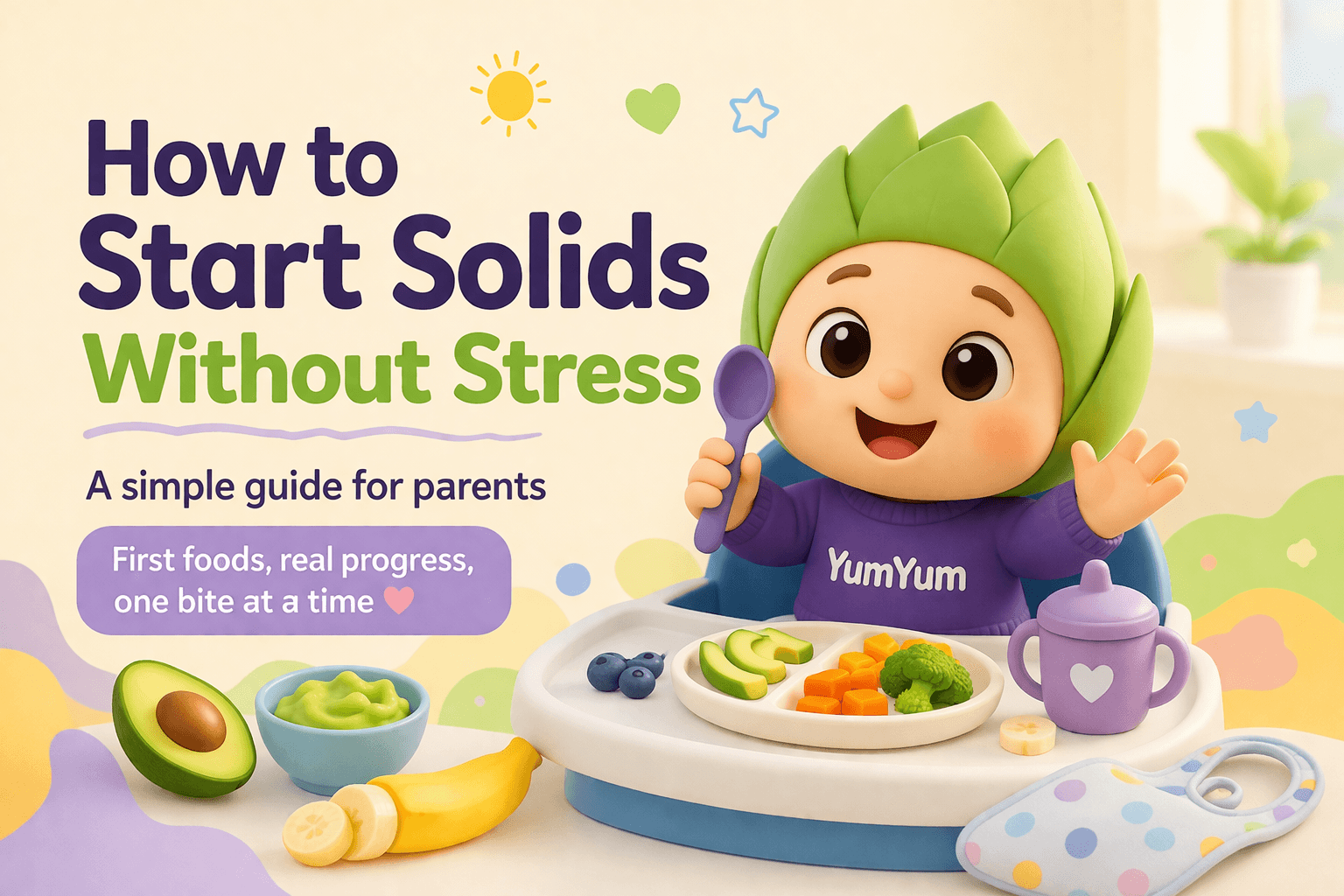
How to Start Solids Without Stress: A Simple Guide for Parents
Starting solids can feel exciting, emotional, and overwhelming all at once. Many parents wonder when to begin, what foods to offer first, how much baby should eat, and what is actually normal in the early weeks.
The good news is that starting solids does not have to be perfect.
It is not about creating full meals right away or getting everything exactly right from day one. It is about giving your baby time to explore food, build skills, and gradually become more comfortable with eating.
If you are looking for more practical feeding help, explore our baby feeding guides for simple, parent-friendly support.
When to start solids
Most babies are ready to start solids around 6 months of age. Readiness is not only about age. It is also about development.
Common signs of readiness can include:
sitting with support or sitting more steadily
good head and neck control
showing interest in food
reaching for food or watching others eat
opening the mouth when food is offered
Starting solids is not a race. If you are unsure whether your baby is ready, your pediatrician can help guide you.
What starting solids is really about
Many parents assume solids should quickly turn into full meals. But in the beginning, solids are mostly about learning.
Babies are learning:
how food feels
how to pick it up
how to bring it to the mouth
how to move food around safely
how to chew and swallow over time
That is why early meals may look slow, messy, or unpredictable. This is normal.
In the early stages, progress is not only about how much your baby eats. Touching, tasting, licking, and exploring all count.
First foods do not need to be complicated
You do not need a perfect menu or a long list of fancy recipes to begin. Simple foods work well.
Many families start with foods such as:
avocado
banana
sweet potato
oatmeal
yogurt
soft-cooked vegetables
egg, if appropriate for your baby and family routine
The goal is not variety all at once. The goal is safe, simple exposure and practice.
For more first food ideas and serving guidance, visit our feeding guides hub.
Baby-led weaning, purees, or both?
There is no single perfect path for every family.
Some parents choose baby-led weaning and offer soft finger foods from the start. Others begin with purees. Many families do a mix of both.
What matters most is:
offering food in a safe, age-appropriate way
keeping mealtimes calm
letting baby learn gradually
avoiding pressure
A mixed approach can still support self-feeding and food exploration. You do not have to choose one method perfectly to help your baby build feeding skills.
What if baby barely eats?
This is one of the most common worries.
In the beginning, many babies eat very small amounts. Some mostly touch or taste. Some seem interested one day and uninterested the next.
That does not always mean something is wrong.
Starting solids is a process. Appetite can vary from meal to meal. Early on, consistency and exposure matter more than big amounts.
A baby who touches food, tastes a little, or practices holding a piece of food is still learning.
Mess is part of the process
Many parents feel stressed when mealtimes get messy. But mess often means learning is happening.
Babies explore with their hands before they become more efficient eaters. They may squeeze food, smear it, drop it, or break it apart to understand texture and control.
Mess can support:
sensory learning
hand-eye coordination
self-feeding practice
confidence with new textures
Mealtime does not need to look neat to be successful.
How to make starting solids feel easier
A few simple habits can make a big difference.
1. Keep expectations low
Your baby does not need to eat a full meal right away.
2. Start with one meal a day
A simple routine can feel less overwhelming for everyone.
3. Offer soft, manageable foods
Keep textures age-appropriate and easy to explore.
4. Let baby go at their own pace
Some babies jump in quickly. Others need more time.
5. Stay calm
Babies often feed better when mealtimes feel relaxed and low-pressure.
6. Focus on practice, not perfection
Learning to eat is a skill that develops over time.
What is normal in the beginning?
A lot of things that worry parents are actually common in the early stages of solids.
Normal can include:
eating very small amounts
making a mess
spitting food out
gagging occasionally while learning
liking a food one day and ignoring it the next
exploring more than swallowing
This stage is often less about nutrition from solids and more about building experience and confidence.
When to get extra support
It can help to speak with your pediatrician or a feeding specialist if:
your baby seems very distressed around food
progress feels extremely limited over time
you are worried about swallowing or feeding safety
mealtimes feel consistently stressful or difficult
It is always okay to ask questions. Support can make feeding feel much easier.
Final takeaway
Starting solids does not need to be perfect to go well.
It is okay if meals are messy. It is okay if progress feels slow. It is okay if your baby needs time to learn.
The goal is not perfect bites or perfect meals.
The goal is helping your baby build skills, confidence, and a positive relationship with food.
One calm meal at a time, learning adds up.
Explore more baby feeding guides
Looking for more support with first foods, textures, self-feeding, and baby-led weaning?
Explore the full YumYum Guides Hub for practical, parent-friendly feeding articles.