How to Build a Simple Baby Meal Without Overthinking It
How to Build a Simple Baby Meal Without Overthinking It
Starting solids can make even the calmest parent feel unsure.
You may find yourself asking:
Does this meal have enough variety?
Should there be protein?
Is this texture okay?
What if my baby only eats one piece?
Do I need a perfect baby meal every time?
The good news: a baby meal does not need to be complicated.
When your baby is ready for solid foods, simple meals can be enough. The goal is not to build a perfect plate every time. The goal is to offer safe, suitable foods and give your baby chances to explore taste, texture, smell, shape, and self-feeding skills.
A baby meal does not need to be perfect
Many parents imagine that every baby meal should look balanced, colorful, and finished.
Real life is different.
Some meals may be very simple. Some may be mostly exploration. Some days your baby may eat more. Other days they may touch, squish, lick, or refuse everything.
That does not mean you are doing it wrong.
The CDC explains that around 6 months, babies may be ready for foods other than breast milk or infant formula when they show signs of developmental readiness, such as sitting with support and bringing objects to the mouth. The CDC also notes that by around 7 or 8 months, babies may eat a variety of foods from different food groups.
This is why it helps to think about meals as practice, not performance.
Think in 3 simple parts
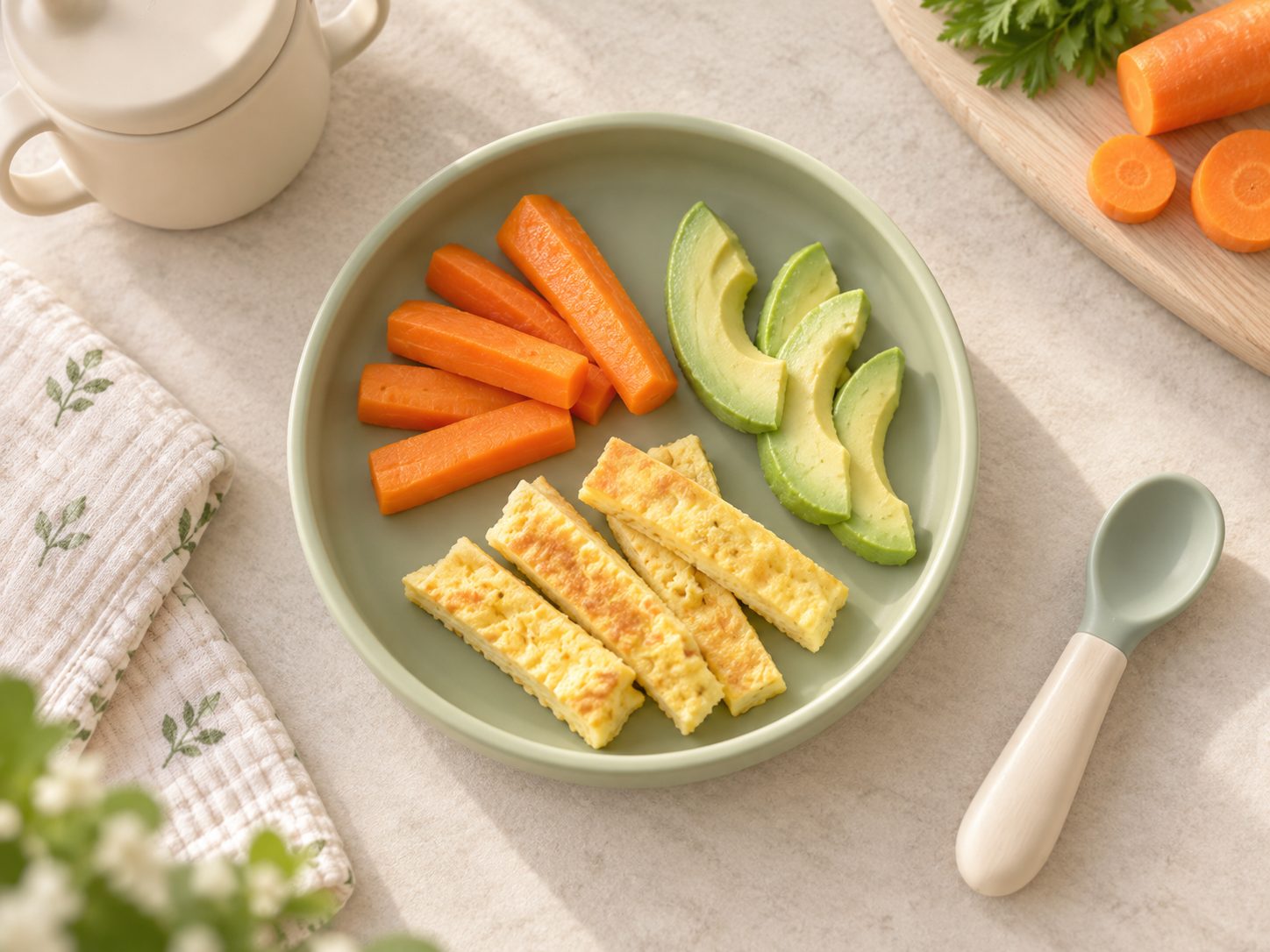
A simple baby meal can be built from three basic ideas:
something soft and easy to hold
something nourishing
something familiar or easy
You do not need to include every food group at every meal. Variety matters over time.
1. Something soft and easy to hold
This is the part of the meal that helps your baby practice picking up food, bringing it to their mouth, biting, chewing, and exploring texture.
Examples:
soft banana spear
steamed carrot stick
ripe avocado wedge
soft omelet strip
steamed apple slice
soft sweet potato wedge
tender broccoli floret
soft pasta pieces
For baby-led weaning, shape and texture matter. NHS guidance describes finger foods as pieces that are big enough for a baby to hold in their fist and soft enough for them to manage as they learn to chew and swallow.
2. Something nourishing
This is the part of the meal that adds nutrients, energy, protein, healthy fats, or iron-rich options over time.
Examples:
egg
fish
chicken
turkey
lentils
beans
yogurt
avocado
hummus
soft cheese
tofu
oatmeal
You do not need to make every meal perfect. But over the week, it helps to offer different foods from different groups.
3. Something familiar or easy

Babies often feel more comfortable when there is something familiar on the plate.
This could be a food they have tried before, a texture they usually accept, or something simple and soft.
Examples:
banana
avocado
soft toast strip
yogurt
sweet potato
pasta
steamed carrot
soft pear
omelet strip
This can make new foods feel less overwhelming.
Simple baby meal combinations
Here are a few calm, realistic meal ideas.
Soft veggie plate
Easy breakfast plate
Simple lunch plate
Gentle dinner plate
Quick snack plate
Leftover meal plate
The point is not to make the plate look perfect. The point is to make the food appropriate, soft enough, and easy for your baby to explore.
Texture matters more than presentation
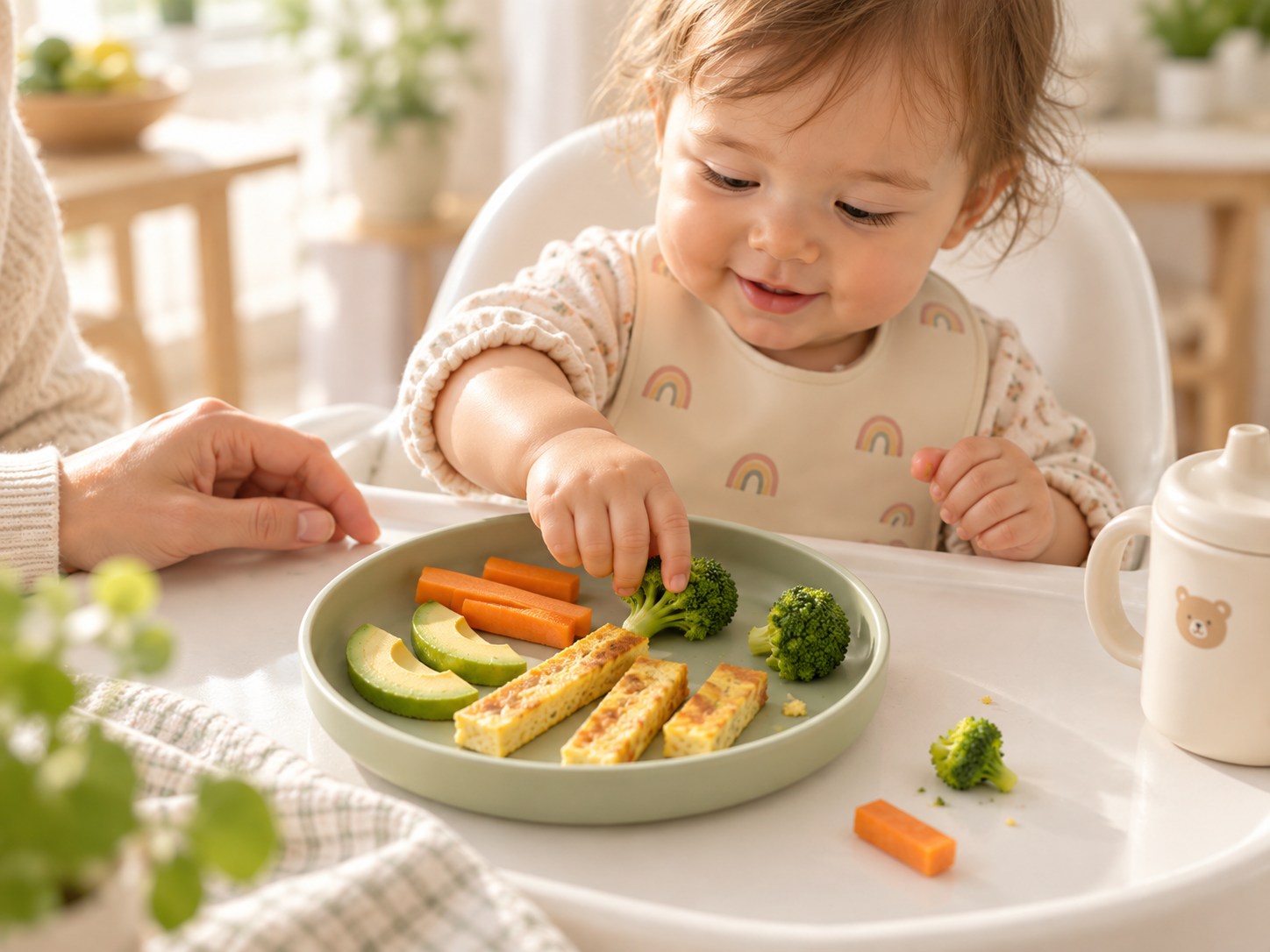
A beautiful plate is nice.
A safe, suitable texture is more important.
The CDC recommends preparing foods in ways that reduce choking risk, including cutting foods into smaller pieces or mashing foods when needed. The CDC also reminds caregivers to pay close attention while children are eating and avoid rushing or distractions during meals.
For babies, think:
soft
easy to mash
easy to hold
not hard
not round and slippery
not sticky or difficult to manage
A simple “squish test” can help: if you can gently squish the food between your fingers, it is usually easier for a baby to manage than something hard or raw.
This does not replace professional advice. If you are unsure about your baby’s readiness, feeding skills, allergies, or choking risk, speak with your pediatrician or healthcare professional.
What if baby only eats one thing?
That is very normal.
Your baby may eat the banana and ignore the broccoli.
They may lick the omelet and drop the avocado.
They may touch the pasta and refuse the chicken.
They may only eat one bite.
That can still be part of learning.
Starting solids is not only about how much food disappears from the plate. It is also about exposure, curiosity, texture practice, and building confidence over time.
Instead of asking only:
Try asking:
These small details help you understand progress more realistically.
Variety matters over time, not in every meal
It is easy to feel pressure to offer a perfect variety at every meal.
But variety is something you build across days and weeks.
One meal may be mostly vegetables.
Another may include egg or fish.
Another may be simple fruit and yogurt.
Another may be leftovers.
The CDC notes that children can eat a variety of foods from different food groups as they grow into solid foods, and NHS guidance encourages offering a range of tastes and textures as babies develop chewing and swallowing skills.
You do not need every single meal to include everything.
A helpful question is:
not only:
A simple baby meal formula
Here is an easy formula you can use:
Examples:
This formula keeps things simple.
You can adjust it based on your baby’s age, readiness, feeding skills, allergies, and what you already have at home.
How YumYum helps
When you are starting solids, it is easy to forget what happened.
Did baby try carrot last week?
Was avocado accepted or refused?
Was it the taste or the texture?
Did baby react to egg?
Which foods became favorites?
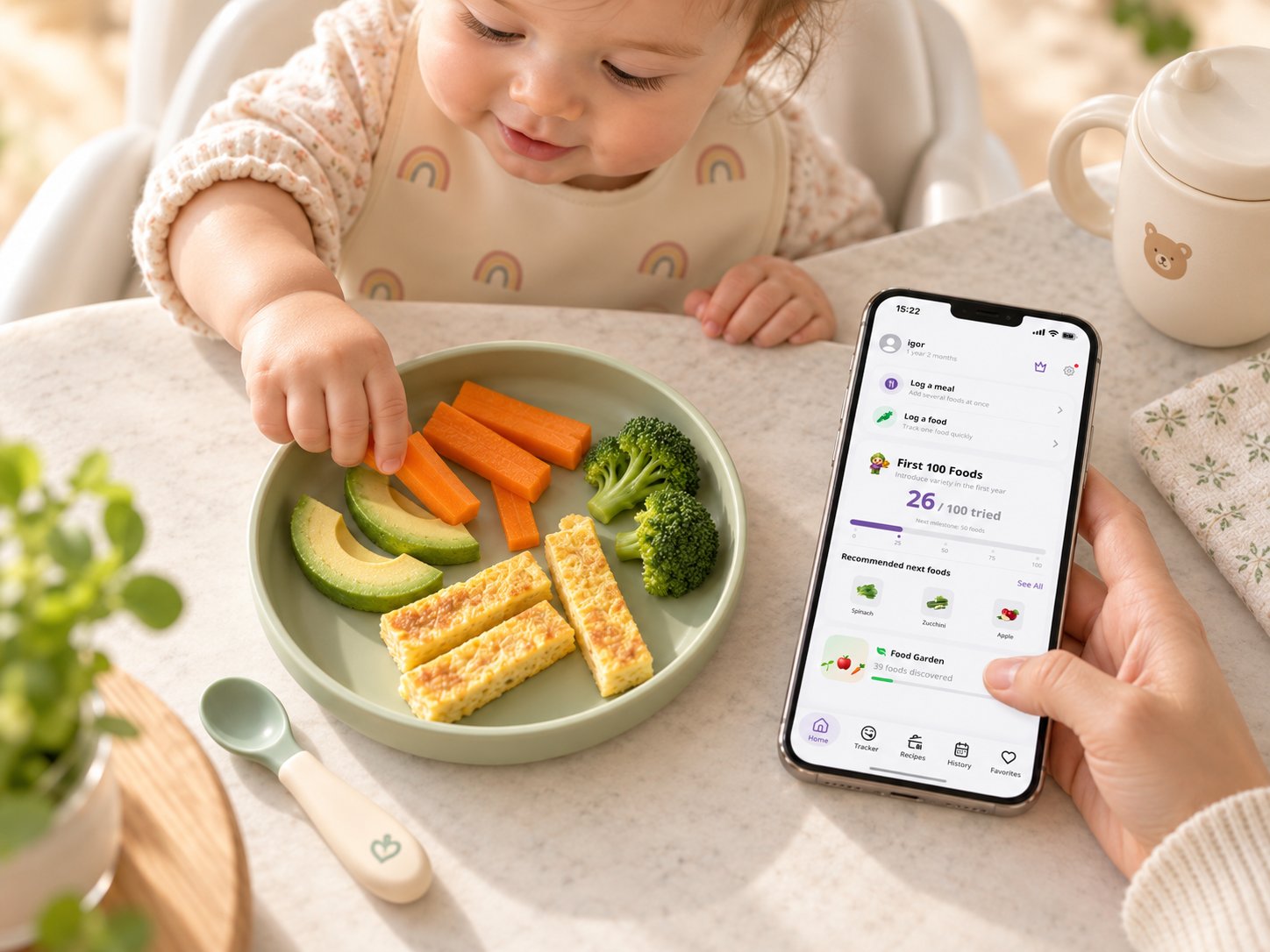
YumYum helps you track the real baby food journey.
Not just perfect meals.
Not just clean plates.
Not just “ate it” or “did not eat it.”
With YumYum, you can track:
foods
meals
textures
reactions
favorites
progress over time
your baby’s First 100 Foods journey
This makes it easier to see patterns without keeping everything in your head.
Final thought
Building a baby meal does not need to feel stressful.
Start simple.
Offer soft foods.
Include variety over time.
Pay attention to texture and shape.
Stay close while your baby eats.
Track what happened.
Try again another day.
Your baby does not need a perfect plate.
They need safe opportunities to explore, learn, and grow.
Track the journey with YumYum.
Search “YumYum BLW” in the App Store.
FAQ
What should a simple baby meal include?
A simple baby meal can include one soft finger food, one nourishing food, and one familiar or easy food. For example: steamed carrot, omelet strip, and avocado.
Does every baby meal need protein?
No, every single meal does not need to be perfect. Protein-rich foods can be offered across the week, along with vegetables, fruits, grains, healthy fats, and other suitable foods.
What if my baby only eats one bite?
One bite can still count as progress. Babies may also learn by touching, smelling, squishing, licking, or refusing food. Starting solids is a learning process.
How soft should baby food be?
For many first foods, a helpful rule is that the food should be soft enough to mash easily between your fingers. Avoid hard, round, slippery, or sticky foods that are difficult for babies to manage.
How can I track baby meals?
You can track foods, meals, textures, reactions, favorites, and progress with YumYum. This helps you remember what your baby tried and what happened over time.