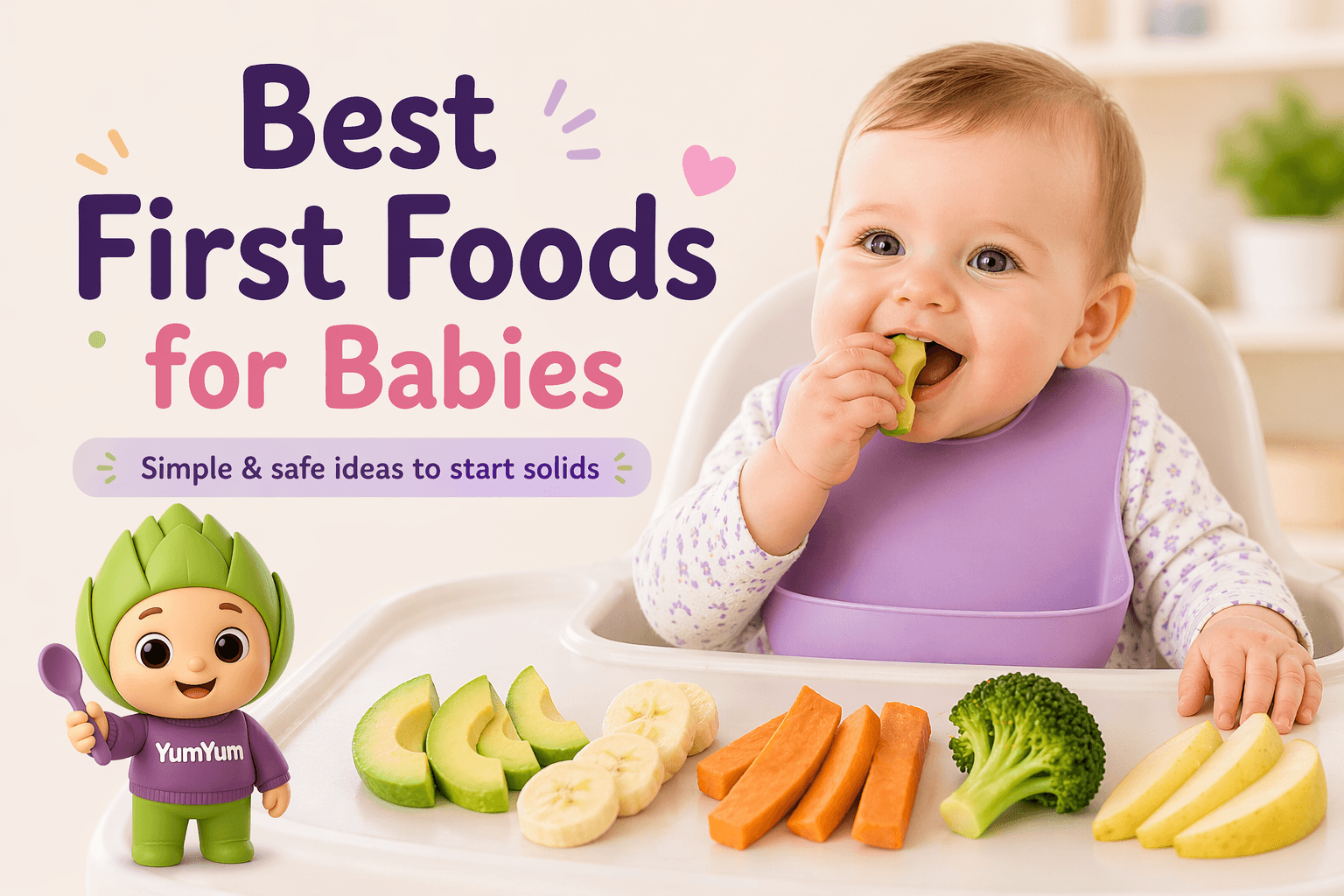
Best First Foods for Babies: 15 Simple and Safe Ideas to Start Solids
Starting solids can bring up a lot of questions for parents. What should baby eat first? Which foods are safest? Do first foods need to be purees, or can you offer finger foods too?
The truth is that there is no single perfect first food. Many simple foods can work well when they are served in a safe, age-appropriate way.
The best first foods for babies are usually soft, easy to manage, and simple enough for your baby to explore while learning new tastes and textures.
If you want more practical feeding help, explore our baby feeding guides for simple, parent-friendly support.
What makes a good first food for babies?
A good first food is usually:
soft enough for baby to manage
easy to prepare
simple in texture
safe for your baby’s stage
something your family can offer consistently
In the beginning, solids are often more about learning than quantity. Babies are learning how food feels, how to pick it up, how to move it in the mouth, and how to swallow over time.
That is why first foods do not need to be complicated.
When can babies start solids?
Most babies are ready to start solids around 6 months of age. Readiness is not only about age. It is also about development.
Signs of readiness may include:
sitting with support or more steadily
good head and neck control
interest in food
reaching for food
opening the mouth when food is offered
bringing objects to the mouth
If you are unsure whether your baby is ready, your pediatrician can help guide you.
15 best first foods for babies
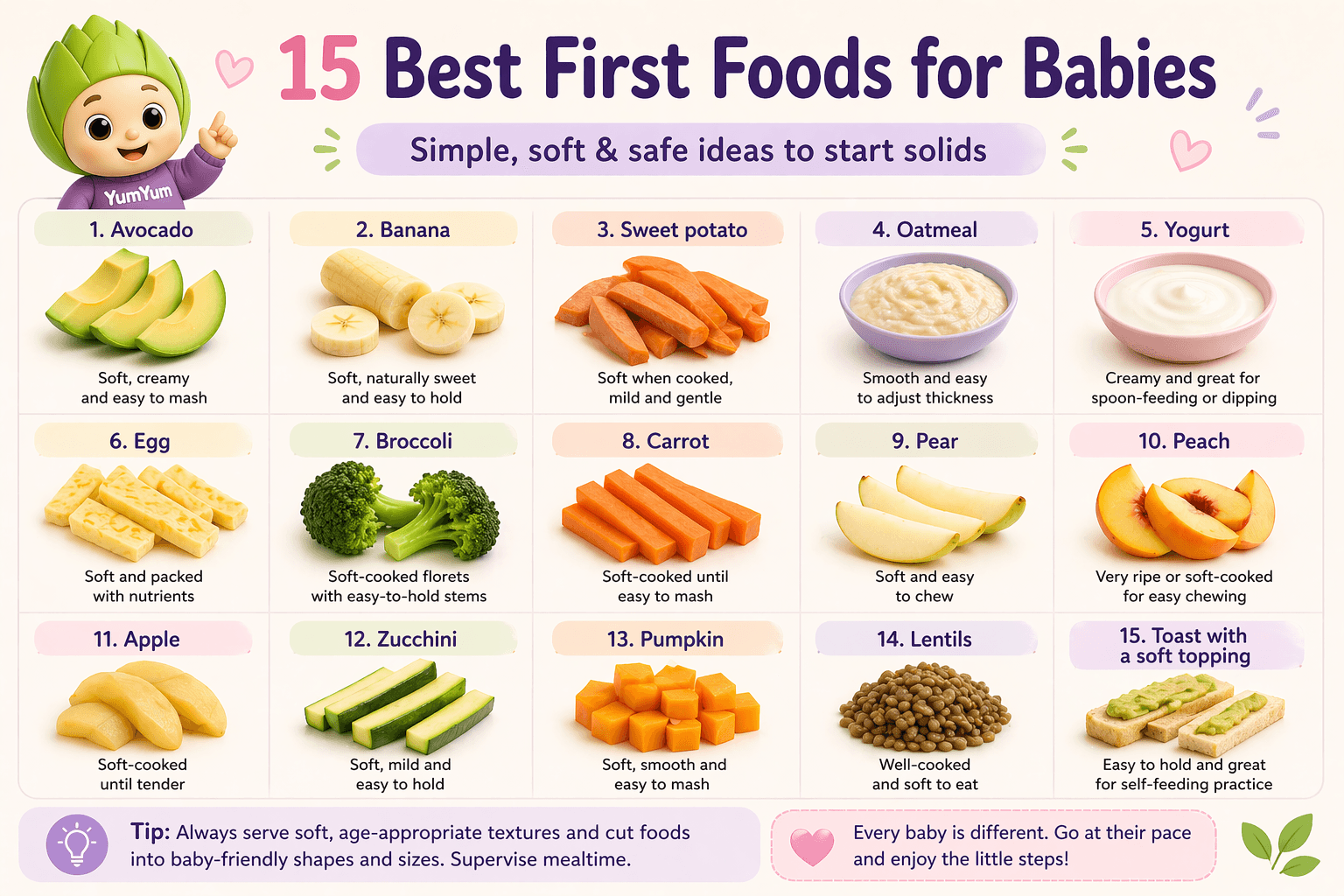
Here are some of the most common and beginner-friendly first foods.
1. Avocado
Avocado is soft, easy to mash, and simple for babies to explore. It can work well as a first food because the texture is naturally soft and manageable.
2. Banana
Banana is another easy first food. It is soft, familiar, and simple to serve in a baby-friendly way.
3. Sweet potato
Soft-cooked sweet potato is a popular starting food because it is mild in flavor and easy to soften well.
4. Oatmeal
Oatmeal can be a simple option for early solids. It can be served smooth or thicker depending on your feeding approach and your baby’s stage.
5. Yogurt
Plain unsweetened yogurt can be a good early food for many babies. It offers a different texture and can work well for spoon-feeding or self-feeding practice.
6. Egg
Egg is a common first food when prepared in a baby-safe texture. Many families like offering soft scrambled egg or omelet strips.
7. Broccoli
Soft-cooked broccoli can work well for babies who are beginning finger foods. The stem can make it easier to hold.
8. Carrot
Well-cooked carrot can be a simple vegetable option when softened enough for baby to manage.
9. Pear
Soft ripe pear or cooked pear can be a gentle fruit option for starting solids.
10. Peach
Very ripe or soft-cooked peach can be another easy fruit for babies to explore.
11. Apple
Apple can work as a first food when softened appropriately. Raw apple is not the same as soft-cooked apple, so serving method matters.
12. Zucchini
Soft-cooked zucchini is mild, soft, and easy to prepare.
13. Pumpkin
Pumpkin or other soft squash can be a good first food because it is easy to mash and simple in texture.
14. Lentils
Well-cooked lentils can be a good early food, especially for families wanting more variety in early meals.
15. Toast with a soft topping
For some babies, toast served in an age-appropriate way with a thin layer of a soft topping can support self-feeding practice.
For more serving ideas by age, visit our feeding guides hub.
Do first foods have to be purees?
No. Some families start with purees, some start with finger foods, and many use both.
What matters most is:
serving food safely
offering age-appropriate textures
keeping mealtimes calm
giving baby time to learn
A mixed approach can still support self-feeding, texture exposure, and skill-building.
How much should baby eat at first?
Usually not much.
In the beginning, many babies only taste a little, touch the food, or explore it with their hands. That can still be completely normal.
Early solids are often about:
exposure
practice
building comfort with food
developing feeding skills
A successful meal does not always mean a lot of food was eaten.
What foods should be served carefully?
Serving method matters just as much as the food itself. Some foods are only safe when they are softened, cut, or prepared in a baby-appropriate way.
This is why visual serving guidance can be so helpful, especially for beginners.
If you are offering a new food, think about:
softness
shape
size
how easily baby can hold it
whether the texture matches your baby’s stage
How to choose the best first foods for your baby
You do not need to offer every food right away. A simple approach often works best.
You can start by choosing foods that are:
easy to prepare at home
already part of your family meals
soft and manageable
low-stress for you to serve
Simple meals are enough in the beginning.
Tips for starting first foods with less stress
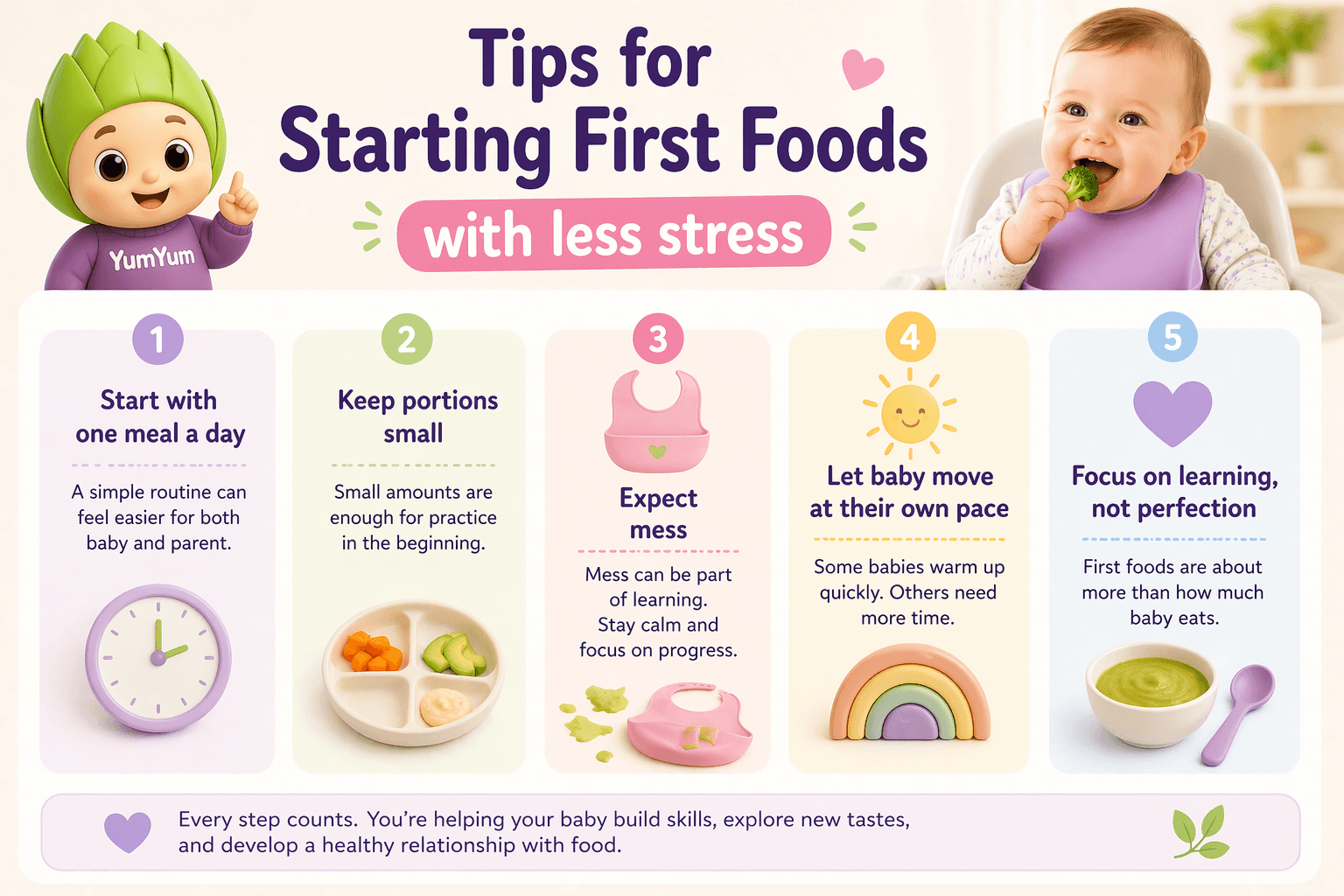
1. Start with one meal a day
A simple routine can feel easier for both baby and parent.
2. Keep portions small
Small amounts are enough for practice.
3. Expect mess
Mess can be part of learning.
4. Let baby move at their own pace
Some babies warm up quickly. Others need more time.
5. Focus on learning, not perfection
First foods are about more than how much baby eats.
What if baby does not seem interested?
This can happen too.
Some babies need time before they become more engaged with solids. That does not always mean something is wrong.
Progress may look like:
touching a food
smelling it
licking it
tasting once
staying calm at the table
These small steps still matter.
Final takeaway
The best first foods for babies are usually simple, soft, and safe for your baby’s stage. There is no one perfect food to begin with, and you do not need a complicated plan to get started.
What matters most is offering food in a safe way, keeping expectations realistic, and giving your baby time to explore and learn.
Starting solids does not need to be perfect.
Simple is enough.
Practice matters.
And small steps still count.
Explore more baby feeding guides
Looking for more help with first foods, textures, and baby-led weaning?
Explore the full YumYum Guides Hub for practical, parent-friendly feeding articles.