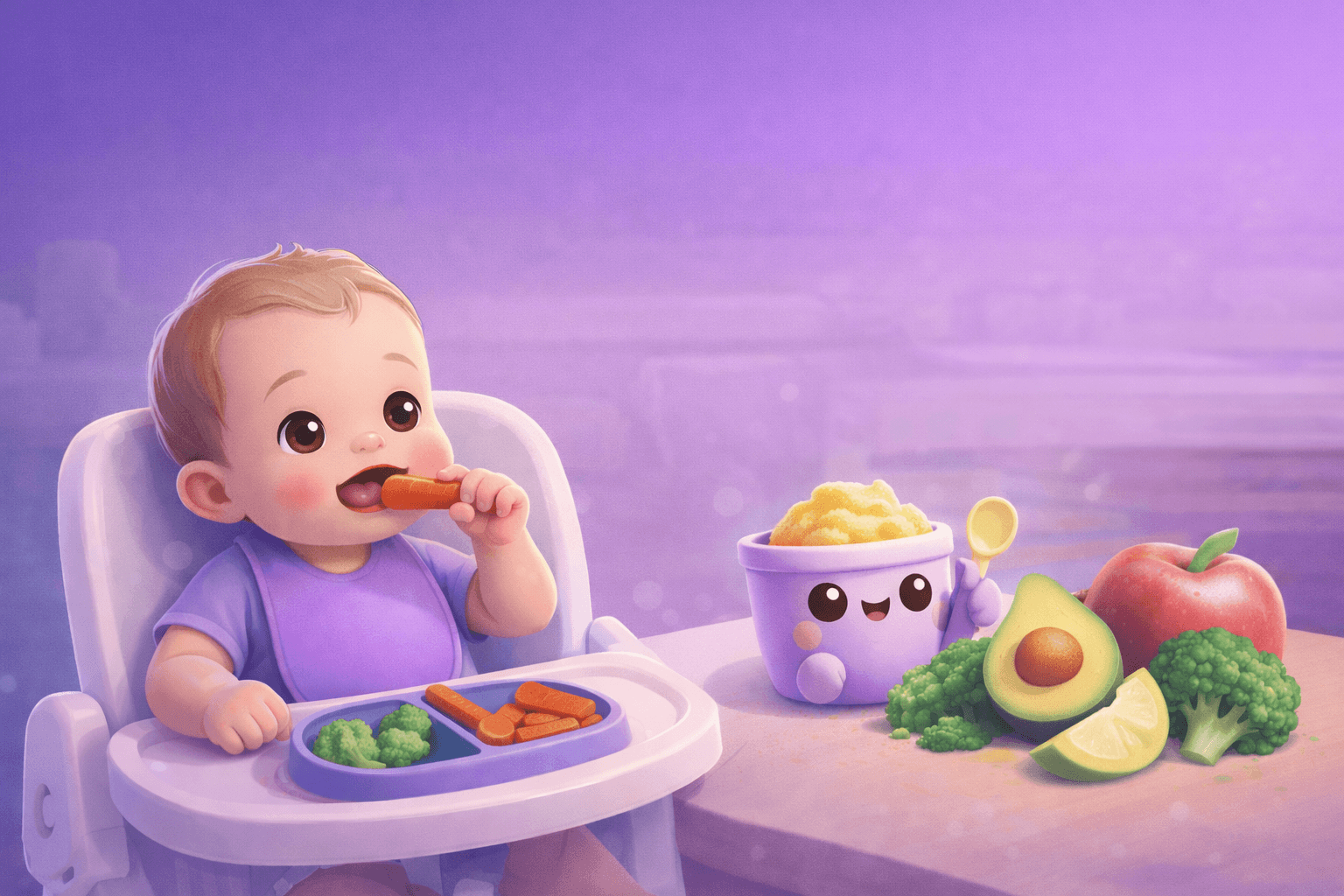
Baby-Led Weaning (BLW) is a method of introducing solid foods where babies feed themselves from the very beginning of solids, instead of being spoon-fed purées by an adult.
In BLW, babies eat real food, in safe shapes and textures, using their own hands — at their own pace.
This approach is widely used by families around the world and supported by many pediatric feeding specialists when done safely.
What Is Baby-Led Weaning?
Baby-Led Weaning means allowing your baby to:
sit upright and join family meals
pick up food independently
decide what, how much, and how fast to eat
Instead of purées and spoon-feeding, babies are offered soft, age-appropriate pieces of food they can hold and explore.
The goal is not how much your baby eats — but how they learn to eat.
When Can a Baby Start BLW?
Most babies are ready for BLW at around 6 months when they can:
sit with minimal support
bring food to their mouth
show interest in food
no longer push food out with their tongue
Every baby develops differently. If you are unsure, consult your pediatrician before starting.
BLW vs Traditional Spoon-Feeding
Baby-Led Weaning | Traditional Feeding |
|---|---|
Baby feeds themselves | Parent feeds with spoon |
Whole foods in safe shapes | Purées and mashed foods |
Baby controls intake | Adult controls intake |
Encourages independence | Focuses on consumption |
Many families also choose a mixed approach, combining BLW and spoon-feeding — and that’s perfectly okay.
Is Baby-Led Weaning Safe?
Yes — when done correctly.
Key safety principles:
Offer foods in age-appropriate textures
Avoid hard, round, or sticky foods
Always supervise your baby while eating
Baby must sit upright
Gagging is normal — choking is not
Learning the difference between gagging and choking is essential for every parent starting BLW.
Benefits of Baby-Led Weaning
Research and parental experience suggest that BLW may help:
develop chewing and oral motor skills
improve hand-eye coordination
support self-regulation of appetite
reduce picky eating later on
build a healthy relationship with food
Most importantly, BLW helps babies feel confident and curious around food.
What Foods Are Best for BLW?
Good first BLW foods are:
soft vegetables (steamed carrots, broccoli, zucchini)
ripe fruits (banana, avocado, pear)
proteins (soft egg strips, shredded chicken, fish)
whole grains (toast strips, pancakes, pasta)
Each food must be prepared differently depending on your baby’s age.
How to Prepare Foods Safely by Age
Food size, texture, and shape change as your baby grows.
For example:
At 6 months: large, soft pieces baby can grasp
At 9 months: smaller pieces for developing pincer grasp
At 12+ months: more variety in textures
Keeping track of this can feel overwhelming — especially with many different foods.
How YumYum Helps Parents with BLW
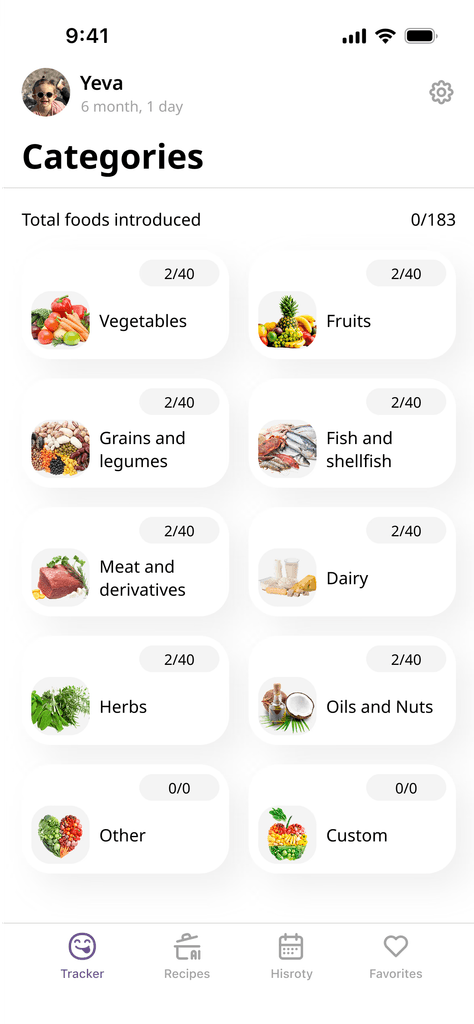
YumYum: BLW Baby Food Tracker is designed to support parents through every stage of baby-led weaning.
With YumYum you can:
see how to serve foods safely by age
track foods your baby has tried
learn correct textures and sizes
build confidence with solids
The app is created to make first foods simple, safe, and stress-free.
Baby-Led Weaning: Final Thoughts
Baby-Led Weaning is not about perfection.
It’s about trust, patience, and letting your baby learn.
Some days your baby will eat a lot.
Some days they won’t eat at all.
Both are normal.